What Happens When Blown-In Insulation Blocks Attic Vents?
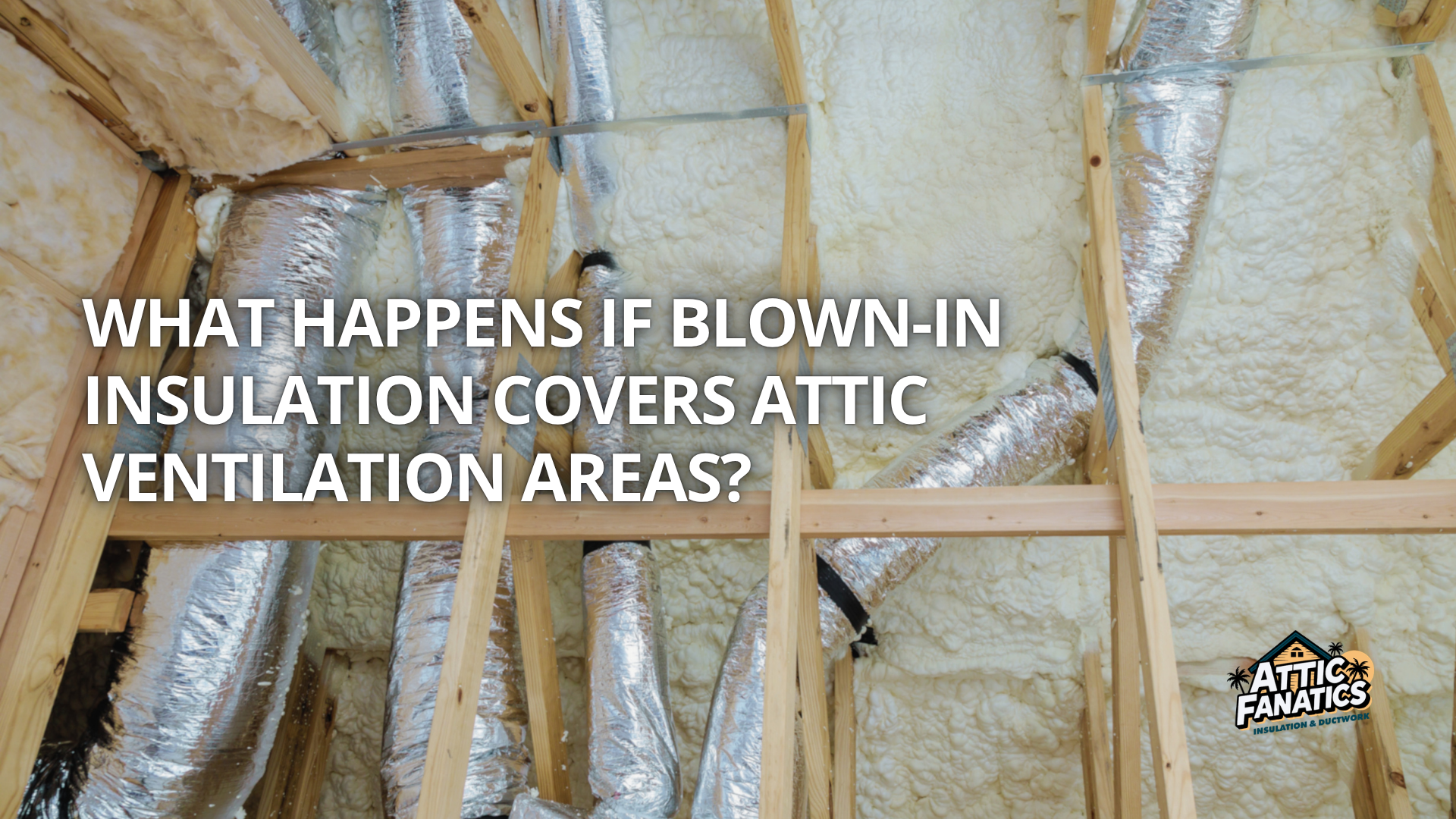
Blown-in insulation should never block attic vents. If ventilation openings become covered during installation, airflow can be restricted, allowing heat and moisture to build up inside the attic. That’s why protecting these ventilation pathways is just as important as installing the right amount of insulation.
A properly installed insulation system keeps vents clear while providing consistent coverage across the attic floor. This allows insulation and ventilation to work together, helping improve your home’s overall performance.
Blown-in insulation blocking attic vents
During installation, loose-fill insulation is distributed across the attic floor to achieve consistent coverage. Without proper planning, however, the material can shift into areas that should remain open for ventilation.
One of the primary concerns involves intake vents located along the roof’s edge. These openings allow outside air to enter the attic, supporting continuous air movement from the lower portion of the roof toward higher exhaust vents. If these intake areas become obstructed, the attic may not ventilate as intended, reducing the effectiveness of both the insulation and the ventilation system.
Can insulation cover soffit vents?
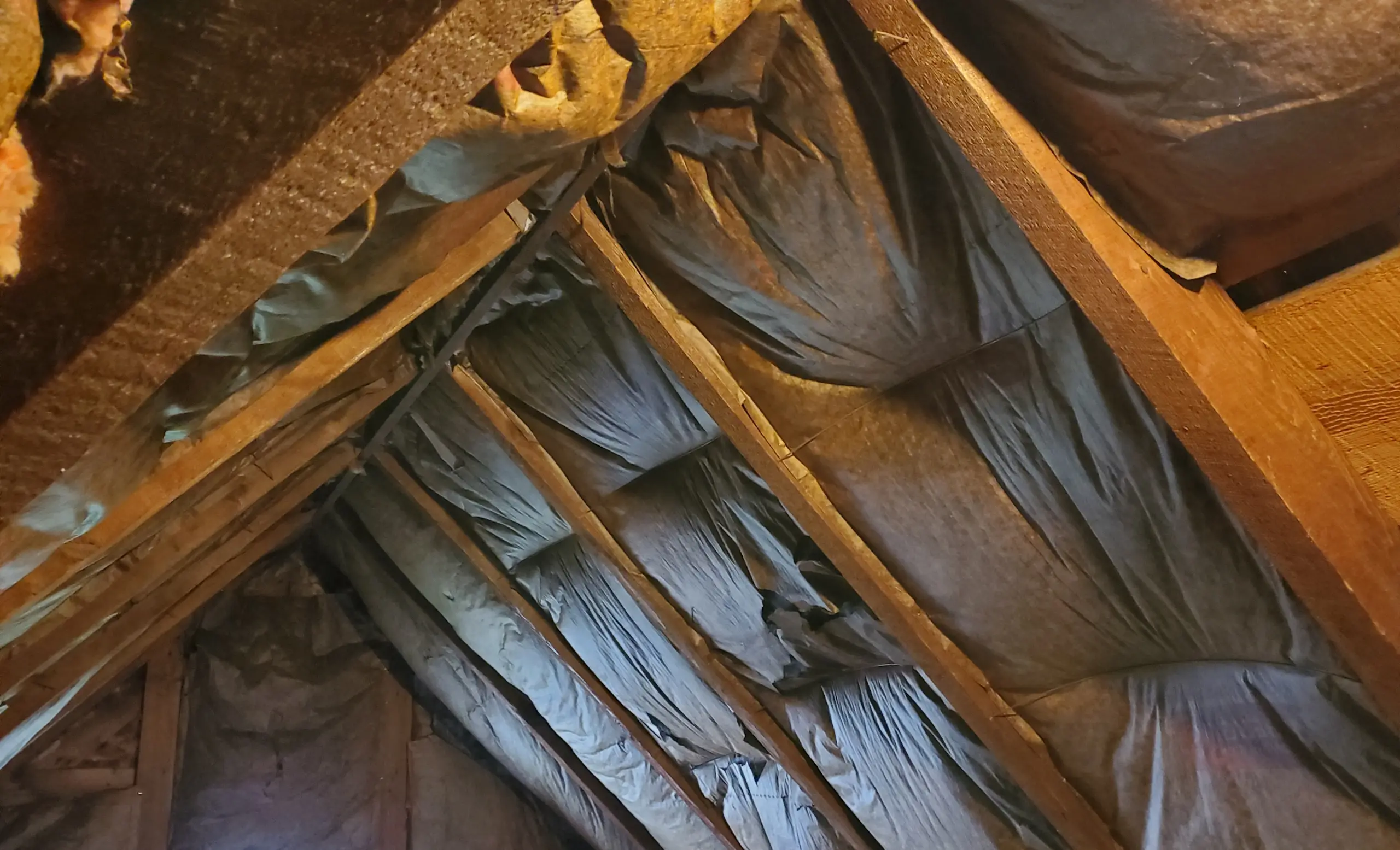
Soffit vents play an important role in maintaining healthy attic conditions. They provide the fresh air needed to keep air circulating beneath the roof deck. When insulation covers these vents, the flow of air into the attic can be restricted.
Reduced ventilation may contribute to several long-term concerns, including:
 Heat becoming trapped inside the attic
 Increased moisture accumulation
 Reduced overall efficiency of the attic system
 Greater strain on heating and cooling equipment
Proper installation focuses on insulating the attic floor while keeping ventilation openings clear so both systems can perform as intended.
Attic ventilation baffles and insulation
One of the most effective ways to protect ventilation pathways is by using ventilation baffles. These components create a channel that allows outside air to continue flowing into the attic, even after new insulation has been installed.
Instead of allowing insulation to settle directly against the roof edge, baffles help keep the intended air pathway open while supporting consistent insulation depth across the rest of the attic floor.
Attic Feature | Purpose |
Soffit vents | Allow fresh air to enter the attic |
Ventilation baffles | Keep ventilation pathways open during and after installation |
Roof ventilation | Helps remove excess heat and moisture |
Blown-in insulation | Reduces heat transfer between the attic and living space |
When insulation and ventilation are planned together, each system can perform its role without interfering with the other.
Balancing insulation with proper ventilation
Adding more insulation isn’t always the complete solution. The way it’s installed is just as important as the amount being added. Before beginning an insulation project, professionals evaluate the attic layout to identify ventilation pathways, existing insulation, and any conditions that could affect installation. This allows the insulation to be installed evenly while preserving the openings needed for proper attic airflow.
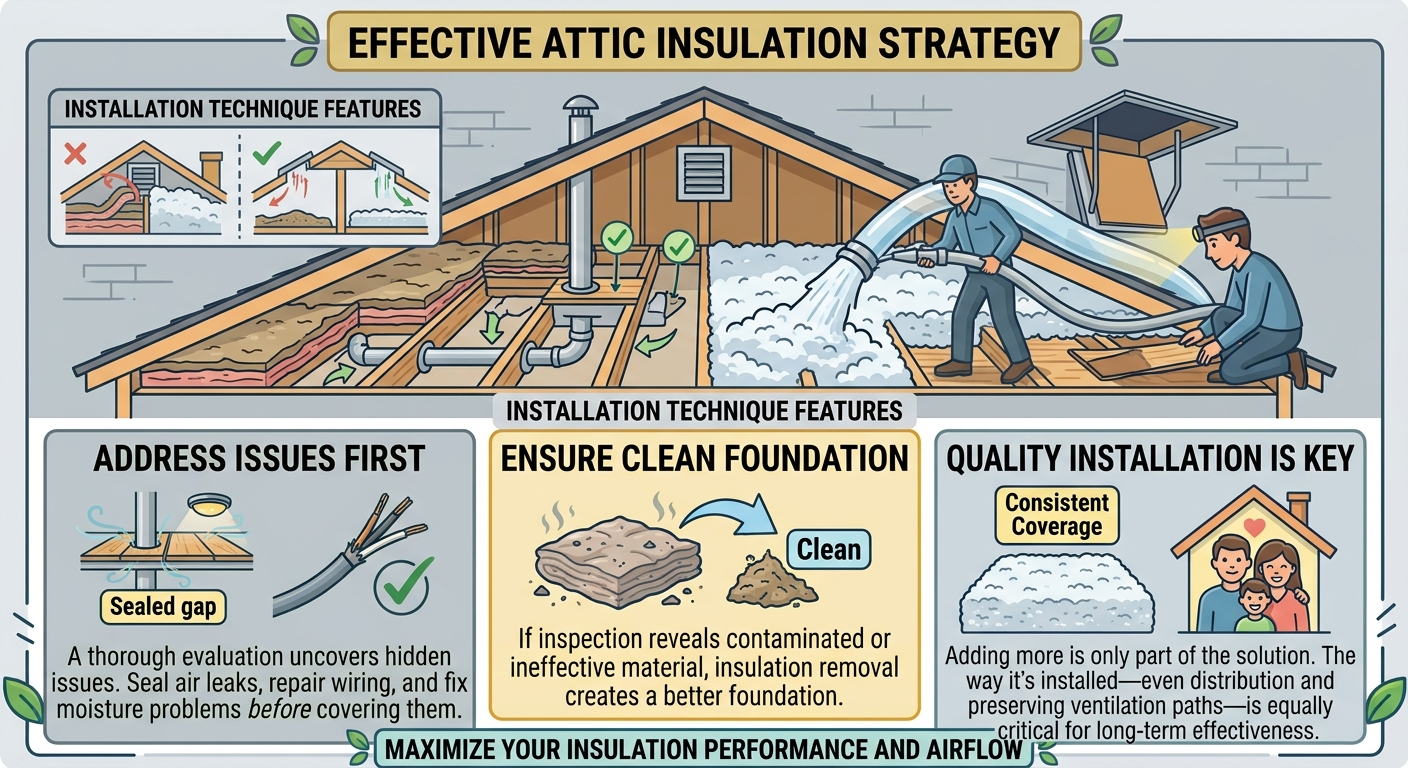
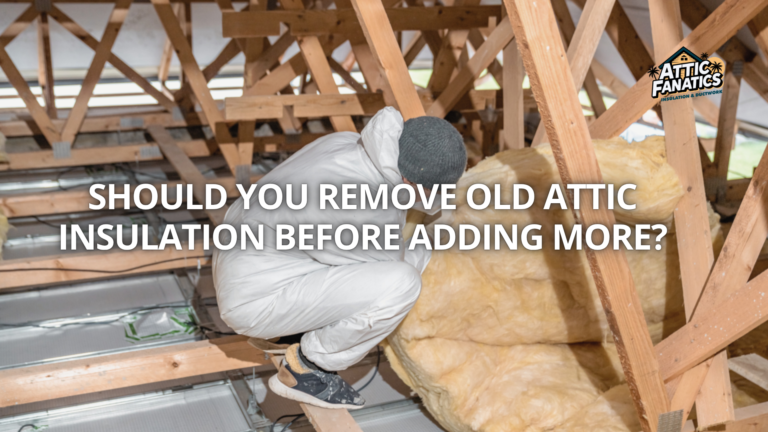
If the inspection reveals insulation that has been damaged or contaminated, insulation removal may be recommended before installing new blown-in insulation. Addressing these issues first creates a cleaner foundation for the new material and helps support long-term performance.
A well-planned attic performs better
A successful insulation project considers more than insulation alone. Ventilation pathways, attic conditions, and existing materials all influence how well the finished system performs over time.
At Attic Fanatics, every attic is evaluated before installation begins. The team checks ventilation areas, plans insulation placement, and helps ensure airflow pathways remain unobstructed while achieving consistent insulation coverage. This careful approach helps improve comfort, protect the attic environment, and maximize the value of your insulation upgrade. If you’re considering blow-in insulation or think your attic may need insulation removal before an upgrade, contact Attic Fanatics to schedule a professional attic evaluation and discuss the best solution for your home.