What Attic Moisture Can Do to Blow-In Insulation Performance
Moisture can affect attic insulation in ways that are not always easy to spot. In high humidity, air leaks, condensation, and water intrusion can all create problems, but each has a different cause and requires a different solution. For homeowners in Hollywood, FL, the key is to identify where the moisture comes from before deciding whether insulation needs repair or replacement.
🌡️ How Humidity Affects Attic Insulation
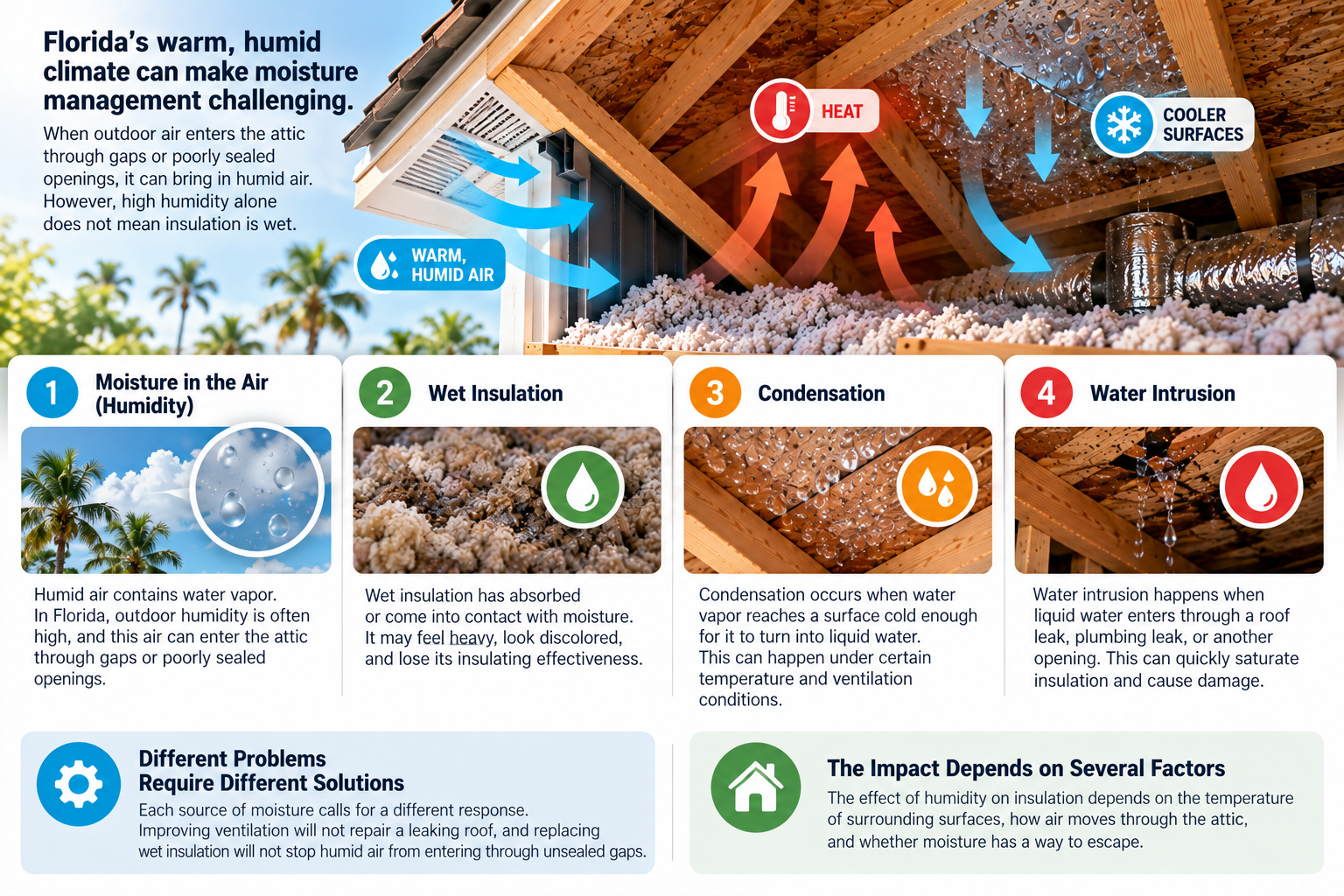
Florida’s warm, humid climate can make moisture management challenging, especially when outdoor air enters the attic through gaps or poorly sealed openings. However, high humidity alone does not mean insulation is wet. The actual impact depends on the temperature of surrounding surfaces, how air moves through the space, and whether moisture has a way to escape. When looking at attic moisture and insulation, it helps to distinguish between moisture in the air and liquid water inside the insulation. Humid air contains water vapor, while wet insulation has absorbed or come into contact with moisture. Condensation occurs when water vapor reaches a surface cold enough for it to turn into liquid water. Water intrusion, by contrast, happens when liquid water enters through a roof leak, plumbing leak, or another opening.
These differences matter because each problem calls for a different response. Improving ventilation will not repair a leaking roof, and replacing wet insulation will not stop humid air from entering through unsealed gaps.
🏠 How Moisture Affects Blow-In Insulation Performance
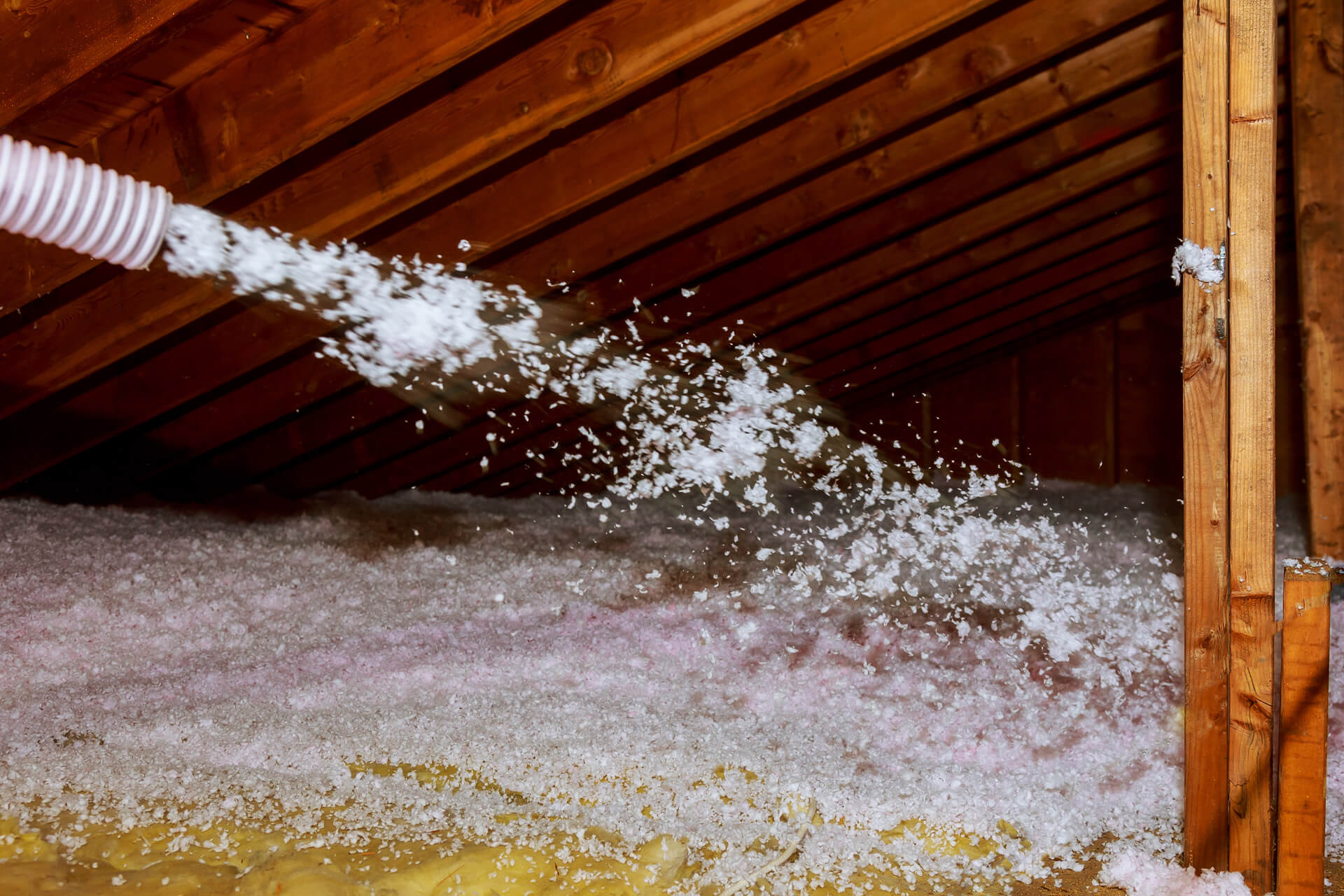
Blow-in insulation helps slow heat transfer by trapping air within its material. When moisture affects that material, its performance can change depending on the insulation type, how much water is present, and how long it remains there. Cellulose insulation is made primarily from processed paper fibers. It can absorb and retain moisture, so prolonged dampness may affect its condition and settling. Fiberglass insulation does not absorb water in the same way as cellulose, but water can collect between its fibers. If it becomes wet, its thermal performance may suffer, particularly when the material is compressed, displaced, or unable to dry properly.
The effect on R-value also depends on the material and the circumstances. R-value measures resistance to heat flow, and moisture does not affect every insulation product in the same way. A homeowner should not assume that any rise in humidity automatically reduces insulation performance. Instead, signs such as damp patches, unusual settling, discoloration, or visible water damage warrant a closer inspection.
💧 Common Sources of Attic Moisture
High Humidity and Indoor Air Leaks
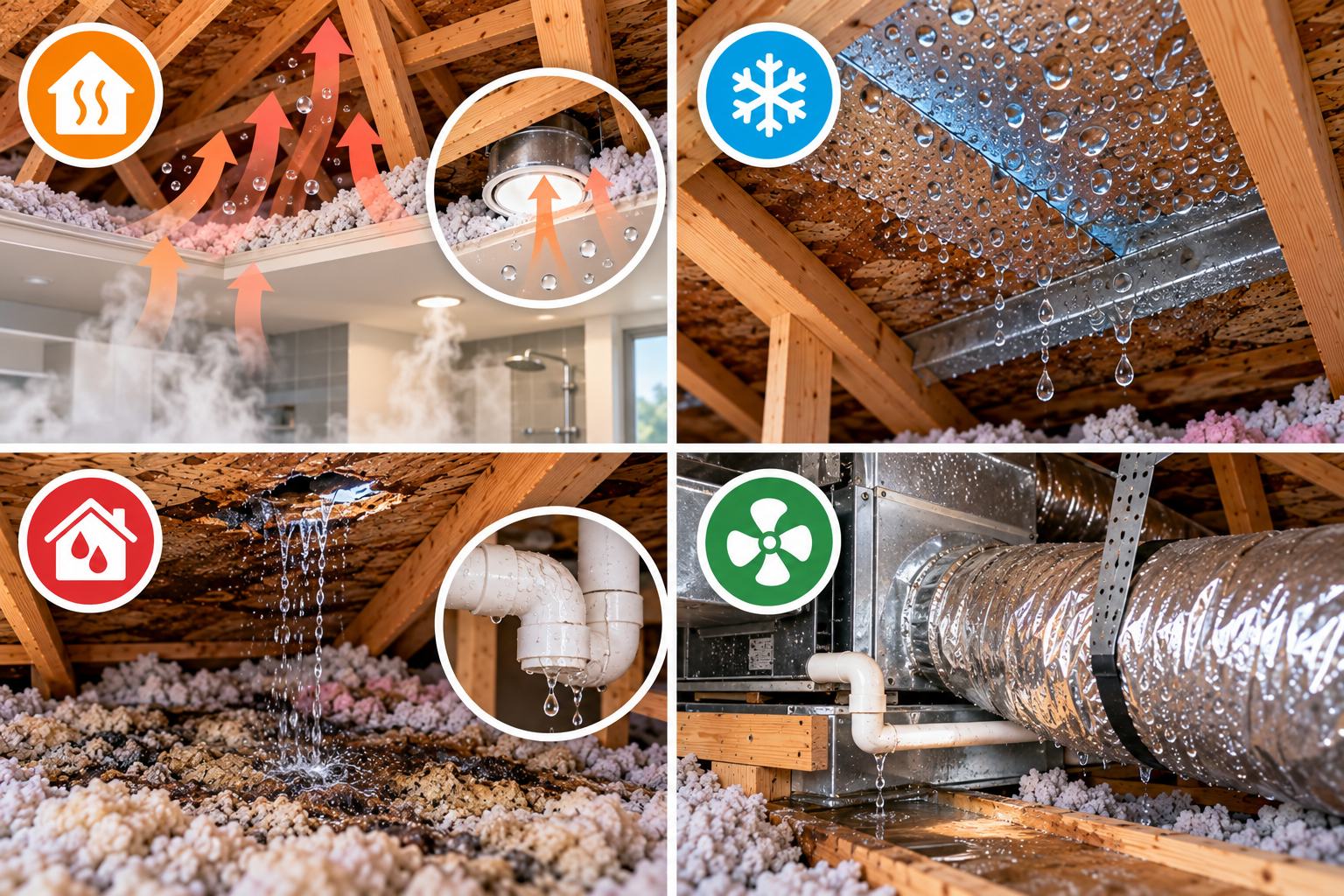
Outdoor humidity is one part of the picture, but indoor air can also carry moisture into the attic. Bathrooms, kitchens, and laundry areas produce water vapor through everyday activities. If warm indoor air escapes through ceiling gaps, recessed lights, attic access panels, or unsealed penetrations, it can carry that moisture into the space above. This is why air sealing matters. Closing suitable gaps helps limit uncontrolled air movement between the living space and attic. It can also support insulation performance by reducing unwanted heat transfer and limiting the movement of moisture-laden air. The goal is not to seal intentional ventilation openings, but to address unintended leaks while maintaining the home’s required ventilation.
Condensation on Cold Surfaces
Condensation can develop when moist air comes into contact with a surface below its dew point. Depending on the conditions, this may occur on roof sheathing, metal components, ducts, or other cold surfaces. The issue is not simply that the attic has high humidity. Temperature differences, air movement, and the amount of water vapor all influence whether condensation forms. If it happens repeatedly, moisture may accumulate on nearby materials or reach the insulation. Finding the source of the humid air and correcting the conditions that allow condensation are important steps toward preventing recurring dampness.
Roof Leaks and Plumbing Leaks
Roof leaks introduce liquid water directly into the attic. Damaged shingles, flashing problems, or other roofing defects may allow rainwater to reach the insulation. Plumbing leaks can create a similar problem when pipes run through or above the attic. These situations require more than an insulation adjustment. The leak needs to be identified and repaired, and affected materials should be checked to determine whether they can dry adequately or need removal. Adding fresh insulation over damp or damaged material can conceal the problem without resolving it.
HVAC-Related Moisture
Air-conditioning systems can also contribute to attic moisture problems. A leaking condensate drain, a blocked drain line, damaged ductwork, or a poorly insulated cold duct may allow water to collect in the attic. In some cases, duct leaks can also move conditioned air into the attic and alter local temperature and humidity conditions. If moisture appears near HVAC equipment or ducts, have the relevant components inspected. The source may require an HVAC repair rather than an insulation replacement.
🌬️ Why Insulation, Air Sealing, and Ventilation Work Together
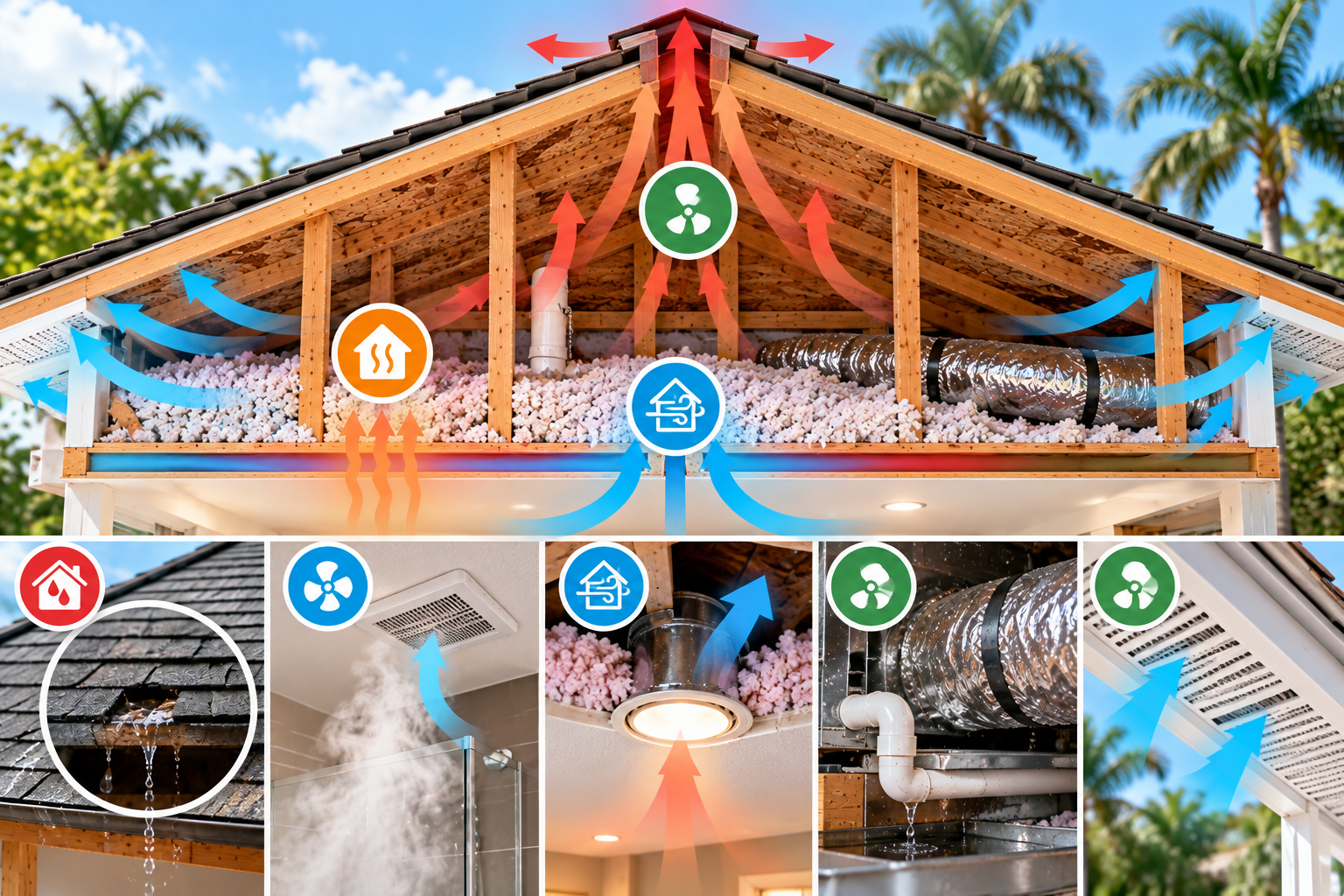
Insulation, air sealing, and attic ventilation serve different purposes. Insulation slows heat transfer, air sealing limits unwanted air movement, and ventilation helps manage heat and moisture under the right conditions. None of these measures automatically fixes every moisture problem.
A Florida attic may need a combination of repairs, depending on its design and the source of the moisture. Roof leaks and plumbing leaks need to be corrected first. Uncontrolled airflow from the living space may call for air sealing, while the attic ventilation system should be checked for suitable intake and exhaust paths. Ventilation changes should account for the home’s attic design and applicable building requirements. Indoor humidity also deserves attention. Bathroom exhaust fans should discharge outdoors rather than into the attic, and HVAC equipment should drain properly. These details help address moisture at its source instead of relying on insulation to compensate for an ongoing problem.
🔍 Should You Replace Blow-In Insulation After Moisture Damage?
Not every moisture concern requires full insulation replacement. If the insulation remains dry and in good condition, it may not need to be removed simply because attic humidity has been high. However, material that has become wet, contaminated, heavily compacted, or otherwise damaged may need professional assessment and removal. Before adding more insulation, arrange an attic inspection to check for roof leaks, plumbing issues, HVAC problems, condensation, and air leakage. The inspection can also help determine whether the existing material has settled or whether its coverage and R-value remain suitable for the home. The important point is that replacing insulation alone may not solve the problem. If the moisture source remains, new material can face the same conditions. Addressing the cause first helps homeowners make a more informed decision about insulation installation or replacement.
Moisture problems in a Florida attic can affect insulation, but the right solution depends on the source. Before adding or replacing blow-in insulation, check for leaks, condensation, HVAC issues, and gaps that allow indoor air to escape. Fixing the underlying problem is just as important as choosing the right insulation material.