 Why Blow-In Insulation Can Lose Its Depth Over Time
Blow-in insulation can look fine from the attic entrance, yet its depth and coverage may change over the years. Some areas become thinner, others develop gaps, and sections that once provided adequate thermal protection may no longer perform as intended.
For homeowners in Hollywood, FL, this deserves attention. Long cooling seasons and intense summer temperatures put a steady demand on attic insulation. When material settles unevenly, shifts, or becomes compressed, more heat can enter the living space, potentially affecting comfort and energy bills. Understanding what causes these changes can help you determine whether your existing insulation needs attention or whether adding more material would be enough.
 What causes blow-in insulation settling?
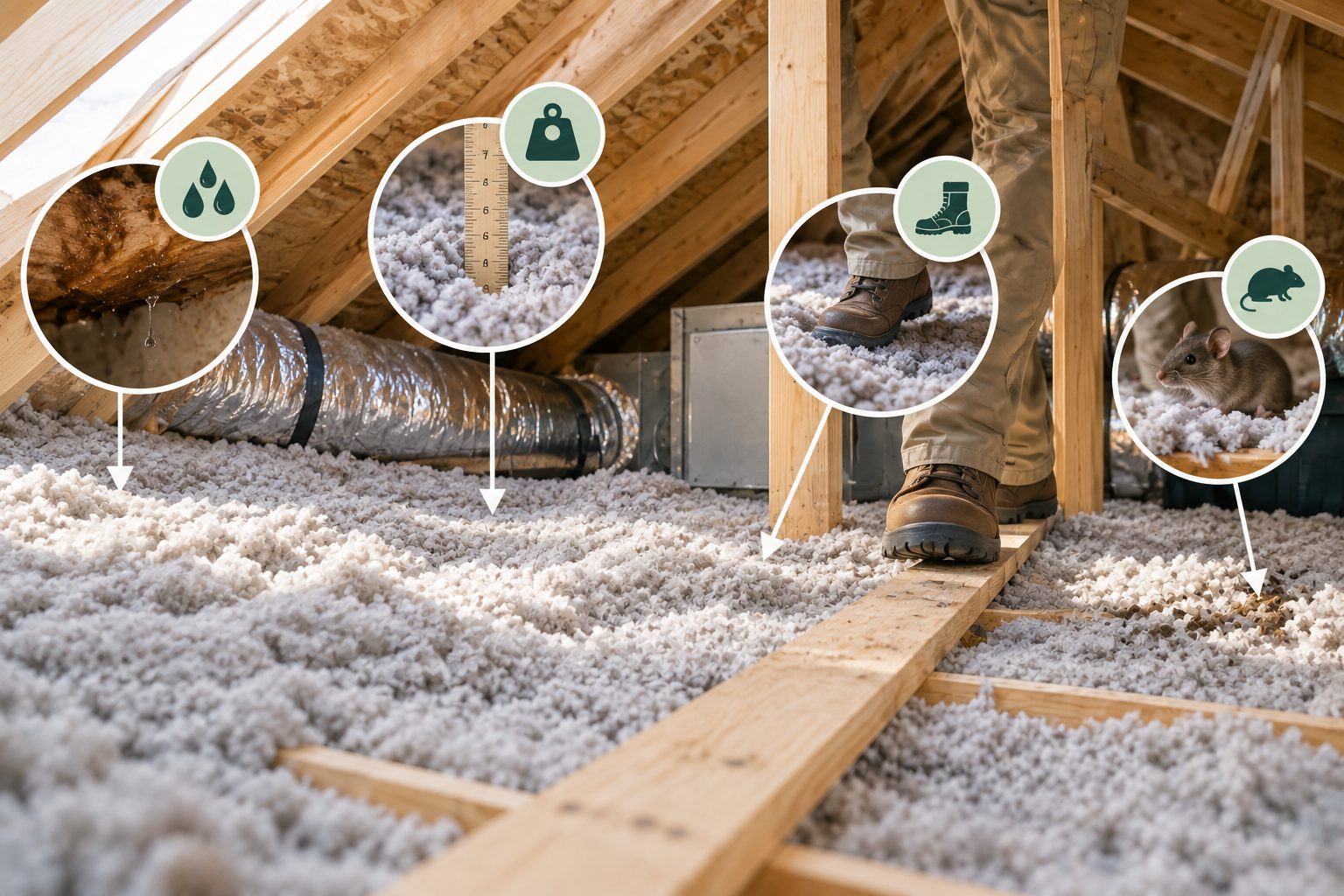
Blow-in insulation settling can happen naturally, but the extent depends on the material, installation method, and attic conditions. Some settling is expected with certain products, while excessive loss of depth may indicate an installation issue or another problem. Uneven insulation installation can leave thin areas from the beginning. Later, foot traffic during maintenance, work around HVAC equipment, or stored items can compress or displace the material. Moisture and pest activity may also affect its condition. These issues can reduce insulation coverage, leaving parts of the ceiling less protected than others. That is why homeowners shouldn’t assume insulation installed years ago still provides the same level of performance today.
 Does blown-in insulation settle differently by material?
Yes. Cellulose insulation and fiberglass insulation have different physical properties, so their settling behavior can vary. Product specifications, installation density, and the amount of material installed all influence the result.
Factor | Cellulose Insulation | Fiberglass Insulation |
Material | Primarily processed paper fibers | Fine glass fibers |
Settling | Can settle depending on density and installation | Can settle or shift if improperly installed or disturbed |
Moisture exposure | Dampness can affect its condition | Wet material may lose effectiveness |
What to assess | Depth, density, and signs of damage | Depth, coverage, and material condition |
Neither material automatically needs replacement because it has aged. Its present condition and the manufacturer’s installation guidelines are more useful indicators of whether corrective work is necessary.
 How insulation depth affects R-value and attic efficiency
Insulation depth matters because it influences how effectively the material resists heat transfer. R-value measures that resistance, and the intended R-value depends on the material type and the amount installed. When insulation becomes thinner or develops bare patches, its thermal protection may decrease in those areas. Compression can also affect performance, depending on the material and how it was installed.
In a Florida attic, intense heat can make these weak spots more noticeable. Homeowners may experience uneven indoor temperatures or find that their cooling system runs longer during hot weather. However, insulation is only one factor affecting energy use; air leakage, ductwork, and HVAC performance can also contribute. The goal is not simply to add more insulation. It is to restore consistent coverage and achieve the intended R-value for the home.
 Signs your attic insulation may have lost coverage
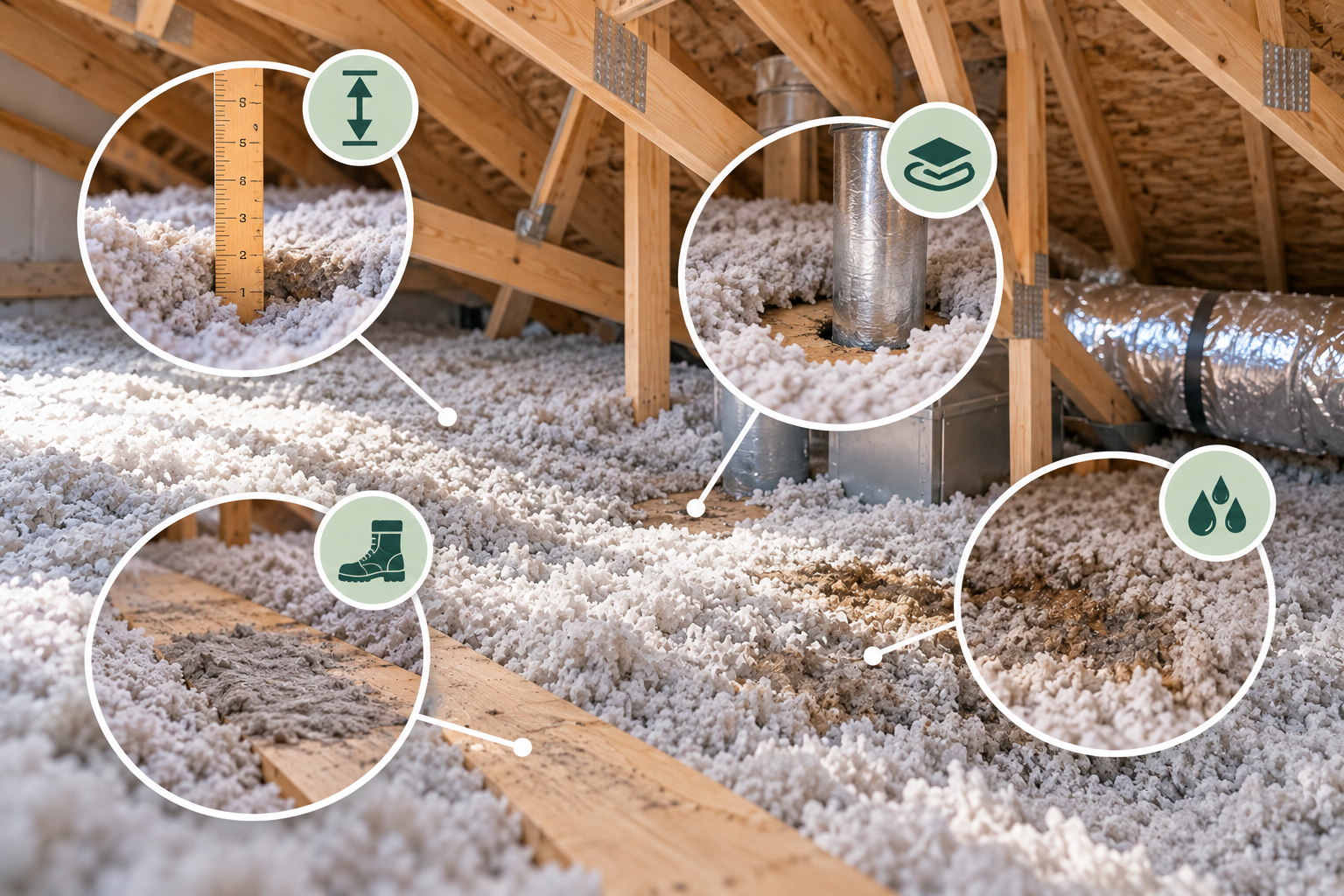
You don’t need to disturb the material to notice possible problems. From a safe viewing point, look for obvious differences in insulation height or areas where the ceiling is exposed.
Watch for these signs:
- Noticeably thinner sections compared with the surrounding material.
- Bare patches or gaps around ceiling penetrations.
- Compressed areas near equipment or locations accessed during repairs.
- Discoloration, damp material, or signs of pest activity.
Avoid walking across an insulated attic floor, as the ceiling below may not support your weight. If you notice damage or moisture, have the area assessed rather than covering it with additional material.
 Should you add more insulation or remove the old material?
The answer depends on what has caused the loss of depth. If the existing insulation remains dry, clean, and in suitable condition, adding another layer may restore the required coverage without removing everything already installed. However, moisture-damaged, contaminated, or pest-affected material may need to be addressed before an upgrade. Adding fresh insulation over these conditions can hide the underlying problem rather than resolve it.
Attic Fanatics offers blown-in insulation services for homeowners who need improved attic coverage. If the existing material requires removal before new insulation is installed, insulation removal services may be appropriate. For homeowners seeking attic insulation, evaluating the existing layer is a practical starting point. The right solution depends on the attic’s condition, the insulation already in place, and the coverage needed for reliable long-term performance. If your insulation appears uneven or you suspect it has settled excessively, contact Attic Fanatics to discuss an assessment and determine the next steps for your home.