How Florida Humidity Affects Blow-In Attic Insulation
Florida’s hot, humid climate puts more pressure on an attic insulation system than many homeowners realize. Blow-in insulation can provide effective thermal resistance, but its long-term performance depends on more than the amount of material installed. Moisture, attic ventilation, air leakage, roof conditions, and the condition of the existing insulation all influence how well the system performs.
For homeowners in Dania Beach and throughout South Florida, humidity deserves particular attention because an attic can become hot, poorly ventilated, and exposed to moisture from several sources. A well-installed insulation layer should remain dry, evenly distributed, and properly separated from ventilation pathways.
🌴 Why Florida Humidity Matters in the Attic
Humidity becomes a concern when warm, moisture-laden air reaches surfaces or materials that are cooler than the surrounding attic environment. In a properly functioning attic, ventilation and air sealing help control these conditions. When either is inadequate, moisture can accumulate where it should not.
Blow-in insulation is designed to slow heat transfer, not to solve moisture problems. If humid air is entering through ceiling penetrations, ductwork, recessed fixtures, plumbing openings, or other gaps, adding more insulation will not stop that air movement. The moisture source needs to be identified and addressed first.
This distinction is important for homeowners considering additional insulation. A thicker insulation layer may improve thermal performance while leaving the underlying moisture problem untouched.
💧 Can Humidity Cause Blow-In Insulation to Settle?
Settling can occur naturally with some loose-fill insulation materials, but excessive moisture can create additional problems. When insulation becomes damp, its physical condition can change, and sections of the attic may no longer maintain the intended depth or distribution.
The concern is not simply that the material looks thinner. Insulation performance is related to its installed depth and coverage. Areas where material has become compressed, displaced, or uneven can create weak spots in the attic’s thermal envelope.
A homeowner inspecting the attic should look for noticeable differences in insulation depth, exposed areas around ceiling penetrations, compressed sections, or material that appears unusually damp or clumped.
If the insulation has shifted because of an underlying problem, replacing or adding material without correcting the cause may only provide a temporary improvement.
🌧️ Moisture Sources Are More Important Than Humidity Alone
High humidity alone does not mean that an attic needs new insulation. The first step is identifying where moisture is coming from and whether the existing insulation has actually been affected.
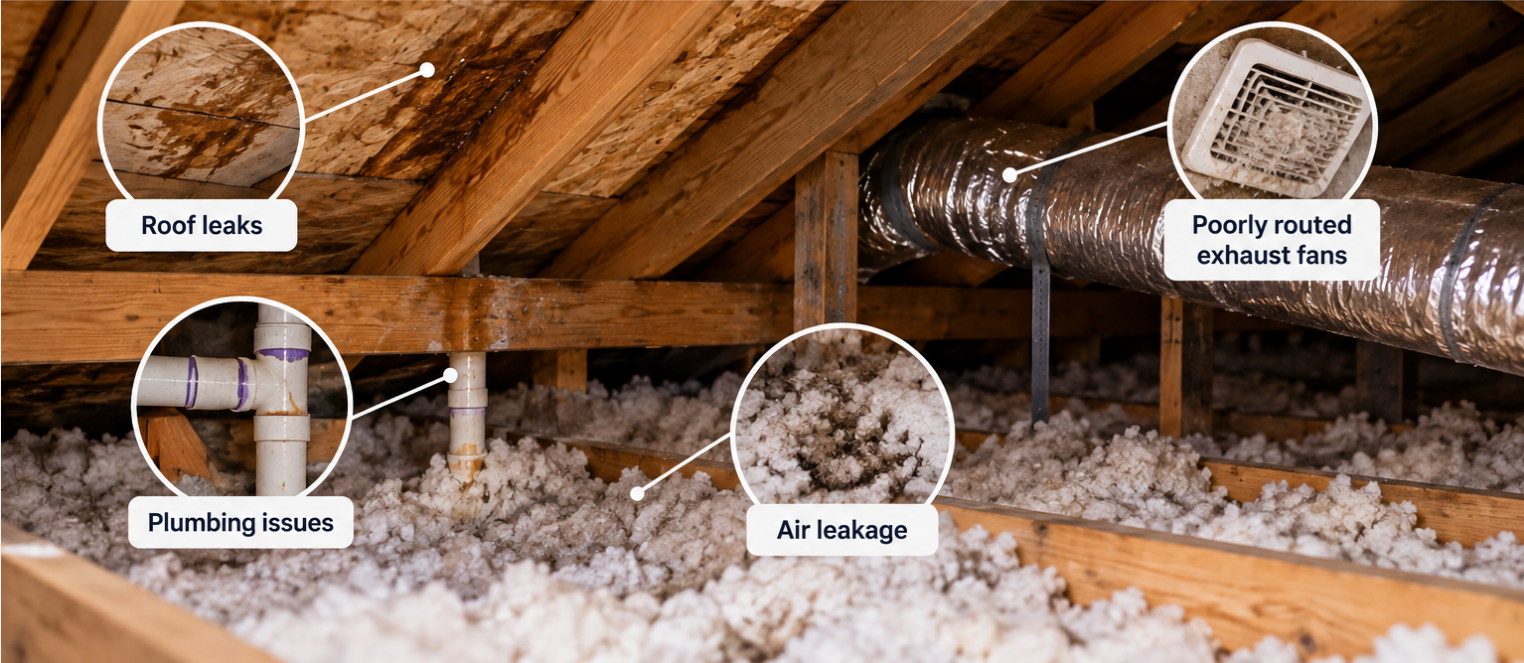
Roof leaks, plumbing issues, poorly routed exhaust fans, and air leakage can all create localized moisture problems. If the existing material is damaged or contaminated, professional insulation removal may be necessary before new material is installed. This allows the attic space to be cleaned, inspected, and prepared rather than simply covering a problem with another layer of insulation.
🏠 When Additional Blow-In Insulation Makes Sense
Adding insulation can be a practical option when the existing material is dry, reasonably uniform, and free from significant contamination or damage. The attic should still be evaluated for ventilation, air leakage, moisture intrusion, and areas where insulation has settled or been displaced.
If additional insulation is appropriate, the installation should account for the attic’s existing condition and target insulation depth rather than simply adding material wherever space is available. Homeowners considering the project can review completed blow-in insulation projects to see examples of how attic conditions can vary from one property to another.
💧 Common Attic Moisture Signs and What They May Indicate
| Attic condition | What it may indicate | Why it matters |
|---|---|---|
| Damp or clumped blow-in insulation | Moisture intrusion or condensation | Can reduce insulation performance and may require further inspection |
| Uneven insulation depth | Settling, displacement, or previous disturbance | Creates areas with less thermal resistance |
| Water stains on roof decking | Roof leak or past water intrusion | The moisture source should be addressed before adding insulation |
| Musty attic odor | Persistent moisture or organic contamination | May indicate a problem that should be investigated |
| Blocked soffit vents | Insulation covering intake pathways | Can restrict intended attic airflow |
| Wet or damaged insulation near ducts | Condensation or air leakage | May indicate an HVAC-related moisture issue |
| Mold-like growth on wood surfaces | Excess moisture over time | Requires identifying and correcting the moisture source |
🌬️ How Attic Ventilation Affects Moisture Control
Ventilation is one part of the attic system that should be evaluated before installing additional blow-in material. Intake ventilation allows outside air to enter through designed pathways, while exhaust ventilation provides a route for warmer attic air to leave.
If soffit intake areas are covered by insulation, the airflow path can become restricted. Missing or poorly positioned baffles can create a similar problem by preventing air from traveling from the soffits into the attic space above the insulation.
This is especially relevant in a warm, humid climate. Ventilation cannot eliminate Florida’s outdoor humidity, but a properly designed attic ventilation system can help move air through the intended pathways and reduce conditions that contribute to moisture accumulation.
More insulation should never be treated as a substitute for correcting blocked ventilation.
☀️ Does Florida Heat Make the Moisture Problem Worse?
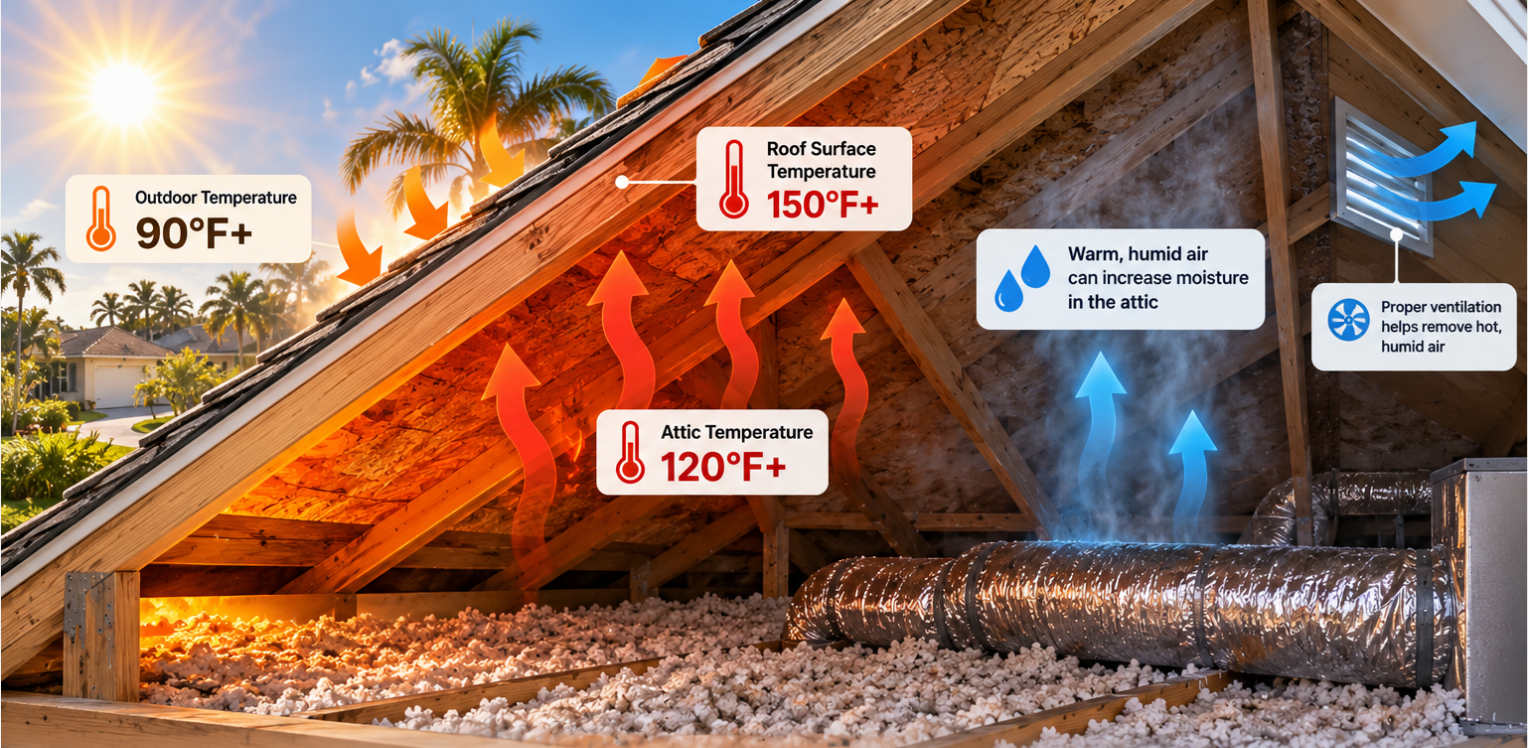
Heat and humidity work together to create challenging attic conditions. During a sunny Florida afternoon, roof temperatures can become substantially higher than the outdoor air temperature. That heat raises attic temperatures and increases the importance of maintaining an effective thermal and ventilation system.
The purpose of blow-in insulation is primarily to reduce heat transfer between the attic and the conditioned living space. It does not make the attic itself cool like an air-conditioned room.
This distinction matters when evaluating attic performance. A homeowner may notice that the attic remains very hot even after insulation is installed. That does not necessarily mean the insulation has failed. The relevant question is whether the insulation is providing the intended resistance to heat flow and whether the attic’s ventilation and air-sealing systems are functioning properly.
🛠️ When Should Damp Blow-In Insulation Be Replaced?
Not every moisture event requires complete insulation removal. The appropriate response depends on the material, how much was affected, how long it remained exposed to moisture, and whether the underlying source has been corrected.
If insulation has been significantly wet, contaminated, compressed, or affected by pests or other attic problems, removal may be appropriate. The attic can then be cleaned and inspected before new insulation is installed.
For homeowners considering professional work, the scope should be based on the actual condition of the attic rather than automatically replacing everything. A proper blow-in insulation service should account for existing insulation, attic access, ventilation, air leakage, and the desired insulation depth.
In cases where damaged or contaminated material must be removed first, attic insulation removal can be part of the preparation process.
🔧 What Should Be Checked Before Adding More Insulation?
Adding insulation can be a practical option when the existing material is dry, reasonably uniform, and free from significant contamination or damage. Before doing so, however, the attic should be evaluated as a complete system.
The inspection should consider:
- 🔹 Existing insulation depth and condition
- 🔹 Roof leaks and signs of moisture intrusion
- 🔹 Soffit, ridge, and other ventilation pathways
- 🔹 Air leaks around penetrations and ceiling openings
- 🔹 Bathroom and kitchen exhaust routing
- 🔹 Signs of pests, contamination, or damaged material
This approach is more useful than simply measuring the existing insulation and deciding to add another layer. If the attic has a ventilation or moisture problem, covering it with additional material can make future inspection and correction more difficult.
🏡 What Dania Beach Homeowners Should Know About Attic Moisture
Homes in Dania Beach face the same fundamental challenge as other South Florida properties: insulation needs to perform in a hot and humid environment while the attic remains exposed to outdoor temperature and moisture conditions.
That does not mean blow-in insulation is unsuitable for Florida homes. It means installation should be approached as part of a larger attic system. Insulation, air sealing, ventilation, and moisture control all influence the result.
A properly evaluated attic can help determine whether the right solution is additional insulation, removal and replacement, ventilation improvements, air sealing, or a combination of these measures. For homeowners planning a project, reviewing previous attic insulation projects can also provide a useful reference for the type of work involved.
The goal is not simply to put more insulation in the attic. The goal is to create a dry, evenly insulated, properly ventilated space that continues to perform under Florida’s demanding climate conditions.