What Should a Blow-In Attic Insulation Estimate Include? 🏠
A blow-in attic insulation estimate should tell you much more than the price of insulation itself. A reliable quote should explain what material will be installed, how much is required, what R-value the finished attic is expected to achieve, and what preparation or additional work is included.
For a homeowner, this matters because two estimates can look similar at first glance while covering very different scopes of work. One contractor may include attic preparation, air sealing, ventilation checks, installation, and cleanup, while another may quote only the insulation material and labor.
When comparing an attic insulation estimate, I recommend looking at the complete scope of work rather than choosing the lowest number on the page. The goal is to know exactly what you are paying for and what condition the attic will be left in after the installation.
🔍 What Should a Blow-In Insulation Estimate Cover
A professional estimate should describe the existing attic conditions and the proposed installation method. Before calculating the quantity of insulation, the contractor should consider the attic’s size, existing insulation, accessibility, ventilation, and areas that may require preparation.
The quote should also identify the type of blow-in insulation being proposed. Fiberglass and cellulose are common options, but the material alone does not determine whether the installation will perform properly. Installation depth, coverage, density, and the target R-value are equally important.
If the attic already contains insulation, the estimate should make clear whether it will remain in place, be redistributed, or require removal. Attic insulation removal can significantly change the project cost, particularly when old insulation is damaged, contaminated, or severely compacted.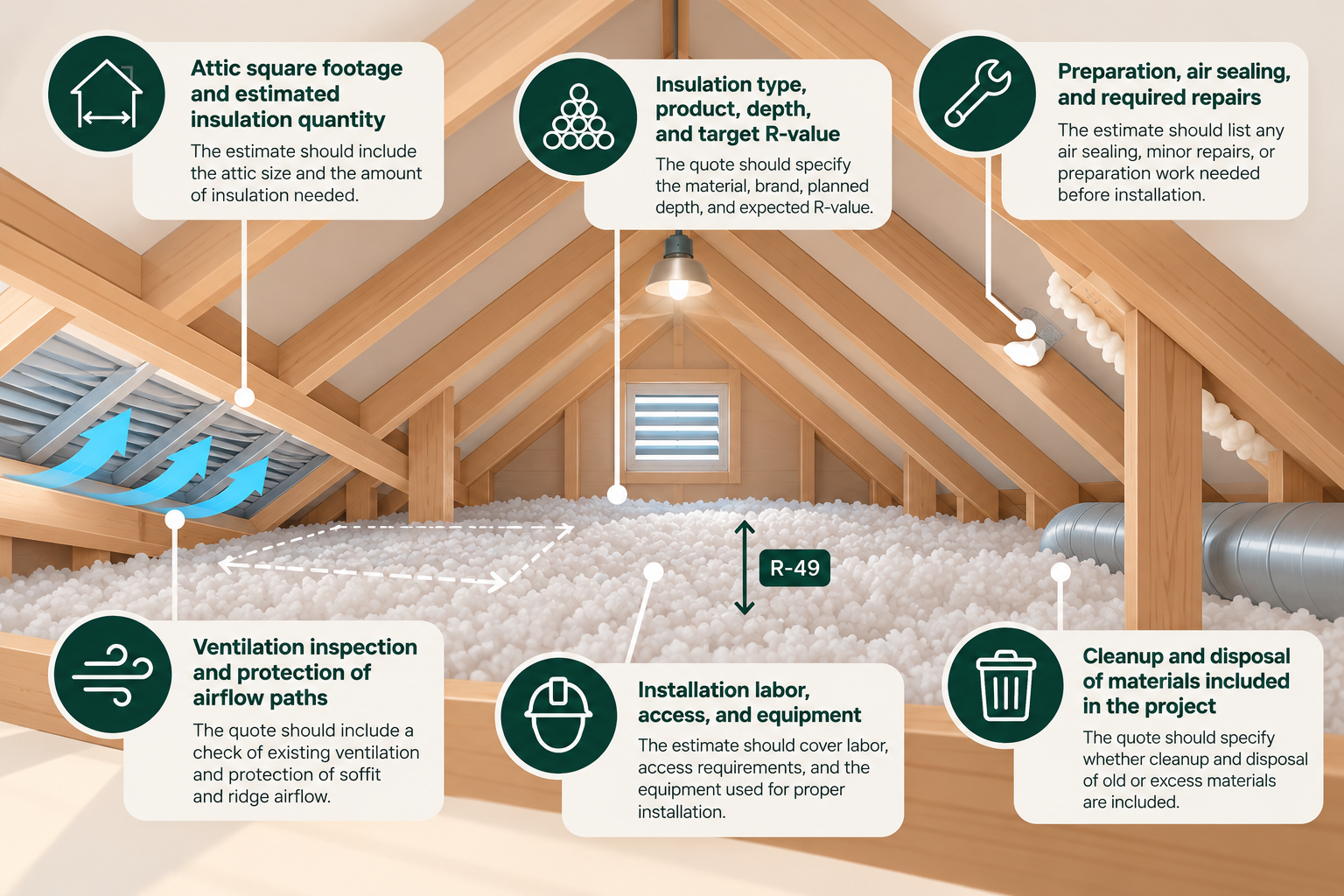
A complete estimate should normally address:
📏 Attic square footage and estimated insulation quantity
🧱 Insulation type, product, depth, and target R-value
🛠️ Preparation, air sealing, and required repairs
🌬️ Ventilation inspection and protection of airflow paths
👷 Installation labor, access, and equipment
🧹 Cleanup and disposal of materials included in the project
These details give a homeowner a much better basis for comparing estimates than the total price alone.
📐 Insulation Quantity and Target R-Value
The quantity of insulation should be calculated from the attic’s actual dimensions and the performance level specified in the estimate. A contractor should not simply state that a certain number of bags will be used without explaining what finished insulation depth or R-value that quantity is expected to produce.
R-value measures resistance to heat flow. The appropriate target depends on factors such as climate, building design, and the existing insulation system. The important point is that the quote should connect the amount of material being installed with the intended thermal performance.
For example, if an attic currently has a shallow layer of insulation, the estimate should explain whether the new material will be added on top or whether the existing material will be removed first. The finished depth should also be realistic for the product being used.
This is one reason I would be cautious about estimates that advertise only a low price per square foot. The same attic can require very different quantities of material depending on the desired R-value and existing conditions.
🏚️ Attic Preparation Should Be Listed Separately
Attic preparation is often overlooked when homeowners compare quotes. Yet preparation can have a direct effect on the performance of the insulation.
Before blow-in insulation is installed, the contractor may need to address penetrations around wiring, plumbing, recessed fixtures, attic hatches, ductwork, and other areas where conditioned air can escape. The estimate should make clear whether this air-sealing work is included or charged separately.
Preparation may also involve installing or repairing ventilation baffles. These components help preserve airflow from soffit vents toward the upper portions of the roof system. Insulation should not simply be blown into areas where it could block intended ventilation paths.
If the attic requires substantial preparation, a professional quote should identify those tasks rather than hiding them inside a vague “installation” charge.
🌬️ How Ventilation Checks Affect the Estimate
Attic ventilation deserves specific attention because insulation and ventilation perform different jobs. Insulation slows heat transfer, while ventilation helps manage moisture and heat within the attic assembly.
Before installation, the contractor should check whether existing soffit, ridge, gable, or other ventilation components are accessible and functioning as intended. The estimate should explain any work needed to protect those pathways during installation.
A thick layer of insulation is not automatically better if it obstructs ventilation. In particular, insulation should not be installed in a way that blocks soffit airflow.
A useful quote therefore identifies ventilation-related preparation and states whether repairs or improvements are included, excluded, or recommended as additional work.
🧰 Labor and Installation Details
Labor should be more specific than simply saying “blow-in installation.” The estimate should indicate what the installation includes and whether the contractor is responsible for moving existing insulation, protecting fixtures, setting up equipment, and distributing the material evenly.
The installation method also affects the final result. Blow-in material needs to be distributed consistently across the attic floor to achieve the specified coverage and performance. Thin areas or missed sections can reduce the effectiveness of the insulation system.
For homeowners comparing a blow-in insulation installation quote, the important question is not simply how quickly the material can be installed. It is whether the scope describes the finished result clearly enough to verify that the work was completed as quoted.
💰 What Can Change the Cost of an Attic Insulation Estimate
The final price depends on several variables, so a contractor should be able to explain the major cost drivers.
| Estimate Item | Why It Affects Cost |
|---|---|
| Attic size | More square footage requires more material and labor |
| Existing insulation | Removal or redistribution adds preparation work |
| Target R-value | Higher performance generally requires more material |
| Insulation type | Material costs vary by product |
| Air sealing | Additional sealing increases preparation time |
| Ventilation work | Baffles or repairs may require extra labor |
| Attic access | Difficult access can increase installation time |
| Cleanup | Removal and disposal may add to the project scope |
A quote should distinguish between work that is included in the base price and optional recommendations. This prevents an estimate from appearing inexpensive initially and becoming substantially more expensive once the project begins.
For homeowners reviewing recent installation examples, latest attic insulation projects can also provide useful visual context for the type of work involved.
⚠️ Red Flags in a Blow-In Attic Insulation Quote
Not every inexpensive quote is necessarily a problem, but an estimate that contains very little technical information is difficult to evaluate.
Be cautious when the document does not specify the insulation material, target R-value, estimated quantity, or whether existing insulation will be removed. A price without a defined scope gives the homeowner little protection if expectations differ once the work starts.
Another concern is a quote that treats every attic as identical. Attic conditions vary considerably. Access, existing insulation, ventilation, wiring, moisture issues, and the condition of the attic floor can all affect the appropriate scope.
A good estimate should reflect the actual attic rather than simply applying a generic price to the home’s square footage.
📋 Questions to Ask Before Accepting the Estimate
Before approving the project, I recommend asking the contractor to clarify the scope in writing. This is especially important when comparing several quotes that use different terminology.
❓ What insulation product and target R-value are included?
❓ Is existing insulation staying, being redistributed, or removed?
❓ Is air sealing included in the quoted price?
❓ Are ventilation baffles and attic access preparation included?
❓ Does the price include cleanup and disposal?
The answers make it much easier to compare estimates on an equivalent basis. A slightly higher quote may include substantially more preparation and finishing work than a lower quote.
🏡 Why the Lowest Insulation Estimate Is Not Always Comparable
The cheapest number is only useful when the scopes of work are equivalent. If one estimate includes insulation removal, air sealing, ventilation preparation, installation, and cleanup while another covers only the installation of new material, the two prices are not directly comparable.
For a family home, the attic should be treated as part of the building envelope rather than simply an empty space to fill with insulation. The quality of preparation and installation can influence comfort, energy use, moisture management, and the long-term condition of the attic.
A detailed attic insulation consultation can help clarify which parts of the work are actually necessary before the project begins. The purpose of the estimate should be to establish a defined scope, not simply provide a number.
The most useful blow-in attic insulation estimate answers three basic questions: what will be installed, how will the attic be prepared, and what exactly is included in the final price. When those details are documented, homeowners can compare contractors more accurately and avoid unexpected charges.