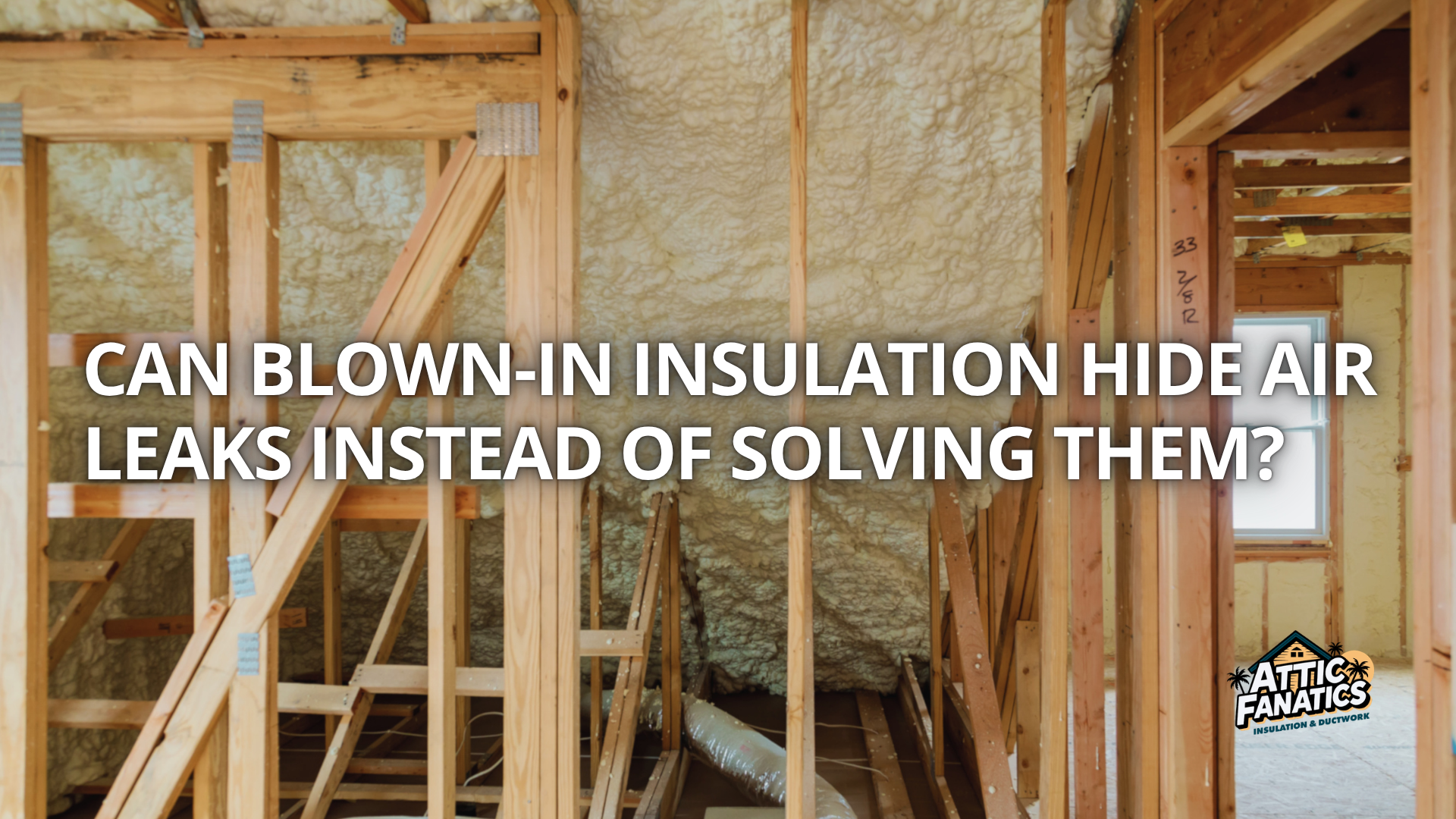
Can Blown-In Insulation Hide Air Leaks Instead of Fixing Them?
Many homeowners choose blown-in insulation to improve comfort and lower energy bills. While it is one of the most effective ways to increase attic insulation, it is important to understand what insulation can and cannot do.
Blown-in insulation helps slow heat transfer, but it does not seal gaps where air escapes. If attic air leaks are left untreated before installation, new insulation may simply cover them instead of solving the problem. That is why a proper attic evaluation should always include air sealing before adding new insulation.
Should air leaks be sealed before adding insulation?
Yes. Air leaks should be identified and sealed before installing blown-in insulation. Insulation and air sealing work together, but they perform different jobs. Insulation slows the movement of heat between your attic and living space, while air sealing blocks unwanted airflow through openings in your home’s ceiling.
Without proper air sealing, cool indoor air can continue escaping into the attic even after fresh insulation has been installed. This forces your cooling system to run longer, reducing energy efficiency and increasing monthly utility costs. Addressing air leaks first helps homeowners get the full benefit of their insulation investment.
Can blown-in insulation cover air leaks?
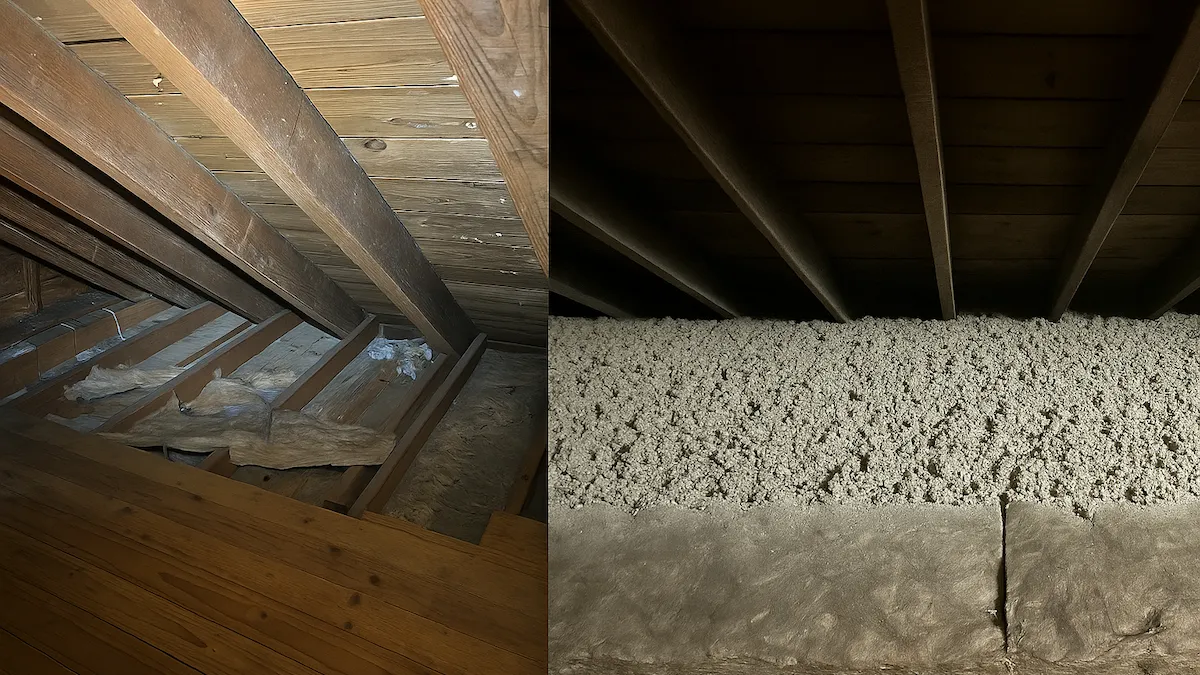
Blown-in insulation can physically cover small gaps, but covering them is not the same as sealing them. Loose-fill insulation settles around wiring, pipes, and other attic components, providing excellent insulation coverage without creating an airtight barrier. As a result, cooled indoor air can still escape through hidden openings beneath the insulation while outside air continues to enter. Once those gaps are buried under new insulation, they can also become more difficult to identify during future inspections. That’s why experienced insulation professionals inspect and seal accessible air leaks before installing new insulation, helping homeowners get the best possible performance from their attic upgrade.
Common attic air sealing before insulation
Several areas in an attic are common sources of air leakage. Many of these openings are small enough to go unnoticed but large enough to affect your home’s energy performance.
During an attic inspection, professionals often check:
 Ceiling penetrations around electrical wiring
 Plumbing pipe openings
 Recessed lighting fixtures
 Bathroom and kitchen exhaust fan housings
 Attic access doors and pull-down stairs
 HVAC duct penetrations
 Gaps around framing joints
Even a collection of small openings can allow a surprising amount of conditioned air to escape throughout the year.
Why insulation and air sealing work together
Many homeowners assume insulation alone creates an airtight attic, but that is not how insulation is designed to function.
Feature | Air Sealing | Blown-In Insulation |
Blocks airflow | Yes | No |
Reduces heat transfer | Limited | Yes |
Improves energy efficiency | Yes | Yes |
Prevents conditioned air from escaping | Yes | Yes |
Works best when combined | Yes | Yes |
When both upgrades are completed together, homeowners often experience better indoor temperatures, reduced HVAC strain, and improved overall comfort.
Preparing the attic before insulation
A quality blow-in insulation project begins long before the new material is installed. Before adding insulation, the attic should be inspected for damaged insulation, moisture concerns, and accessible air leaks. If existing insulation is contaminated, compressed, or no longer performing effectively, removing it first may be the best solution.
Professional insulation removal creates a clean surface for inspections, air sealing, and proper installation of new insulation. It also allows hidden issues to be addressed before they become buried beneath fresh material.
Why professional attic preparation matters
Skipping air sealing may reduce the overall effectiveness of a new insulation system. Although your attic may appear well insulated, cooled indoor air can still escape through hidden openings beneath the insulation layer, making your HVAC system work harder to maintain comfortable temperatures. By inspecting the attic first, professionals can identify problem areas, improve insulation performance, and help homeowners achieve better long-term energy efficiency.
At Attic Fanatics, every attic is carefully evaluated before new insulation is installed. The team checks for air leaks, insulation deficiencies, and other conditions that may affect performance, helping homeowners get the most value from their attic upgrades.
If you’re planning to add blown-in insulation, schedule an attic evaluation before installation. Contact Attic Fanatics to learn how proper attic preparation can improve comfort and reduce energy loss: