How Much Blow-In Insulation Does a Florida Attic Need?
The right amount of attic insulation depends on more than how many inches cover the attic floor. The material you choose, the level of thermal resistance you need, and how the insulation is installed all affect the final result. For homeowners in Hollywood, FL, the goal is to get consistent coverage that suits the home and its cooling needs, rather than relying on a single depth measurement.
 What Determines How Much Insulation You Need?
When asking, “how much blown-in insulation do I need,” start with the attic’s existing condition and the level of insulation required. An attic with little or no insulation may need a different approach from one that already has a reasonable layer but has developed thin spots or settled areas. The type of material matters, too. Cellulose and fiberglass are both used for loose-fill attic insulation, but their thermal properties and installation requirements differ. The attic’s square footage, existing insulation, framing, air leaks, and any moisture concerns should also be considered before deciding how much material to add. A proper assessment helps determine whether you need a new installation, additional coverage, or improvements to the existing system.

 R-Value vs. Insulation Depth
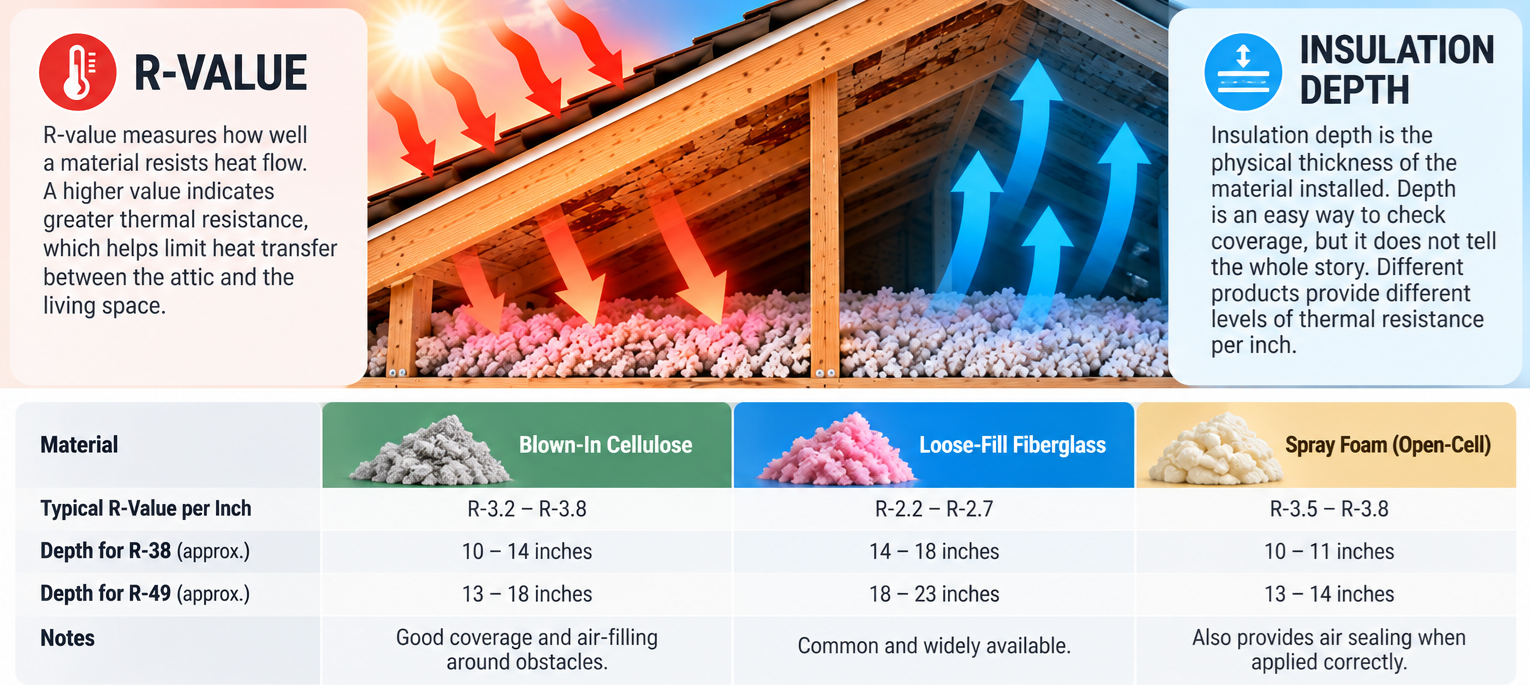
R-value measures how well a material resists heat flow. A higher value generally indicates greater thermal resistance, which helps limit heat transfer between the attic and the living space. Insulation depth is the physical thickness of the material installed across the attic floor. Although depth is an easy way to check coverage, it does not tell the whole story. Different products provide different levels of thermal resistance per inch, so the same depth of cellulose and fiberglass may not deliver the same result. When comparing R-value and blown-in insulation depth, look at the product’s stated performance rather than assuming every material works the same way. The manufacturer’s coverage chart can show the required depth and material quantity for a particular performance target.
 What Type of Blow-In Insulation Is Right for Your Attic?
Cellulose is made primarily from processed paper fibers, while fiberglass consists of fine glass fibers. Both can be installed as loose-fill insulation, but each product has its own specifications for coverage, density, and settling. The right choice depends on the attic’s conditions and the product’s intended use. For either material, the installer should follow the manufacturer’s instructions to achieve the intended thermal performance.
In a Florida attic, insulation must also be considered alongside moisture management. Roof leaks, condensation, and uncontrolled air movement can create problems that additional insulation alone will not fix. Before installation, any existing moisture issues should be identified and addressed.
 Why Installation Density and Settling Matter
Loose-fill insulation needs to be installed at the appropriate density to deliver its intended performance. Using too little material or spreading it unevenly can leave areas with less thermal protection than planned. Settling is another consideration. Some products become thinner over time, which is why manufacturers may provide both an initial installation depth and a settled depth. These measurements are not necessarily interchangeable.

When checking insulation coverage, use the product’s installation chart to understand the expected depth after settling. This helps avoid judging the installation by its appearance alone. The material should cover the attic floor reasonably evenly, with attention to corners and areas around framing, while keeping required ventilation paths and clearances unobstructed.
 How Florida Conditions Affect Attic Insulation Needs
Hollywood’s hot, humid climate puts a long cooling season on the calendar. Adequate attic insulation can help slow heat transfer into the living space, but the right amount depends on the home’s construction and existing conditions. Air leakage also matters. Gaps around ceiling penetrations, attic hatches, and other openings can allow conditioned air to escape or humid air to enter. Sealing suitable gaps before adding insulation can help the attic system perform as intended.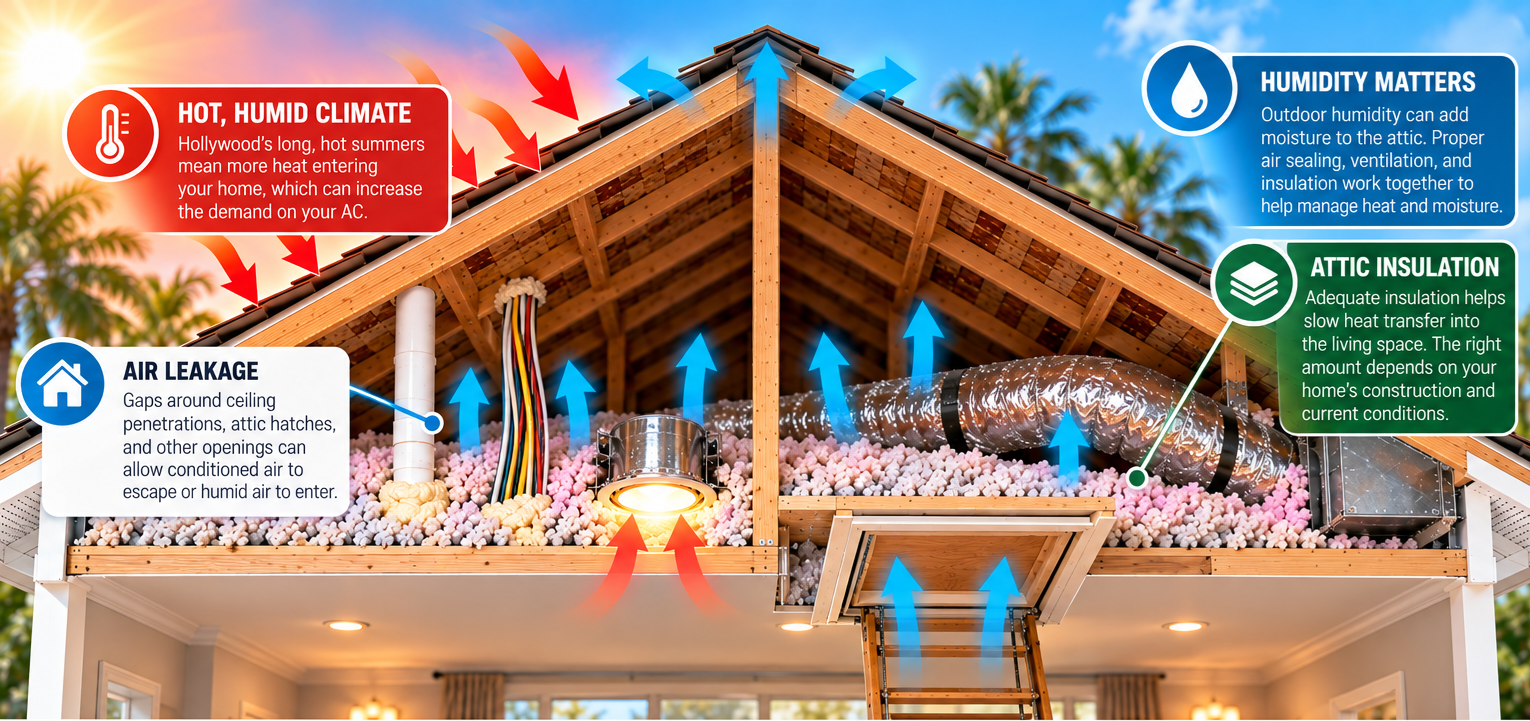
Ventilation is a separate part of the picture. In a vented attic, insulation should not block soffit vents or other designed airflow paths. If moisture is present, the cause should be addressed rather than covered with new material. Florida building requirements may also influence the insulation level needed for a particular project. Requirements can depend on the type of construction, the scope of work, and the applicable code provisions. Confirm current local requirements and product guidance before settling on a target.
 How to Check Whether Your Attic Has Enough Insulation
Start by looking at the existing material. Uneven coverage, exposed sections of the attic floor, compressed insulation, or noticeably thinner areas may indicate that the attic needs further assessment. However, appearance alone cannot confirm the insulation’s actual performance. An attic inspection can help establish the existing coverage and identify issues that need attention before adding more material. The installer can compare the product already in place with the manufacturer’s specifications, calculate the amount needed for the target performance level, and check for air leaks or moisture concerns. This approach is more reliable than choosing an arbitrary number of inches and applying it to every home.
Get the Amount Right for Your Attic
The right insulation level is based on the home’s needs, the material being installed, and the intended thermal performance—not just a fixed number of inches. Checking existing coverage, following the manufacturer’s installation guidance, and addressing air leaks or moisture concerns can help you make a better decision about attic insulation in Hollywood, FL.