Can Better Attic Insulation Give Your AC a Break?
When Florida heat builds up in your attic, your air conditioner has to keep your living space comfortable despite the heat outside. If the attic has too little insulation, more heat can pass into the rooms below, adding to the home’s cooling demand. For homeowners in Hollywood, FL, improving attic insulation can help limit that heat transfer and give the AC less work to do during hot weather.
 How Attic Heat Affects Your Air Conditioner
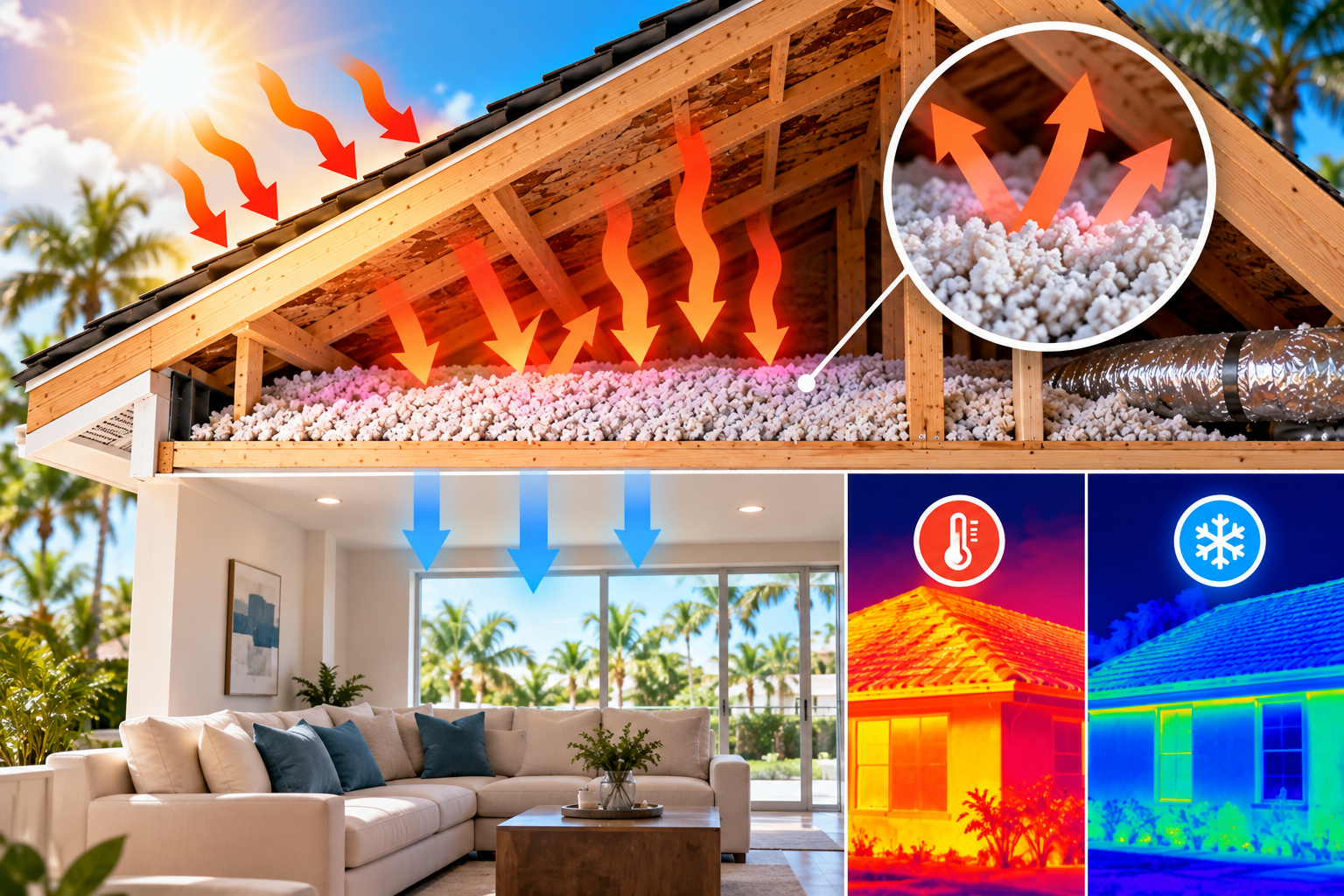
Your roof absorbs heat from the sun throughout the day. Some of that heat reaches the attic, where temperatures can rise well above the outdoor air temperature. If the attic floor is poorly insulated, heat can move into the living space below, making rooms harder to keep cool. This is where attic insulation and AC efficiency connect. Insulation slows heat transfer between the attic and your home’s conditioned areas. When less heat enters the living space, the air conditioning system may not need to remove as much heat to maintain the thermostat setting.
In South Florida, where air conditioning is often used for much of the year, this difference can matter. However, the result depends on the home’s layout, existing insulation, air leakage, windows, and HVAC system. Insulation helps manage heat gain; it does not eliminate the effects of Florida heat.
 Can Insulation Reduce AC Usage?
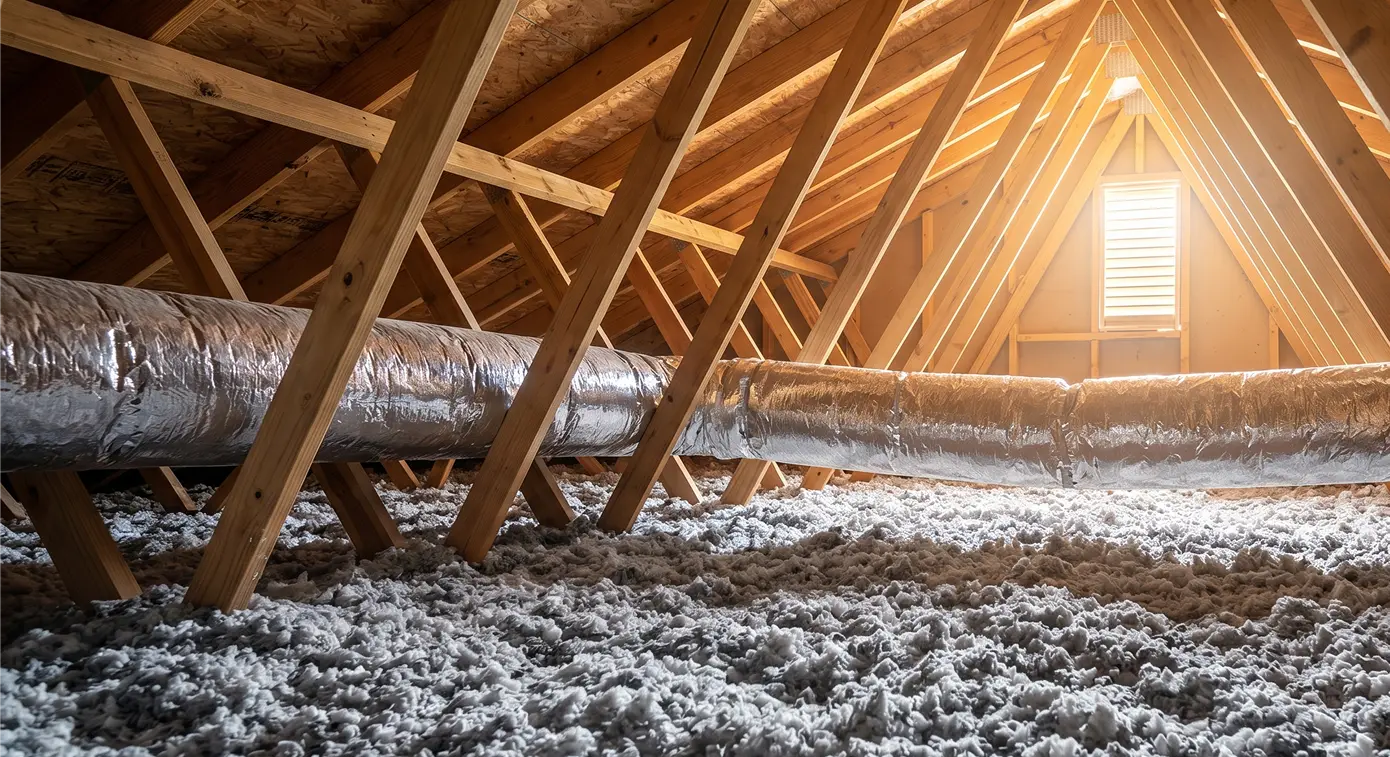
It can, especially when the existing attic insulation is thin, uneven, or missing in certain areas. With less heat entering through the ceiling, the air conditioner may run for shorter periods or cycle less frequently under similar weather conditions. Blow-in insulation is one option for improving attic coverage. It consists of loose insulation material distributed across the attic floor, helping fill around joists and reach many irregular spaces. The material may be cellulose or fiberglass, depending on the product selected.
If your home has inadequate insulation, adding the right amount can reduce heat transfer into the rooms below. That may help reduce the cooling load, which is the amount of heat your AC must remove to keep the house comfortable. Still, more insulation is not automatically better in every situation. The existing material, attic conditions, air leakage, and recommended insulation level should be assessed before adding more.
 Why R-Value Matters in Hot Weather
Insulation slows heat transfer, helping keep outdoor heat from entering your living space. Its thermal resistance depends on the material and how much is installed. In Hollywood, FL, choosing the right insulation level can help limit heat gain during long, hot summers. For loose-fill insulation, coverage should be even, without compressed or blocked areas that could affect performance. An attic inspection can help determine whether your existing insulation is sufficient or needs an upgrade.
 How Air Leaks Can Undermine Insulation
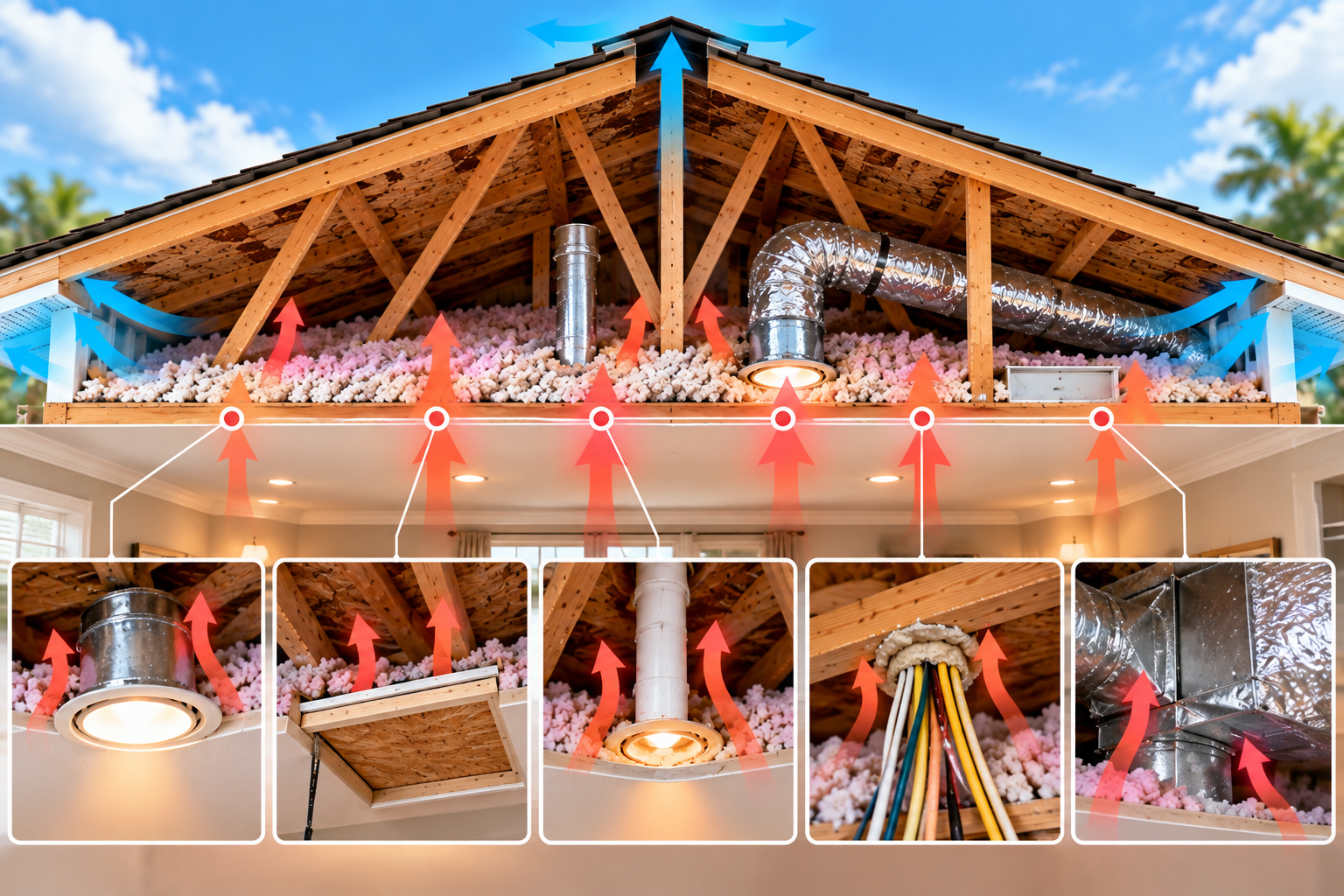
Even good insulation cannot do its job as effectively when conditioned air escapes through gaps around ceiling penetrations, attic access points, plumbing openings, or wiring. These openings can allow air to move between the living space and attic, affecting comfort and increasing the demand placed on the AC. Air sealing addresses these unintended gaps. It works alongside insulation by limiting unwanted air movement rather than simply slowing heat transfer. In a home with significant leakage, adding insulation without addressing accessible air leaks may leave part of the problem unresolved. The work should be done carefully, following appropriate safety and building requirements. Some openings need specific clearances, and intentional attic ventilation paths should not be blocked.
 Don’t Overlook Your HVAC System and Ductwork
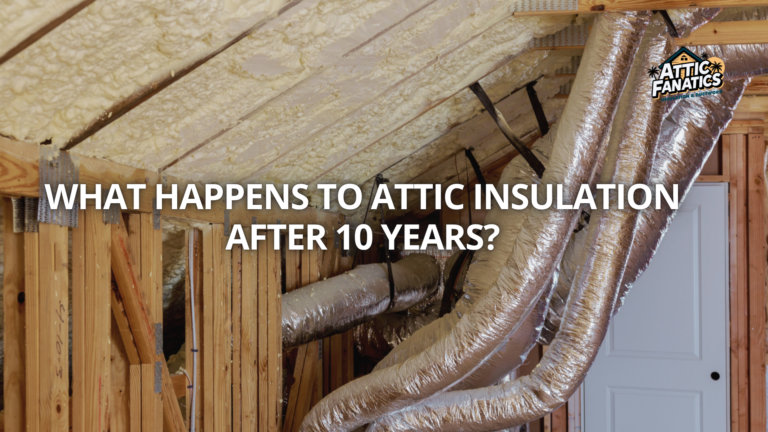
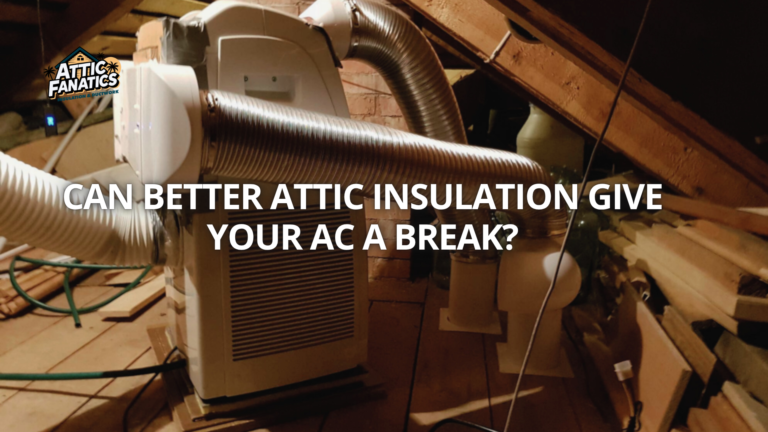
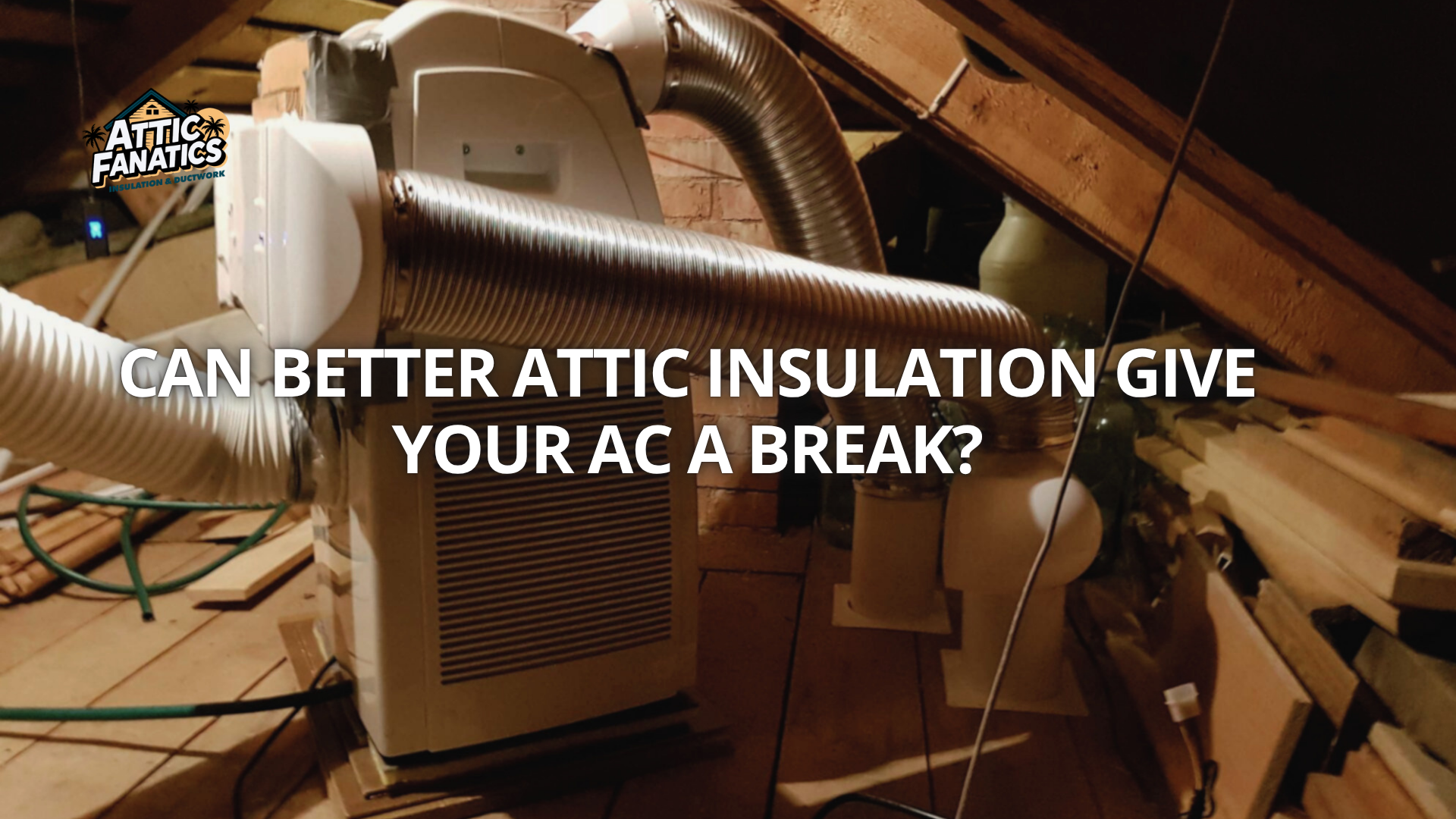
Attic insulation is only one part of home efficiency. If ductwork runs through a hot attic, leaks or damaged insulation around the ducts can affect how much cooled air reaches your rooms. Cold air may escape before reaching its destination, while the ducts themselves can gain heat from the surrounding attic. Checking duct connections, duct insulation, and the condition of the HVAC system can help identify other sources of inefficiency. Dirty filters, airflow restrictions, incorrect system sizing, or maintenance issues may also affect performance. Attic temperature is another consideration, but lowering it is not the same as improving the entire home’s efficiency. In a properly designed system, attic insulation, air sealing, suitable ventilation, and well-maintained HVAC equipment work together to manage heat and deliver cooled air where it is needed.
 Can Better Attic Insulation Lower Cooling Costs?
Improved insulation can contribute to lower utility bills when it reduces the amount of cooling your home needs. However, the amount you save varies. Homes with very little existing insulation may benefit differently from homes that already have adequate coverage. Weather, thermostat settings, occupancy, window performance, air leakage, duct condition, and AC efficiency all influence energy use. For this reason, it would be misleading to promise a specific reduction in cooling costs without evaluating the property. If your AC seems to run constantly during hot afternoons, check whether the attic insulation is adequate and whether other issues are adding to the cooling load. Comparing energy use before and after improvements under similar weather conditions can give you a more useful picture than relying on a general savings estimate.

 Give Your AC a Helping Hand
Better attic insulation can help keep Florida heat from moving into your living space, reducing the cooling demand your air conditioner must handle. Before adding more material, check the existing coverage, air leaks, and ductwork. Addressing these issues together can help improve home comfort and support more efficient AC operation.