How Much Does Attic Insulation Cost in South Florida?
The attic insulation cost for a home depends on more than its square footage. The insulation type, existing insulation, required R-value, and condition of the attic can all affect the final price. Some homes only need additional insulation, while others may require removal, air sealing, or other preparation first. That’s why the
What Determines Attic Insulation Cost?
The biggest mistake homeowners can make is comparing insulation quotes based only on the final dollar amount. Two homes can have similar square footage but completely different insulation requirements.
Cost factor | Why it matters |
Attic size | A larger attic requires more material and labor. |
Insulation type | Blown-in, fiberglass, and spray foam have different material and installation requirements. |
R-value | A higher target R-value may require more material or a different installation approach. |
Insulation depth | The existing depth determines how much additional insulation may be needed. |
Existing insulation | Old or damaged material may need to be removed before installation. |
Attic accessibility | Tight or difficult-to-reach spaces can increase labor requirements. |
Air sealing | Gaps and penetrations may need to be sealed before insulation is added. |
Ventilation | Poor attic ventilation can affect the overall scope of work. |
This is why attic insulation cost South Florida estimates can vary significantly from one property to another.
How Attic Size Changes the Price
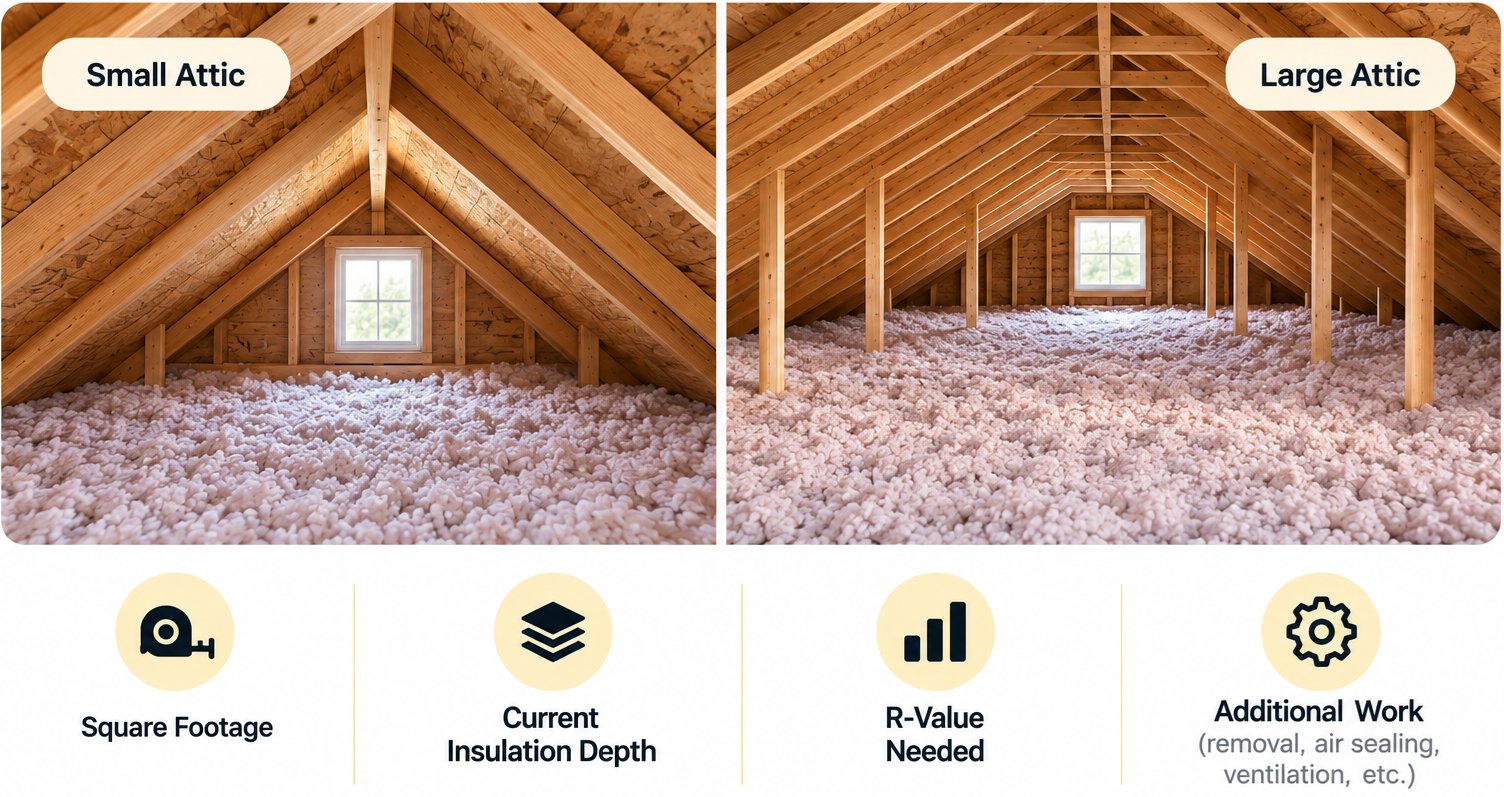
Most insulation projects are priced partly according to the amount of space being treated. A small attic requires less material than a large one, but square footage isn’t the only measurement that matters. Contractors also need to look at the current insulation depth, the condition of the existing material, and the level of insulation needed to reach the desired R-value. For example, an attic with several inches of usable insulation may only require additional material. Another attic with very little insulation may need a much larger installation. This is where insulation cost per square foot becomes useful for comparing estimates, but it should not be treated as a complete price by itself. A quote based on square footage may not include removal, air sealing, ventilation work, or other preparation.
Blown-In Insulation vs. Fiberglass vs. Spray Foam
The type of attic insulation you choose can have a major effect on the overall project cost.
Blown-In Insulation
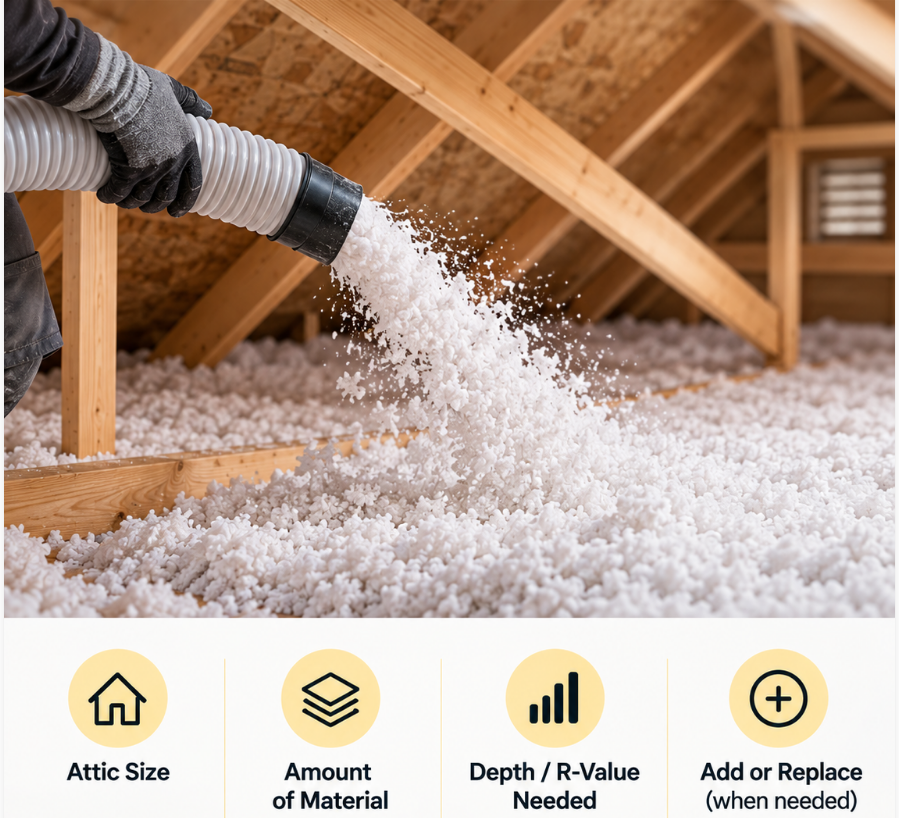
Blown-in insulation is commonly installed using a machine that distributes loose insulation across the attic floor. Its pricing is generally based on the size of the area, the amount of material required, and the depth needed to achieve the desired R-value. If an attic already has insulation, the installer may be able to add more rather than remove everything first. However, damaged, contaminated, or otherwise unsuitable insulation may change the scope.
Fiberglass Insulation
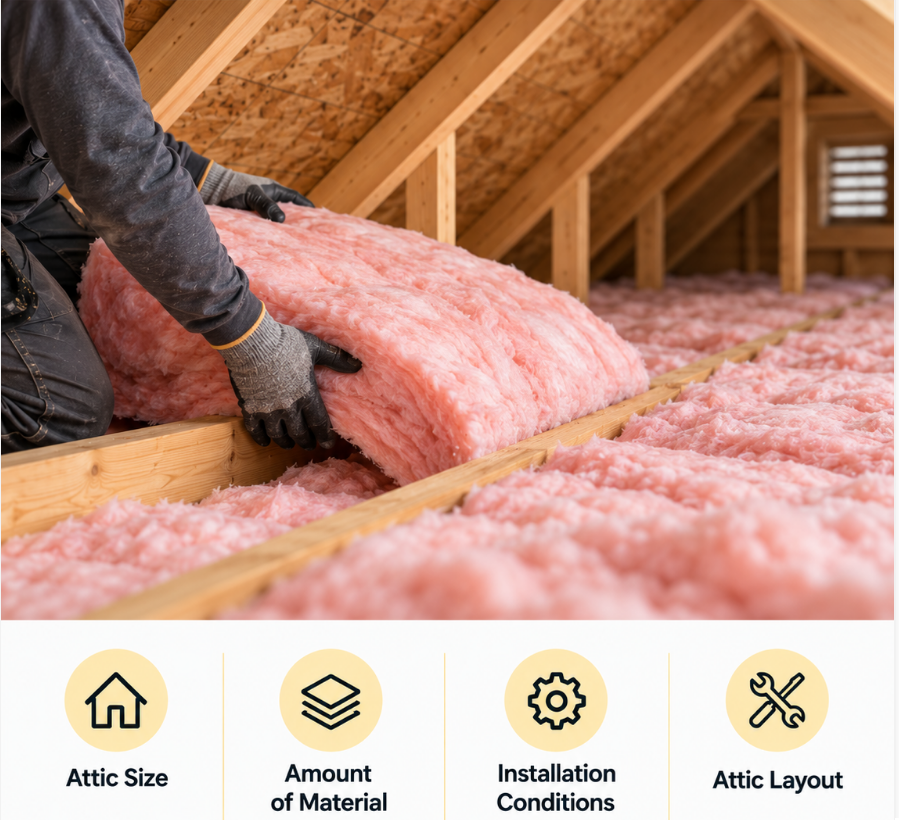
Fiberglass insulation is available in forms such as batts and rolls and is another option for attic applications. The cost depends on the amount required, the attic’s dimensions, installation conditions, and whether additional preparation is necessary. The shape of the attic can also affect labor. A straightforward open space is different from an attic filled with obstructions, wiring, ductwork, or hard-to-reach areas.
Spray Foam Insulation
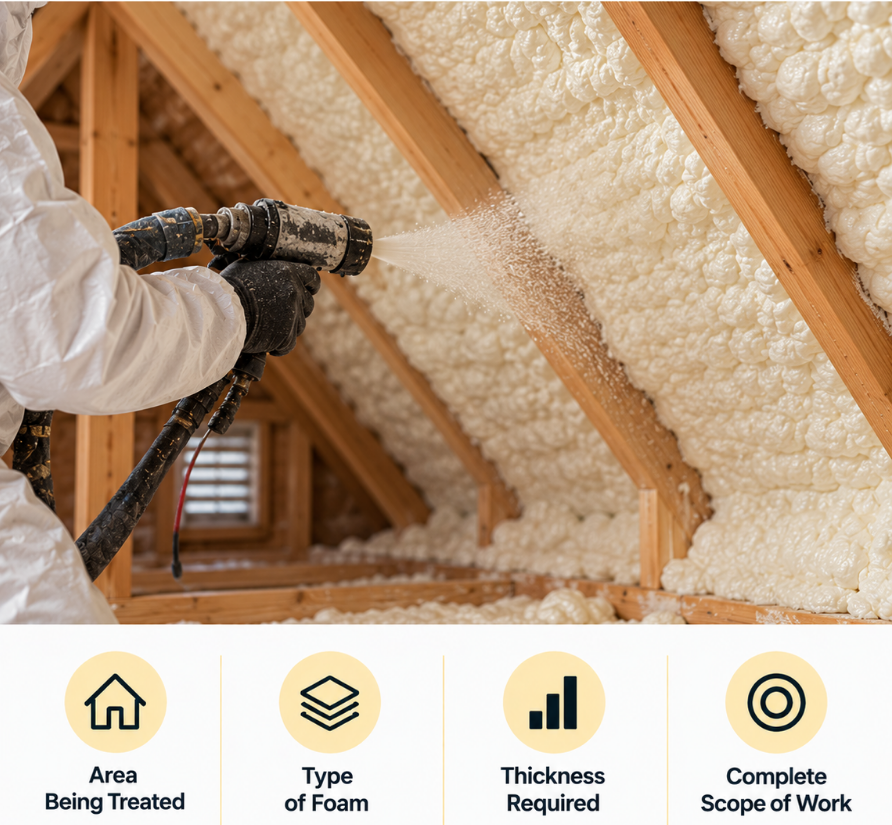
Spray foam insulation is installed differently from loose-fill or batt insulation and is generally priced according to the area being treated, the type of foam, and the thickness required. Because the installation process and material requirements differ, spray foam should not be compared with blown-in or fiberglass based only on a basic price per square foot. The right comparison is the complete scope of work and what that installation is intended to accomplish.
R-Value and Insulation Depth Matter
When comparing insulation quotes, don’t look at the amount of material alone. The R-value tells you how well the insulation is designed to resist heat flow, so it’s an important part of the proposal. The amount needed will depend on what’s already in the attic and the level the project is designed to reach. The insulation depth is one detail that can help explain how much material will be added. A good quote should clearly state the insulation type, the amount being installed, and the target R-value. That gives you something meaningful to compare instead of simply looking at the final price.
 What About Existing Insulation?
Existing insulation can either reduce or increase the work involved. If the current material is in usable condition, adding new insulation may be possible. But insulation replacement may be necessary when existing material is damaged, heavily deteriorated, contaminated, or otherwise unsuitable for the planned installation. Removing old insulation adds labor and disposal requirements, which can change the final cost. This is one reason an attic inspection is useful before accepting a quote. You don’t want to compare one contractor’s price for adding insulation with another contractor’s price that includes removal and preparation.
Air Sealing and Attic Access Can Change the Scope
Insulation is only one part of an attic’s condition. Before new insulation is installed, an installer may identify openings around wiring, pipes, fixtures, ductwork, or other areas where unwanted air movement occurs. Air sealing may therefore become part of the project. Attic accessibility can also affect labor. A wide, open attic is generally easier to work in than a cramped space with limited entry points and multiple obstacles. These details can make a meaningful difference in insulation installation time and cost.
Don’t Ignore Attic Ventilation
South Florida homes deal with substantial heat throughout much of the year, which makes the attic environment an important part of the home’s overall performance. Ventilation should be considered alongside insulation rather than treated as an unrelated issue. If an attic has ventilation concerns, those conditions may need to be addressed as part of the work. Adding insulation without considering the condition of the attic as a whole may not address every factor contributing to heat buildup.
Does Attic Insulation Improve Energy Efficiency?
One reason homeowners consider insulation is energy efficiency. Attic insulation can help reduce heat transfer between the attic and the living space below. Depending on the home’s existing insulation, HVAC system, air leakage, and other conditions, improving the attic envelope may help maintain more consistent indoor temperatures. However, insulation isn’t a guaranteed solution for every comfort or energy problem. If the attic already has adequate insulation, another issue may be contributing to high cooling demand. That’s why looking at the entire attic before deciding what work is needed is important.
Compare the Complete Scope, Not Just the Lowest Quote
When reviewing insulation proposals, don’t automatically choose the lowest number. Instead, compare what you’re actually getting for that price.
Ask:
- What type of insulation is being installed?
- How much insulation will be added?
- What R-value is the work designed to achieve?
- What will happen to the existing insulation?
- Is insulation removal included?
- Is air sealing included?
- Are ventilation concerns being addressed?
- Does the price include labor and cleanup?
- Are there attic access issues that could affect the work?
A lower quote may appear cheaper simply because it covers fewer parts of the project. A slightly higher quote may include removal, preparation, air sealing, or a larger amount of material. The goal isn’t to find the cheapest insulation installation. It’s to understand what work your home actually needs and compare proposals on the same scope.
Why an Attic Inspection Comes First
An attic inspection gives you a clearer picture of what the project actually involves. It can reveal the condition and amount of existing insulation, areas with poor coverage, available access, air leaks, ventilation issues, and whether old material needs to be removed. It can also help determine which insulation approach makes sense for the space. For South Florida homes, these conditions can vary even between properties of similar size. Looking at the actual attic makes it easier to determine the work required and get a quote based on the property’s condition rather than a generic price range.
A More Useful Way to Think About Attic Insulation Cost
There’s no single price that applies to every home. The total depends on the size and condition of the attic, the type and amount of insulation needed, the existing insulation, and any preparation required before installation. An attic inspection can help identify what actually needs to be done. From there, you can compare quotes based on the full scope of work rather than simply choosing the lowest number.
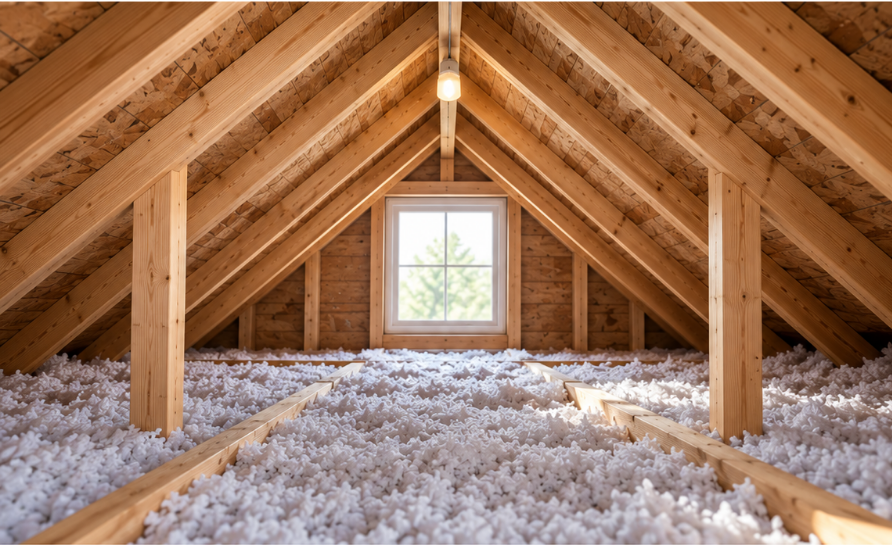
Attic Fanatics USA can help homeowners in assessing their attic conditions and determine what type of insulation work may be appropriate for the property. Rather than guessing from a generic price, an inspection gives you a clearer picture of the actual scope before you move forward.