Why Does My Home Smell Different When the AC Is Running?
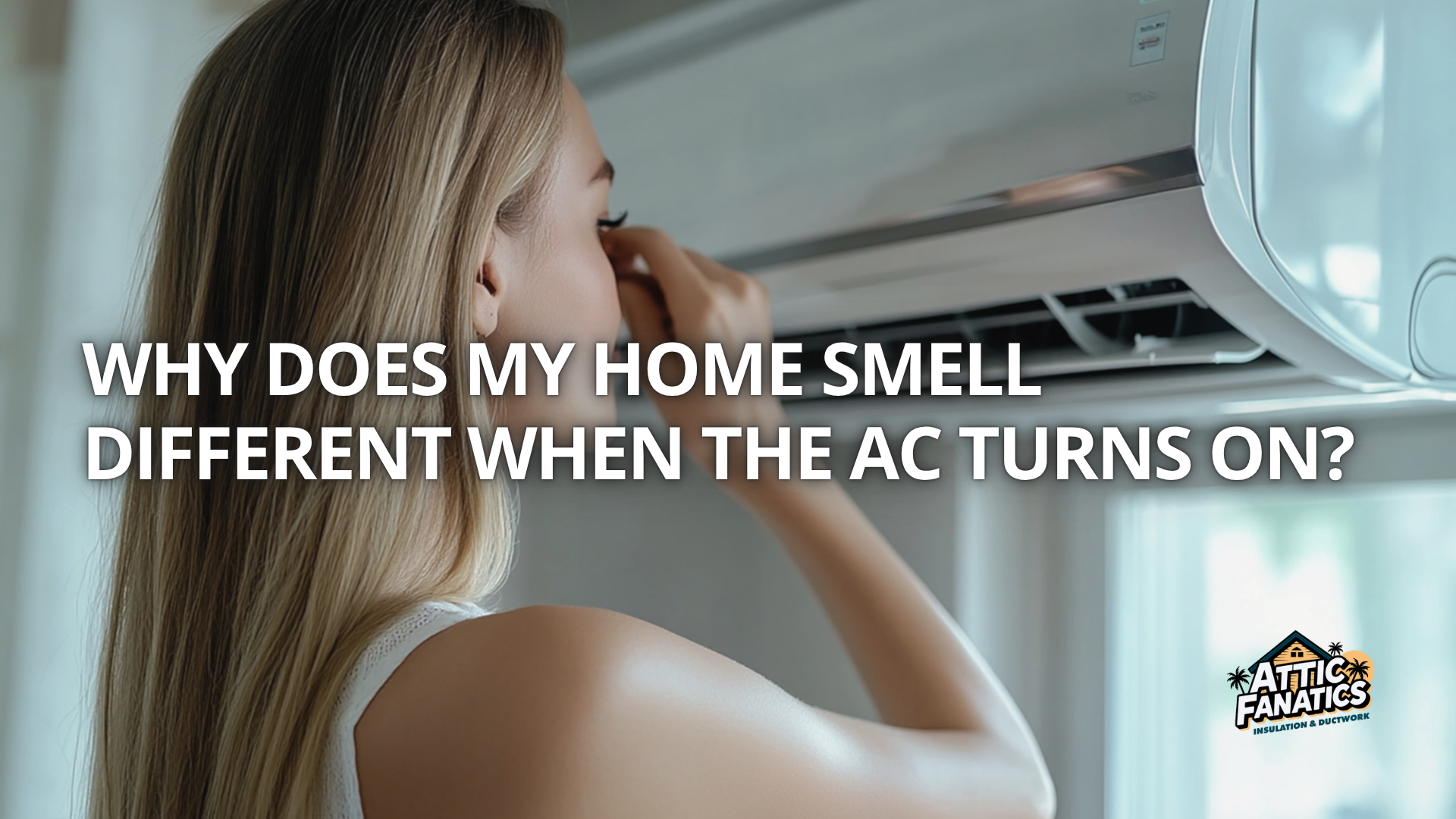
If your home smells normal one moment but develops a musty or unpleasant odor as soon as the air conditioner starts, the HVAC system may simply be revealing a problem that already exists. The system doesn’t create odors on its own; it circulates air throughout the home, which means it can also carry smells from hidden areas.
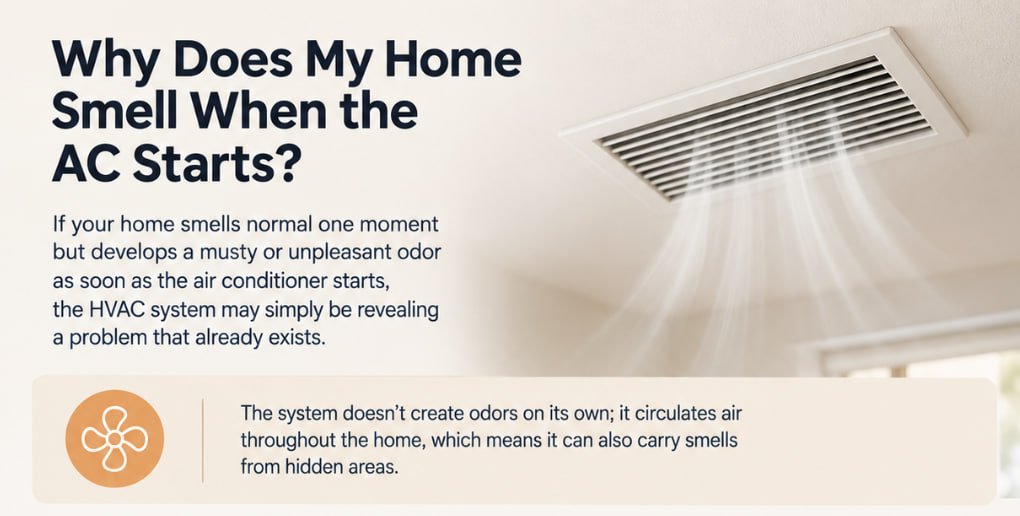
Several issues can contribute to this problem, including dirty ductwork, attic moisture, damaged insulation, or air leaks. Identifying the source is the first step toward resolving the odor instead of masking it with air fresheners.
Why Does My AC Make My House Smell?
Homeowners searching why does my AC make my house smell often assume the air conditioner itself is failing. While HVAC equipment can develop problems, odors frequently originate elsewhere and become noticeable only when air begins circulating. The attic, duct system, and surrounding insulation all interact with the home’s airflow. If one of these areas contains moisture, contamination, or debris, the smell may spread each time the system operates.
Common Sources of AC-Related Odors
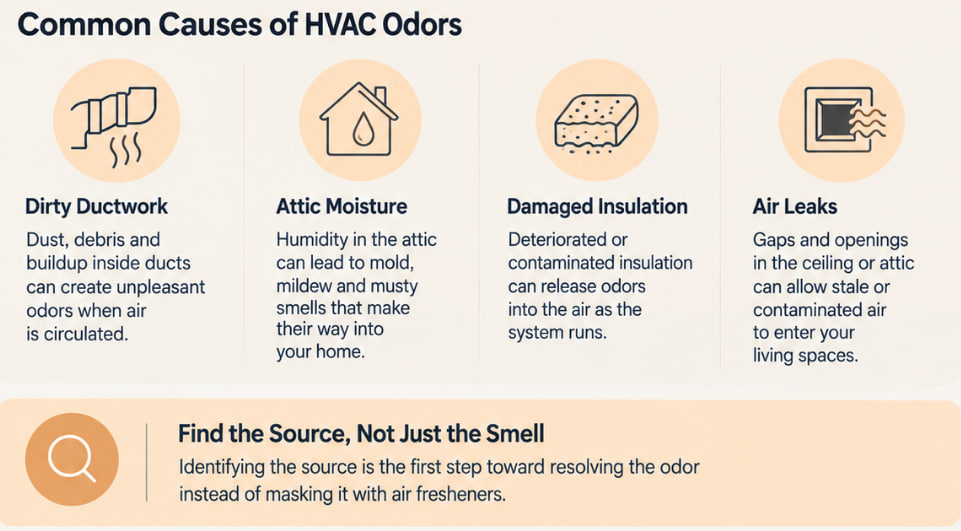
- Dirty HVAC Ducts – Over time, dust, debris, and other contaminants can accumulate inside HVAC ducts. Whenever the system starts, these particles may circulate throughout the home along with any lingering odors. Routine inspections can determine whether the ductwork requires cleaning or whether the smell originates somewhere else.
- Attic Moisture – Moisture above the ceiling often develops slowly due to roof leaks, condensation, or poor ventilation. Damp conditions can create musty odors that become more noticeable once air begins moving through the home. Because moisture is not always visible from below, homeowners may not realize it exists until odors appear consistently.
- Insulation Damage – Older insulation may become contaminated by moisture, pests, or years of accumulated dust. Damaged materials can trap odors that remain hidden until airflow carries them into occupied rooms. When contamination is extensive, professional insulation removal may be recommended before installing new insulation.
How Attic Odors Reach Living Spaces
The attic is connected to the rest of the home through numerous small openings that are often overlooked during routine maintenance.
- Ceiling Gaps and Air Leaks – Tiny gaps around recessed lighting, plumbing penetrations, attic access panels, and electrical fixtures allow air to move between the attic and living areas. These pathways can carry odors, dust, and fine particles into the home whenever pressure changes occur.
- Duct Leakage – Small leaks in the ductwork can draw surrounding air into the ventilation system before it is distributed throughout the home. Homeowners researching attic odors through HVAC system problems often discover that air leakage and conditions above the ceiling are working together to spread unwanted smells.
How to Narrow Down the Source
Not every odor comes from the same place. Determining when and where the smell appears can help narrow the possible causes.
- ❄️ Odors only appear when the AC starts.
- 🌬️ The smell is stronger near ceiling vents.
- 💧 Musty odors become worse after humid weather.
- 🌫️ Dust accompanies the unusual smell.
- 🏠 The odor is concentrated in specific rooms.
These observations provide useful information during a professional inspection.
Possible Source | Common Signs |
Dirty HVAC ducts | Odors begin when airflow starts |
Attic moisture | Persistent musty smell, especially after humidity |
Damaged insulation | Stale odors combined with declining efficiency |
Ceiling air leaks | Smells strongest near vents or upper rooms |
Duct leakage | Uneven airflow along with recurring odors |
When to Schedule an Inspection
If you’re searching house smells when air conditioner turns on, the cause may involve the HVAC system, the attic, or both. Because these components work together, focusing on only one area may overlook the real source of the problem.
Attic Fanatics inspects insulation condition, moisture exposure, air leaks, and attic contamination that may contribute to odors circulating through the home. Their evaluations help determine whether attic-related conditions are affecting indoor comfort and identify the most appropriate solution. If recurring odors continue whenever the AC operates, scheduling a professional inspection can help identify hidden problems before they become more extensive.