Why Spray Foam Works Well in Humid Climates
Air Sealing Properties
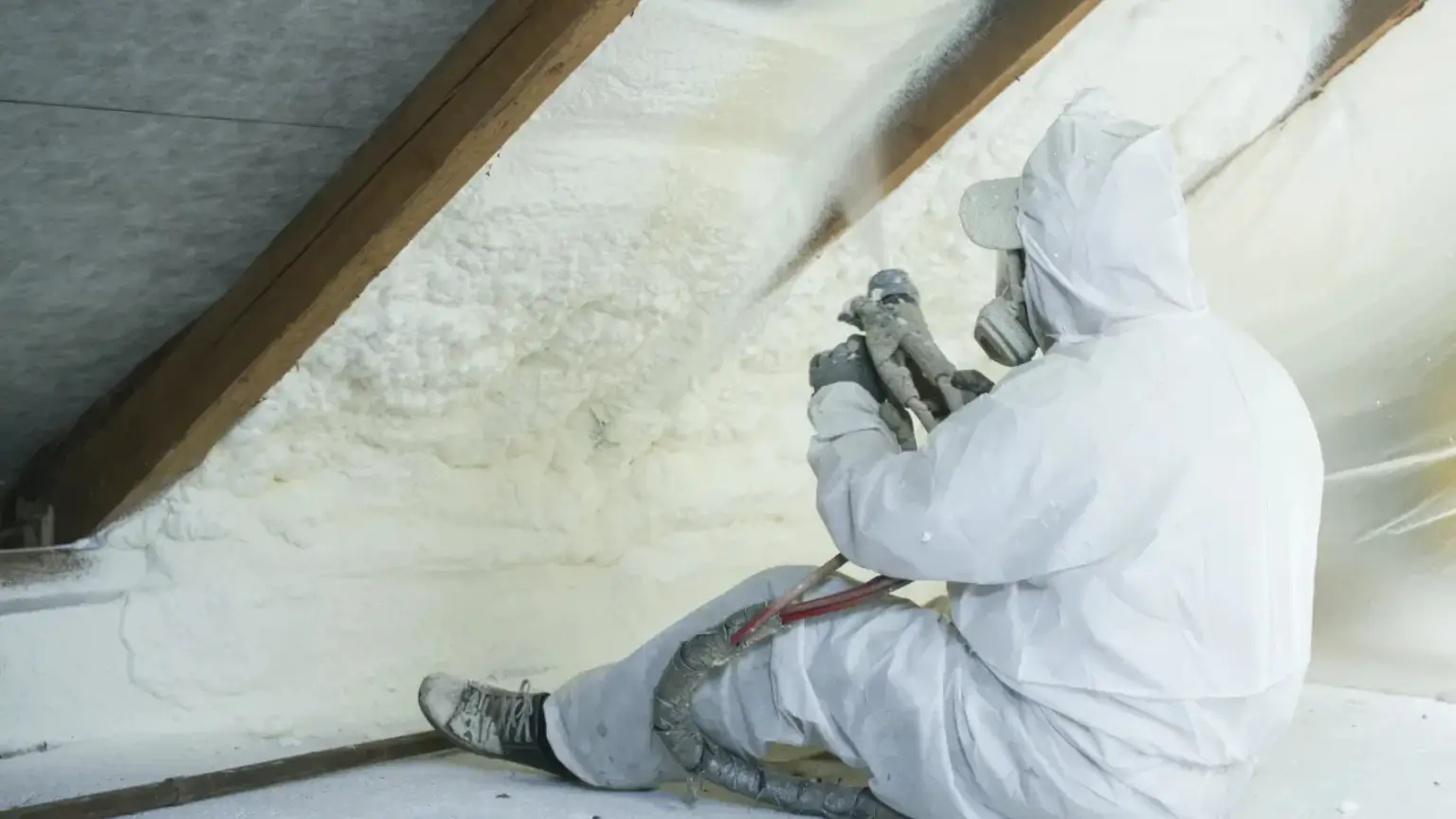
Spray foam offers an impermeable, air-tight seal that won’t allow warm, humid air into your home to mingle with cooler interior air – a leading source of condensation. The air sealing benefit is an ongoing source of constant, consistent indoor temperatures and a lessened load on HVAC systems.
Resistance to Moisture (particularly Closed-Cell)
Closed-cell spray foam is a water-resistant insulation that is used as an insulator and vapor barrier. Its thick composition resists water and will not absorb water, making it very well-suited for keeping water out of wet or coastal environments.
Prevention of Mold and Mildew
Since spray foam eliminates air leaks and moisture accumulation, it significantly lessens the possibility of mold and mildew development – a ubiquitous issue in tropical regions with perpetual humidity.
Open-Cell vs. Closed-Cell: Which to Use?
Key Differences and Moisture Performance
- Open-cell spray foam: More yielding, soft, and porous. While it provides outstanding sound insulation, it is not naturally dampness-resistant and might need supplemental vapor barriers in moist areas.
- Closed-cell spray foam: More firm, rigid, and resistant to Moisture. It also has a higher R-value per inch, making it more suitable for stopping heat transfer in warm weather conditions.
Optimum Applications for Humid Climates
- Open-cell: Most appropriate for interior walls and ceilings in air-conditioned areas of controlled humidity.
- Closed-cell: Most appropriate for exterior walls, crawl spaces, basement regions, and regions that are in direct exposure to humid air or possibility of moisture ingress.
Ideal Installation Methods for Wet Climates
Preparation of the Surface and Testing for Moisture Prior to Spraying
All surfaces must be free of moisture, and they must be cleaned and dried before the spray foam can be utilized. Moisture testing will guarantee that the substrate is at a safe humidity to prevent weak adhesion or trapped Moisture.
Providing Proper Ventilation and Drying Time
Proper ventilation while and after installation permits the foam to dry properly and minimizes VOC emissions. Under humid conditions, extended drying periods are sometimes required to obtain the ideal bond.
Utilization of Vapor Barriers Where Required
In some humid environments, a vapor barrier that is installed with spray foam provides an additional layer of protection from moisture migration, especially in crawl spaces, attics, and exterior walls.
Conforming to Local Building Codes and Climate Zone Regulations
There are requirements for code compliance in each zone of insulation, R-values, vapor barrier location, and methods of installation. Dealing with experienced professionals working within the climate zone that you’re operating within will ensure compliance and best performance.
Common Mistakes to Steer Clear Of
- Spraying over Wet Materials – Foaming over wet material is prone to holding Moisture, which can cause rot and mold.
- Skipping Pre-Installation Moisture Tests – You can capture too much water if you don’t test.
- Utilizing Open-Cell in Moist Areas Without Designing – Open-cell foam in areas with a high amount of water must be installed with a vapor barrier, so that you don’t have trouble.
Long-Term Performance & Maintenance
Spray Foam Durability
Closed-cell spray foam, if properly installed, will endure 30+ years without decreasing in efficiency, even in damp conditions.
Failure Signs to Look Out For
- Recurring musty smells
- Water damage or condensation is noticeable.
- Foam sections that are separating from surfaces
When to Check or Replace Insulation
It is advisable to check spray foam insulation every couple of years, particularly in tropical regions, to make sure it’s in good working order.
Conclusion
Spray foam humid climate insulation provides the ultimate level of protection against humidity, enhances energy efficiency, and attains a higher degree of indoor comfort. Closed-cell works exceptionally well for water resistance, whereas open-cell can be installed under controlled conditions. Still, special installation procedures, heat and Moisture testing, and planning for the specific climate are required. Attic Fanatics is bringing decades of expertise with moisture-proof insulation to coastal and humid climates, so that your insulation will last longer and be humidity-protected. Whether constructing a new home or retrofitting a current dwelling, call Attic Fanatics today for professional spray foam insulation service tailored to your area. Call now to schedule a complimentary consultation and begin safeguarding your home against moisture damage while maximizing energy efficiency.