Batt Insulation and Sound Control 🔇🏠
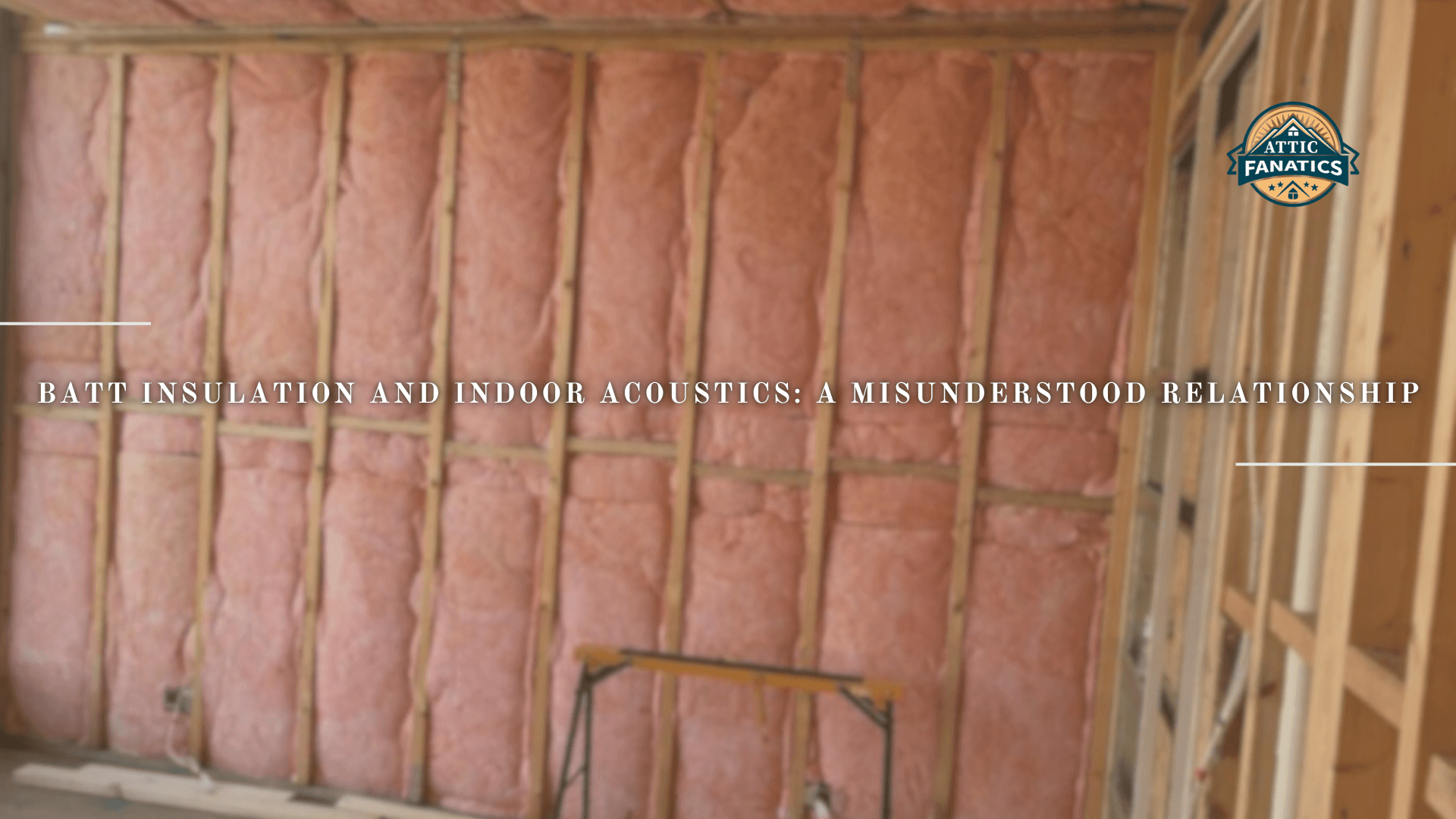
Batt insulation is commonly known for its role in improving thermal comfort and energy efficiency in homes. However, when it comes to soundproofing, many homeowners misunderstand its effectiveness. While batt insulation plays a significant role in improving sound damping, it doesn’t always provide the level of sound isolation people expect.
The Role of Batt Insulation in Acoustic Performance 🏠

Alt Text: Impact of Batt Insulation on Noise Reduction in Homes
Batt insulation is a popular choice for home insulation due to its affordability, ease of installation, and ability to provide excellent thermal resistance. However, its acoustic capability is often misunderstood. The primary function of batt insulation is to regulate temperature by reducing heat transfer between spaces. While it can help mitigate some airborne noise, it is not specifically designed to block sound effectively, which is why it’s important to distinguish between its thermal and acoustic properties.
For homeowners looking to enhance sound control, understanding the limitations of batt insulation soundproofing is essential. Unlike specialized soundproofing materials, batt insulation may reduce the amount of sound that passes through walls, but it won’t fully isolate a room from noise. Its effectiveness in soundproofing walls is significantly less when compared to materials specifically engineered for soundproofing, such as acoustic foam, mass-loaded vinyl, or resilient channels.
Understanding Sound Transmission and Sound Absorption 🔊
To better understand the role of batt insulation in sound control, it’s important to differentiate between two key concepts: sound transmission and sound absorption.
Sound Transmission refers to how sound waves travel through different materials. The higher the material’s density and mass, the more it will block sound. Batt insulation, made from fiberglass or mineral wool, may offer some resistance to sound transmission, but its primary function is not to block noise.
Sound Absorption, on the other hand, is the ability of a material to absorb sound waves, reducing the amount of reverberation and echo in a space. Batt insulation excels in this area, as it traps sound waves and minimizes noise reflections within a room. However, it does not completely eliminate the noise entering or exiting a room.
STC vs NRC: Acoustic Rating Differences 🏡
When evaluating noise control, homeowners often come across two important terms: STC (Sound Transmission Class) and NRC (Noise Reduction Coefficient). Both metrics measure different aspects of a material’s ability to control sound, but they should not be confused.
STC (Sound Transmission Class) measures how well a material prevents sound from traveling through walls, floors, or ceilings. The higher the STC rating, the better the material blocks sound. Batt insulation typically has a low to moderate STC rating, meaning it does not provide significant soundproofing by itself.
NRC (Noise Reduction Coefficient) measures the ability of a material to absorb sound within a room. Batt insulation is highly effective at absorbing sound and reducing echo, making it an excellent choice for improving indoor acoustics.
Understanding these distinctions helps homeowners make informed decisions about using batt insulation in sound-sensitive areas. If you’re looking to reduce noise from neighboring rooms, consider pairing batt insulation with additional soundproofing techniques like acoustic sealants or sound barriers for better results.
Wall Insulation and Sound: The Misconception of Complete Soundproofing ❌
One of the most common misconceptions about batt insulation is that it can completely soundproof a room. This assumption often leads to frustration when homeowners don’t achieve the level of sound isolation they were hoping for. While batt insulation can certainly improve the wall insulation sound, it is not a perfect solution for full soundproofing.
If you’re converting a room for audio purposes, such as a home theater or music studio, it’s important to consider a combination of materials and strategies to address both soundproofing and noise control. Adding mass to the walls, using soundproof drywall, or installing specialized acoustic panels can significantly enhance sound isolation. Additionally, sealing gaps around doors and windows is essential to prevent sound leakage.
When to Use Batt Insulation for Acoustic Efficiency 📏

Alt Text: Optimal Uses of Batt Insulation for Sound Control
Batt insulation is a great choice for general acoustic improvements in spaces where complete soundproofing is not required. If you’re renovating a home, insulating walls between bedrooms, or improving the overall acoustic performance of your home theater, batt insulation can help manage sound within the space. However, if you’re working on a room where precise sound isolation is critical, such as a recording studio, additional soundproofing measures will be necessary.
Maximizing Acoustic Capability with the Right Materials 🏠
While Acoustic batt insulation can improve acoustic efficiency, it is not a one-size-fits-all solution for every sound-related need. For general comfort and noise reduction, it works well, but for complete sound isolation, other methods are necessary. When planning any renovation or room conversion, be sure to evaluate your acoustic needs carefully, and consider combining batt insulation with specialized soundproofing materials to achieve the best results for both thermal and acoustic comfort.