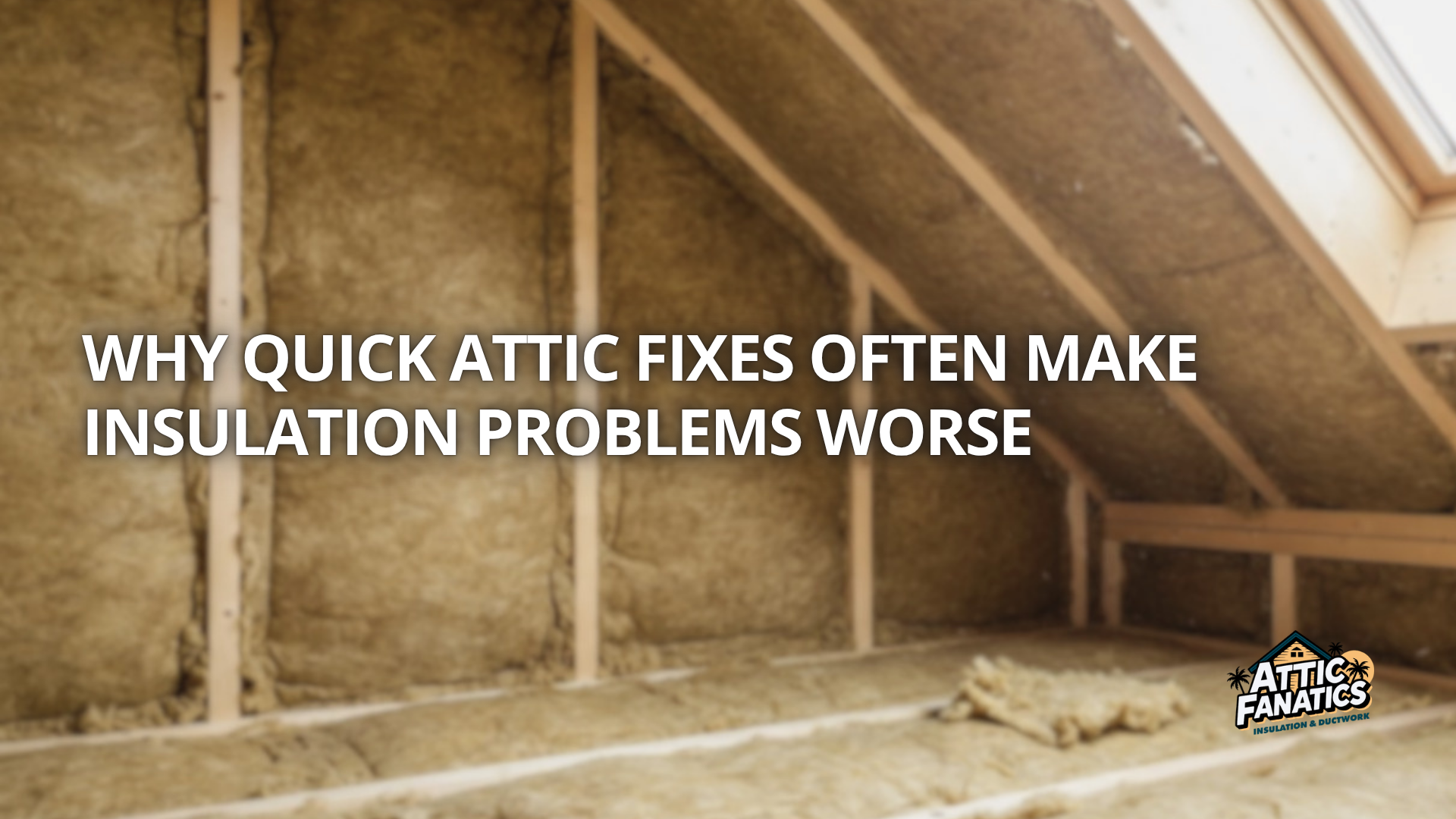
Why Quick Attic Fixes Can Make Problems Worse 🏠
Small insulation problems rarely stay small for long. A minor draft, uneven temperatures, or rising cooling costs may seem easy to solve with a quick patch or added material, but surface-level fixes often hide the real issue instead of correcting it.
In many homes, the actual problem involves trapped moisture, air leakage, or poor airflow patterns. Covering these conditions without addressing the cause can create bigger structural and efficiency problems over time.
🔧 What “Quick Fixes” Usually Involve
Quick fixes are typically short-term attempts to improve comfort without evaluating the entire insulation system. Homeowners may add extra material over damaged sections or seal only the most visible gaps.
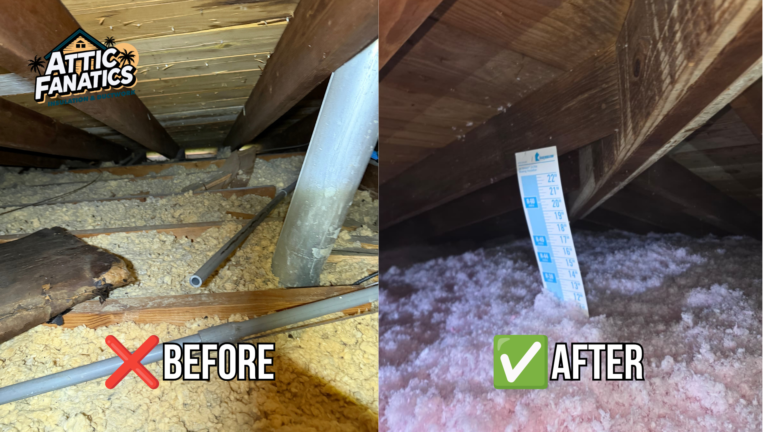
While these solutions may provide temporary improvement, they rarely address the root cause of the problem. In attic insulation problems causes investigations, underlying airflow and moisture issues are often discovered beneath earlier repair attempts.
⚠️ Why Temporary Solutions Fail
💧 Trapping Moisture
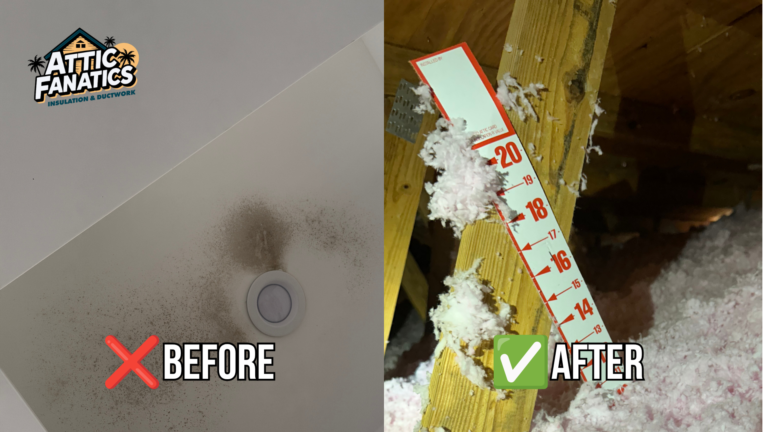
Adding insulation over damp surfaces or poor ventilation zones can trap humidity inside the structure. Over time, this creates conditions for mold growth and material deterioration.
Moisture-related damage often develops slowly, making it difficult to notice until repairs become more extensive.
📉 Uneven Insulation Layers
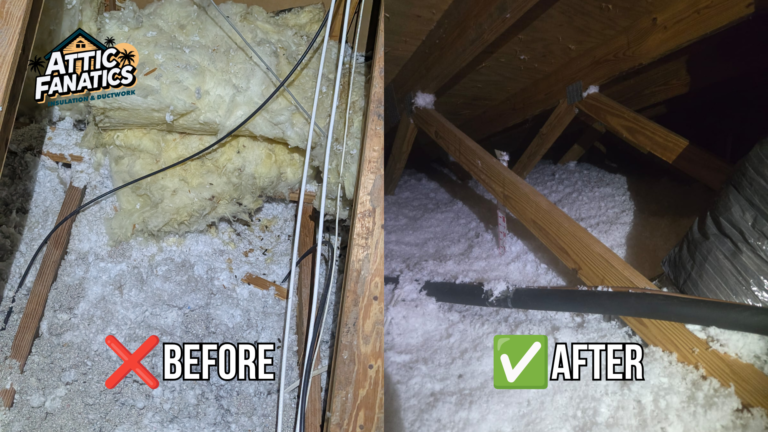
Patching isolated sections creates inconsistent coverage. Some areas become over-insulated while others remain exposed, leading to unstable temperature control throughout the home.
This imbalance reduces overall efficiency instead of improving it.
🌬️ Ignoring Air Leaks
Many quick repairs focus only on insulation thickness while leaving gaps and openings untreated. Warm air continues moving through cracks around wiring, vents, and framing joints.
This is one of the main reasons bad insulation quick fix issues return repeatedly after temporary repairs.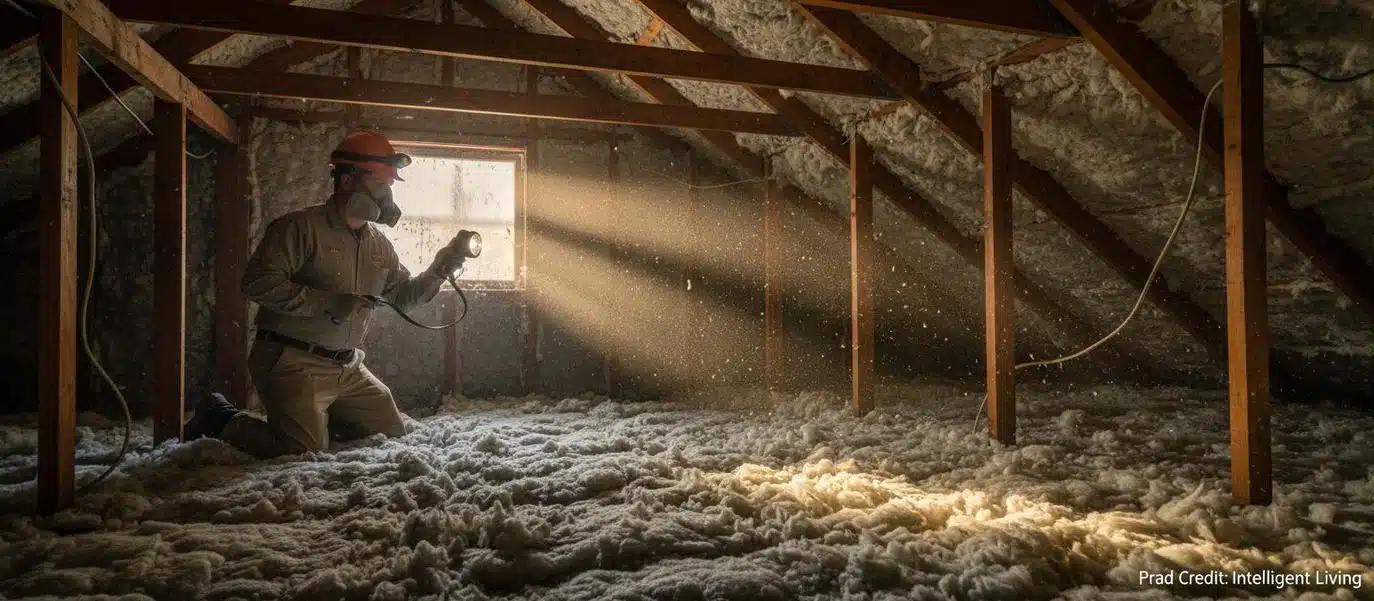
🚨 Long-Term Consequences of Poor Fixes
💸 Higher Energy Bills
When insulation systems remain unbalanced, heating and cooling equipment works harder to maintain stable temperatures. This increases monthly energy use over time.
🦠 Mold and Moisture Damage
Hidden moisture creates ideal conditions for mold growth and wood deterioration. Once moisture becomes trapped, the damage can spread behind walls and ceilings unnoticed.
🧱 Structural Degradation
Persistent humidity and poor airflow gradually weaken structural materials. Over time, wood framing and support surfaces may begin deteriorating.
- 💧 Moisture trapped beneath insulation layers
- 🌬️ Air leakage reducing efficiency
- 📉 Uneven coverage creating temperature imbalance
- 🦠 Mold growth caused by poor ventilation
These issues often become far more expensive than the original problem itself.
🛠️ Proper Insulation Approach
🔍 Full Inspection First
A proper solution begins with identifying the real source of the issue. Inspections should evaluate airflow, moisture levels, structural condition, and existing insulation performance.
🔒 Air Sealing Before Insulation
Closing gaps and leakage points before installation improves long-term performance significantly. Proper air sealing attic importance becomes especially clear in homes with ongoing temperature fluctuations.
🧪 Correct Material Selection
Different materials perform differently depending on climate conditions, ventilation, and home design. Choosing the right option helps prevent recurring problems and premature failure.
These steps are part of the same process used in professional attic insulation services focused on long-term reliability rather than temporary improvement.
🛠️ How Attic Fanatics Prevent Repeat Issues
Professionals approach insulation problems by evaluating the entire system instead of isolated symptoms. Ventilation, airflow, and moisture control are all reviewed before repairs or upgrades begin.
This method helps create balanced performance and reduces the likelihood of repeated issues developing later.
🌿 Long-Term Solutions Prevent Bigger Problems
Temporary repairs may seem cheaper at first, but they often allow hidden issues to continue developing beneath the surface. Over time, these overlooked problems lead to higher costs, weaker efficiency, and structural damage.
A complete insulation strategy focuses on identifying the root cause, correcting airflow and moisture concerns, and installing materials that perform reliably for years.