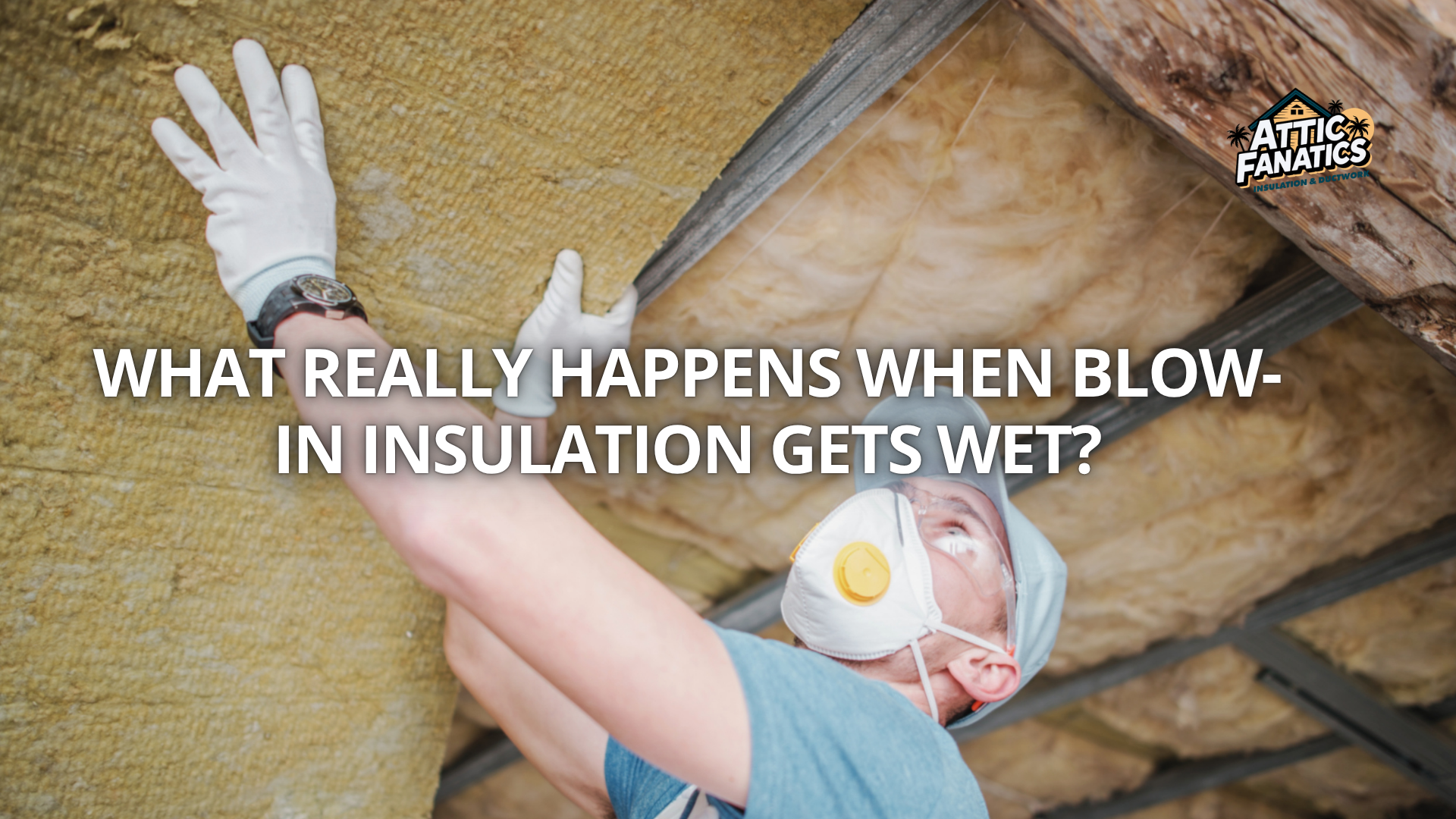
 What Really Happens When Blow-In Insulation Gets Wet?
Finding damp insulation in your attic can raise several questions. Has it lost its effectiveness? Does it need to be replaced? And more importantly, where did the water come from? The answers depend on the type of insulation, how much moisture it absorbed, and how long it remained wet. For homeowners in Hollywood, FL, these questions are particularly relevant because Florida humidity, heavy rainfall, and air conditioning use can contribute to attic moisture problems. Wet insulation isn’t automatically ruined. However, leaving it unaddressed can affect its performance and allow the underlying moisture problem to continue.
 What happens if blown-in insulation gets wet?
When water reaches loose-fill insulation, it can change the material’s condition and reduce its ability to resist heat transfer. The extent of the damage depends on whether the exposure was minor or widespread, whether the material became saturated, and whether it can dry properly. In some cases, the affected insulation may recover after the moisture source is corrected and the material dries completely. In others, clumping, compression, contamination, or persistent dampness may make removal necessary. The important distinction is between temporary moisture exposure and damage that prevents the insulation from performing as intended. Simply covering the affected area with fresh material doesn’t resolve either problem.
 How cellulose and fiberglass respond to moisture
Cellulose insulation and fiberglass insulation react differently when exposed to water. Their composition influences how moisture affects their structure, how they may dry, and whether replacement is appropriate.
Factor | Cellulose Insulation | Fiberglass Insulation |
Moisture exposure | Absorbs moisture into its paper fibers | Can retain water between its fibers |
Material condition | May clump, compact, or become heavier when wet | May become compressed or displaced |
Drying considerations | Drying can be difficult if moisture is widespread or trapped | Drying depends on saturation, surrounding conditions, and material condition |
Potential concerns | Prolonged dampness can contribute to deterioration or contamination | Persistent moisture can affect performance and surrounding materials |
Replacement decision | Depends on the extent of damage and contamination | Depends on the extent of saturation, damage, and contamination |
Neither material should automatically be discarded after every instance of water exposure. A proper assessment considers the affected area, the condition of the insulation, and whether it can be restored to a suitable state.
 Where does attic moisture come from?
Before deciding what to do with wet blow-in insulation, homeowners need to identify how the water entered the attic. Several sources can produce similar symptoms, even when the original problem is very different. A roof leak may allow rainwater to soak the insulation beneath damaged shingles or flashing. Plumbing leaks can introduce water around pipes, while HVAC-related moisture may result from drainage problems, condensation, or improperly managed ductwork.
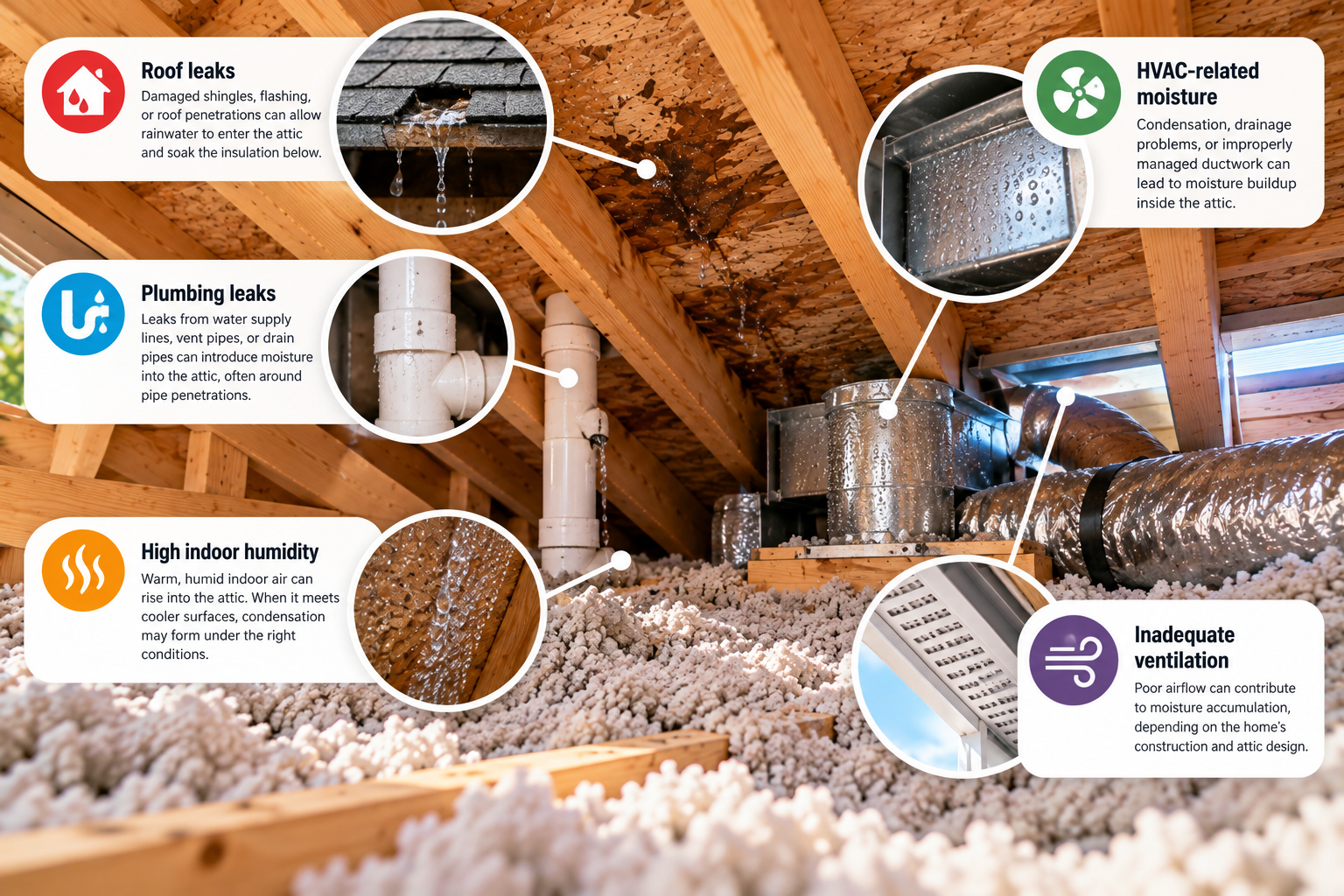
Humidity creates another concern. When warm, humid air meets cooler surfaces, condensation can develop under the right conditions. High indoor humidity and inadequate attic ventilation may also contribute to moisture accumulation, depending on the home’s construction and airflow patterns. These sources require different solutions. Replacing insulation without correcting the cause of the moisture intrusion can leave the home vulnerable to the same problem again.
 Can blown-in insulation get wet without being ruined?
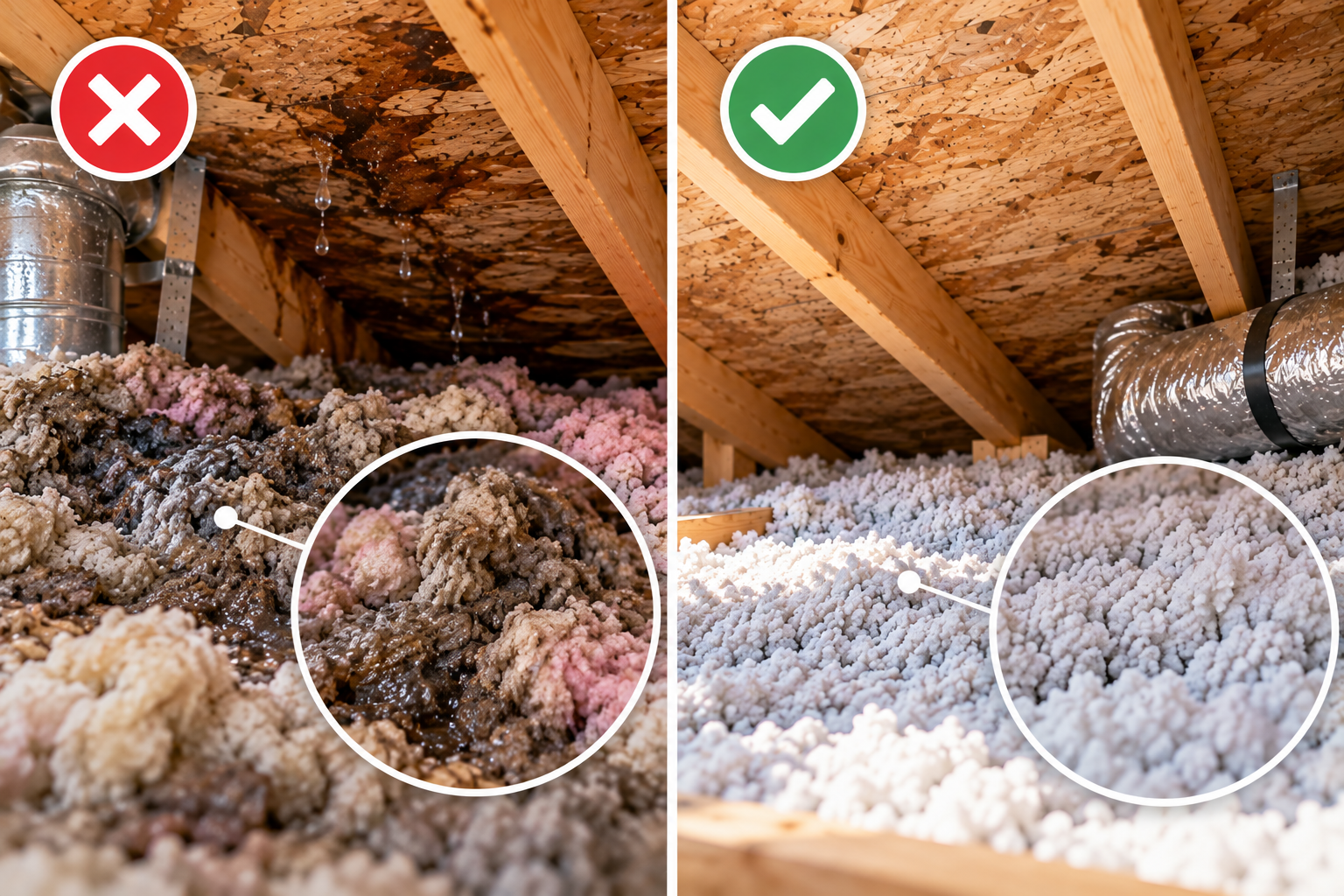
Yes. A small area exposed to moisture may remain salvageable if the source is corrected promptly and the material can dry thoroughly without contamination. The outcome is less favorable when insulation remains saturated, becomes compressed, or develops persistent odors and visible signs of deterioration. Homeowners should also consider the materials surrounding the affected area. Water may damage ceiling components or other building materials even when the insulation appears relatively intact. Prolonged dampness can encourage mold growth where suitable conditions exist. Avoid disturbing suspected mold or contaminated material yourself. An appropriate assessment can help determine whether drying, localized removal, or broader remediation is needed.
 When should wet insulation be removed?
Insulation removal may be appropriate when the material is heavily saturated, contaminated, damaged, or unable to dry properly. The decision should be based on the actual condition rather than the presence of moisture alone. The first priority is to stop the water source. Roof damage, plumbing problems, HVAC drainage issues, and contributing humidity conditions should be addressed before replacement material is installed. Otherwise, new insulation may suffer the same damage.
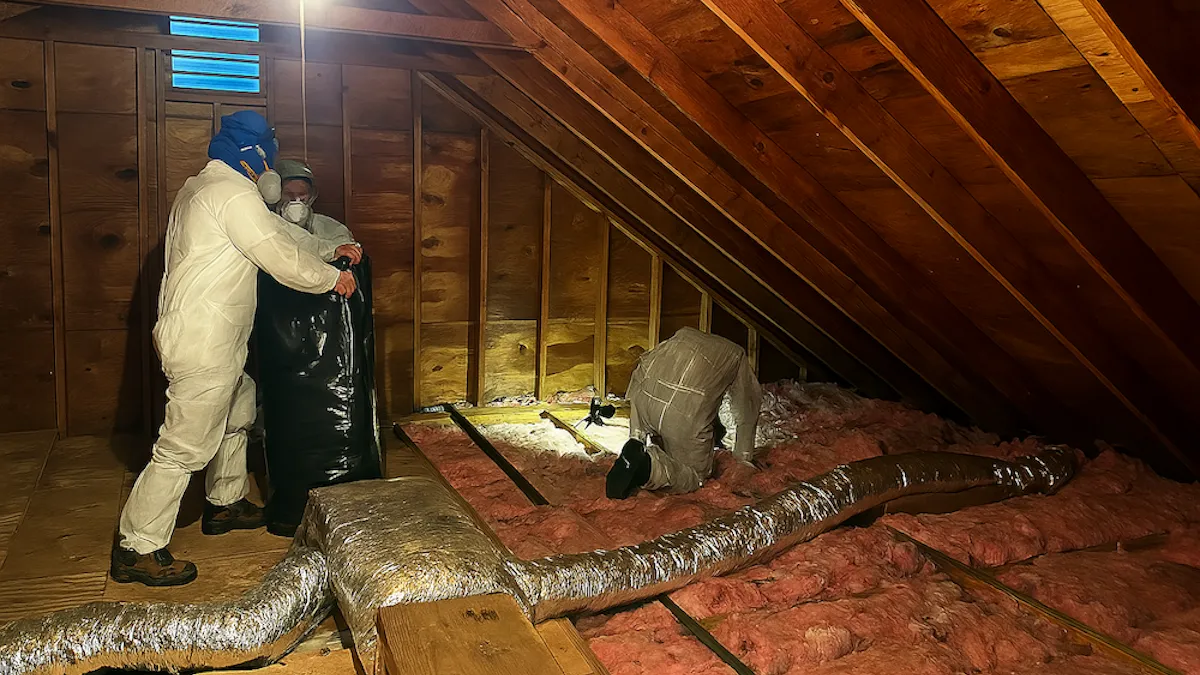
Attic Fanatics provides insulation removal services for situations where existing material needs to be cleared. After the underlying issue has been resolved, blown-in insulation may be considered to restore suitable coverage. For homeowners, the right approach starts with finding out why the insulation became wet, assessing how much material is affected, and choosing a solution based on its condition. To discuss an attic insulation concern, contact Attic Fanatics.