🧹 Attic Sanitizing: What to Do Before New Blow-In
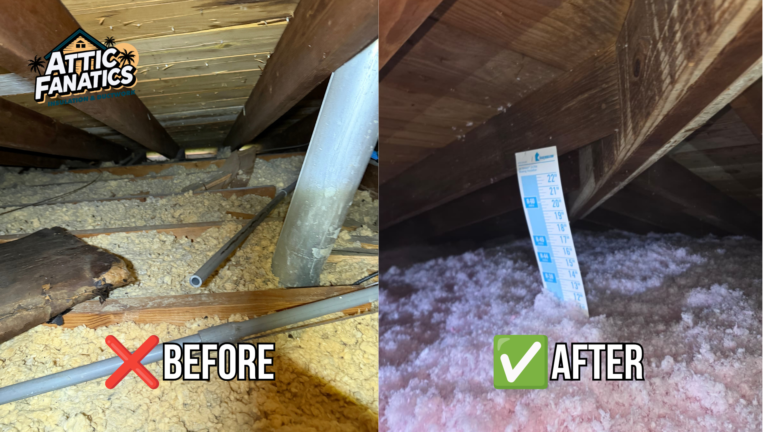
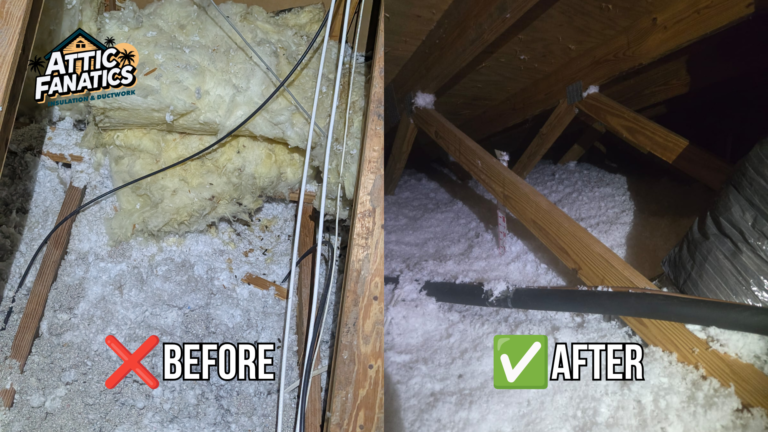
Removing old insulation is only part of the process. Once damaged, contaminated, or outdated material has been removed, the exposed attic often reveals years of accumulated dust, debris, odors, and hidden contaminants. Installing new insulation immediately without addressing these issues can reduce performance and leave underlying problems unresolved. The period between insulation removal and replacement is one of the most important stages of an attic restoration project.
Proper cleaning and sanitizing help create a healthier environment, improve indoor air quality, and provide a clean foundation for new blow in insulation to perform as intended.
❓ Why Even Small Roof Leaks Can Damage Attic Insulation
Old insulation often hides more than homeowners realize. Once it is removed, contaminants that have accumulated over many years become visible and accessible for treatment.
🦨 Contaminants Left Behind in Attics
Attics frequently collect dust, pest droppings, nesting materials, insect debris, and other contaminants. Even homes without obvious pest activity may contain particles that have accumulated over decades. When old insulation is removed, these materials can become disturbed and spread throughout the space if they are not properly addressed.
💨 Air Quality Concerns
Contaminants left behind can affect the air circulating through a home. Dust particles, allergens, and biological materials may contribute to poor indoor air quality, particularly when ventilation systems pull air from upper portions of the structure. This is one reason attic sanitizing after insulation removal is often recommended before installing new insulation materials.
👃 Odor Elimination Benefits
Old insulation can absorb odors from moisture, pests, mold, and environmental contaminants over time. Even after removal, odors may linger if surrounding surfaces are not cleaned and treated properly. Addressing these sources before re-insulating helps create a cleaner and more comfortable indoor environment.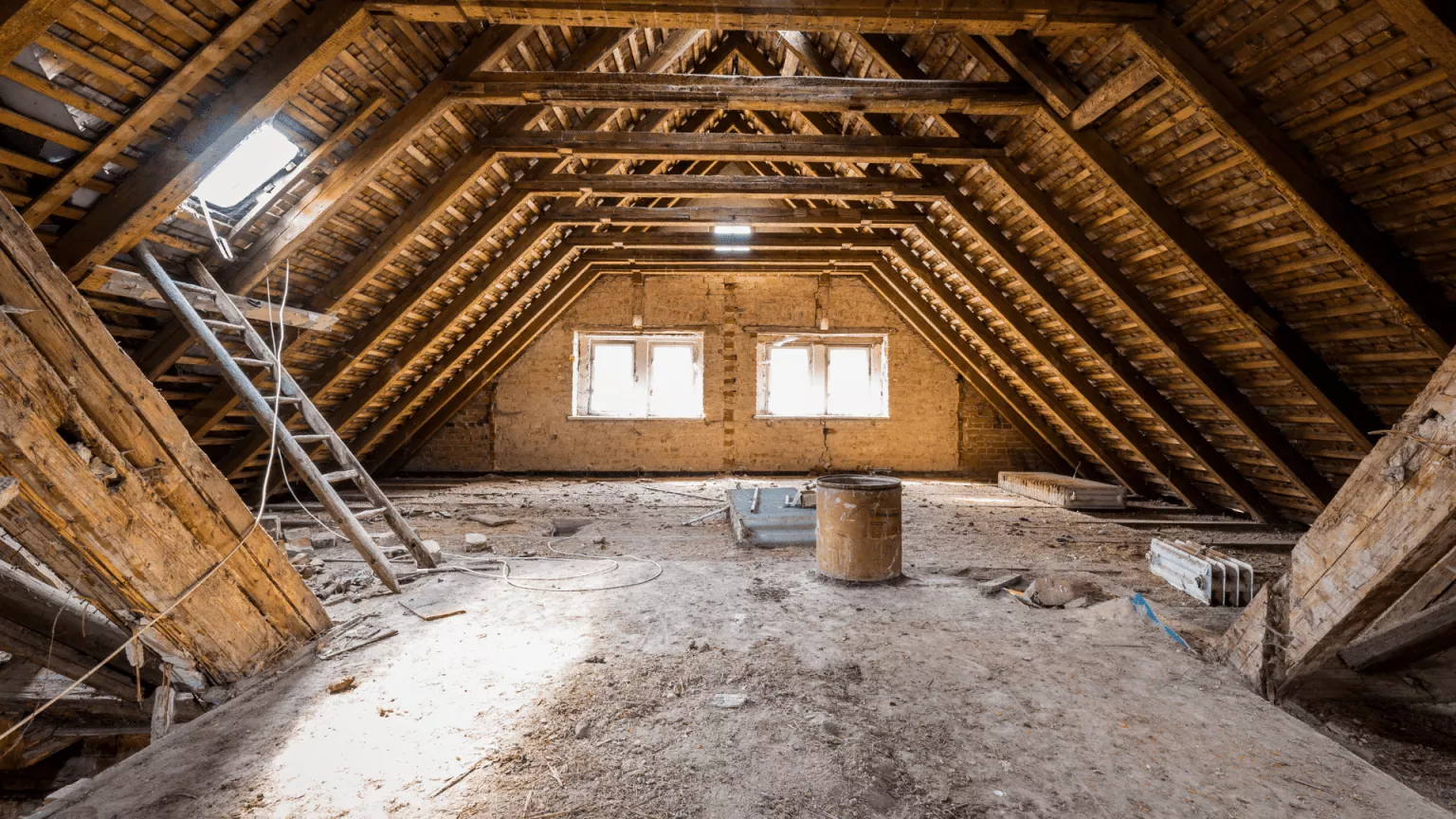
🛠️ Steps Involved in Professional Attic Sanitization
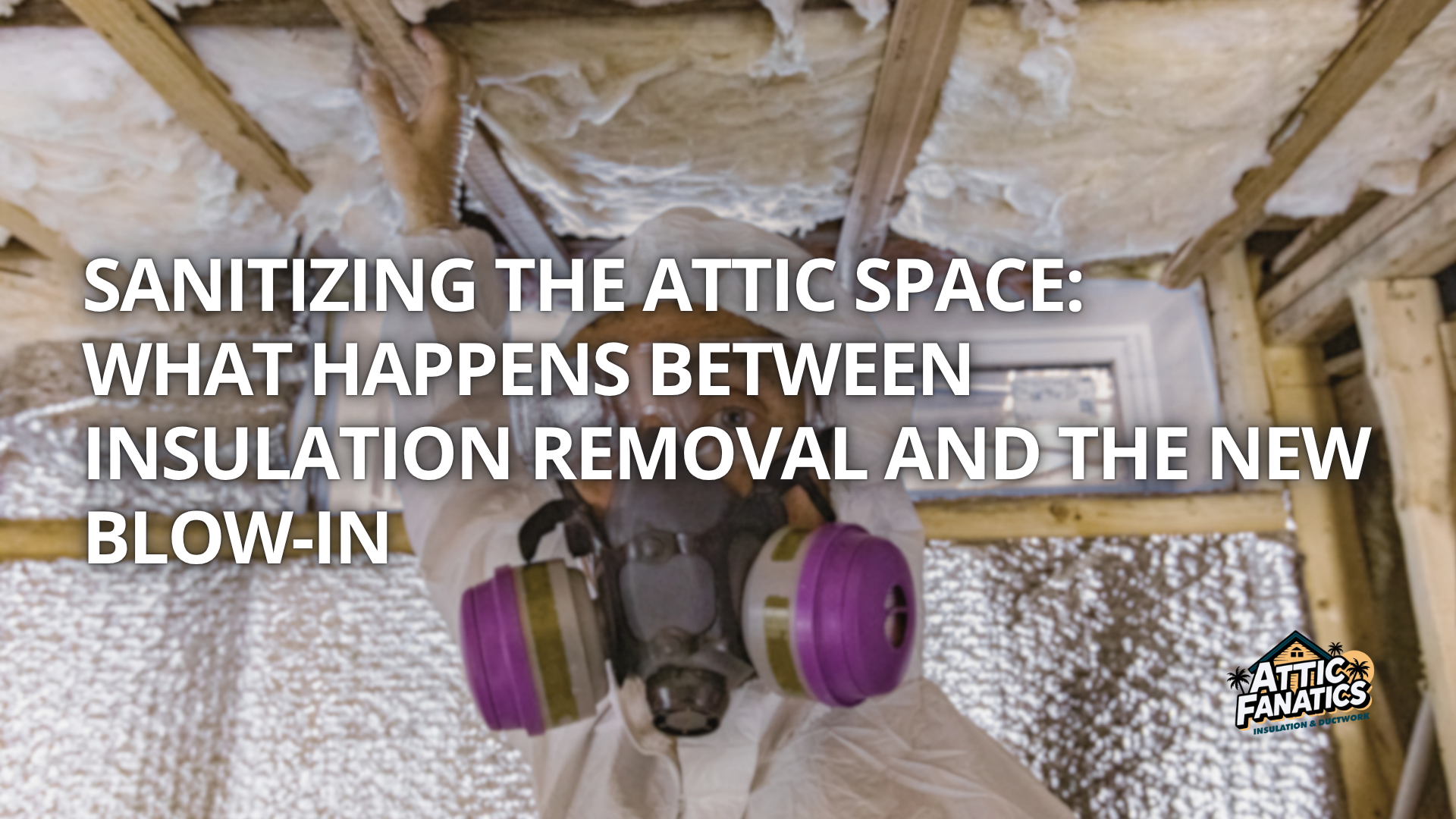
A thorough sanitization process goes beyond simple sweeping or vacuuming. The goal is to remove contaminants, treat affected areas, and prepare surfaces for long-term performance.
🗑️ Debris Removal
The first step typically involves removing loose debris left behind after insulation extraction. Dust, construction residue, pest-related materials, and other contaminants are carefully collected and disposed of. This creates a clean working environment for the next stages of preparation.
🧼 Surface Cleaning and Disinfecting
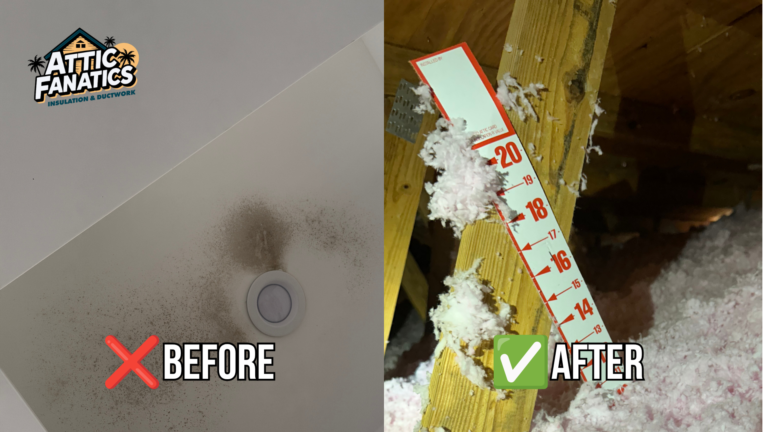
Once debris is removed, exposed surfaces may be cleaned to eliminate remaining contaminants. Depending on the condition of the attic, disinfecting treatments may be applied to areas affected by biological contamination. Professional attic cleaning services often focus on areas that are difficult for homeowners to access safely.
🦠 Mold and Bacteria Treatment
If signs of microbial growth are present, targeted treatment may be necessary before new insulation is installed. Mold and bacteria can continue spreading if underlying moisture issues are not resolved first. Addressing contamination at this stage helps prevent future problems after installation is complete.
🧹 Removal of dust and loose debris
🧽 Cleaning exposed surfaces
🧴 Odor treatment where necessary
🧫 Microbial remediation when contamination is present
🏗️ Preparation for insulation installation These steps help create a cleaner and healthier environment before new materials are added.
📐 Preparing the Attic for New Insulation
Sanitization is only one part of preparation. The space should also be evaluated for issues that could affect future performance.
🔩 Sealing Air Leaks
Small gaps around wiring, plumbing penetrations, vents, and framing can allow conditioned air to escape. Sealing these openings improves energy efficiency and helps insulation perform more effectively.
🌀 Checking Ventilation
Proper ventilation plays a major role in temperature control and moisture management. Airflow pathways should be inspected to ensure they remain unobstructed before installation begins. Balanced ventilation supports long-term insulation performance and helps reduce moisture-related problems.
🪵 Inspecting Structural Components
Exposed framing, roof decking, and support structures become easier to inspect after old insulation is removed. Any signs of water damage, deterioration, or structural concerns should be addressed before proceeding. Correcting these issues beforehand helps protect the new insulation investment.
🌟 Benefits of Sanitizing Before Re-Insulating
Skipping the sanitization phase may leave hidden contaminants behind and reduce the effectiveness of the entire project. A clean attic creates better conditions for insulation performance while helping improve indoor air quality. Proper preparation can also reduce odors, identify hidden problems earlier, and contribute to a healthier living environment overall. When insulation is installed over untreated contamination, those issues often remain trapped beneath the new material and become more difficult to address later.
🦉 How Attic Fanatics Prepares Attics for New Blow-In Insulation
Attic Fanatics follows a structured preparation process before installing replacement insulation. This includes cleaning exposed surfaces, addressing contamination concerns, evaluating airflow, and ensuring the space is ready for new material installation.
By focusing on preparation as well as installation, the process helps support long-term performance, cleaner indoor conditions, and more effective insulation results.