🌪️ Emergency Removal of Wet Blown-In Attic Insulation
When a hurricane passes, the visible damage often gets the most attention. Missing shingles, fallen branches, and water stains are easy to spot. What many homeowners don’t realize is that some of the most serious damage may be hidden above the ceiling. Blown-in insulation is highly vulnerable to water intrusion. Once saturated, it can hold large amounts of moisture, creating conditions that encourage mold growth, weaken surrounding materials, and reduce energy efficiency. In storm-prone regions, a fast response is not just recommended; it can make the difference between a manageable cleanup and a costly restoration project.
❓ How Hurricanes and Storms Affect Attic Insulation
Severe weather can introduce moisture into the attic in several ways. Even if the damage appears minor, water often travels farther than expected.
🏠 Roof Intrusion Events
Strong winds can lift roofing materials, damage flashing, or create small openings that allow water to enter. Even a brief leak during a storm can soak insulation hidden beneath the roof deck. Because the material sits below the leak, it often absorbs moisture long before visible signs appear inside the home.
💨 Flooding and Wind-Driven Rain
Hurricanes frequently bring heavy rainfall combined with intense winds. Water can be forced into small openings around vents, soffits, and roof penetrations that normally remain protected. This type of intrusion can affect large sections of the attic without creating an obvious ceiling leak.
🧽 Moisture Retention in Blow-In Insulation
Unlike some insulation products, loose-fill materials can absorb and retain significant amounts of water. Once saturated, they often compress, settle, and lose their ability to regulate indoor temperatures effectively. This is why wet attic insulation removal is often necessary after major storm events rather than simply allowing the material to dry naturally.
⚠️ Why Emergency Response Is Critical
The longer moisture remains trapped inside the attic, the greater the risk of secondary damage.
🍄 Mold Prevention
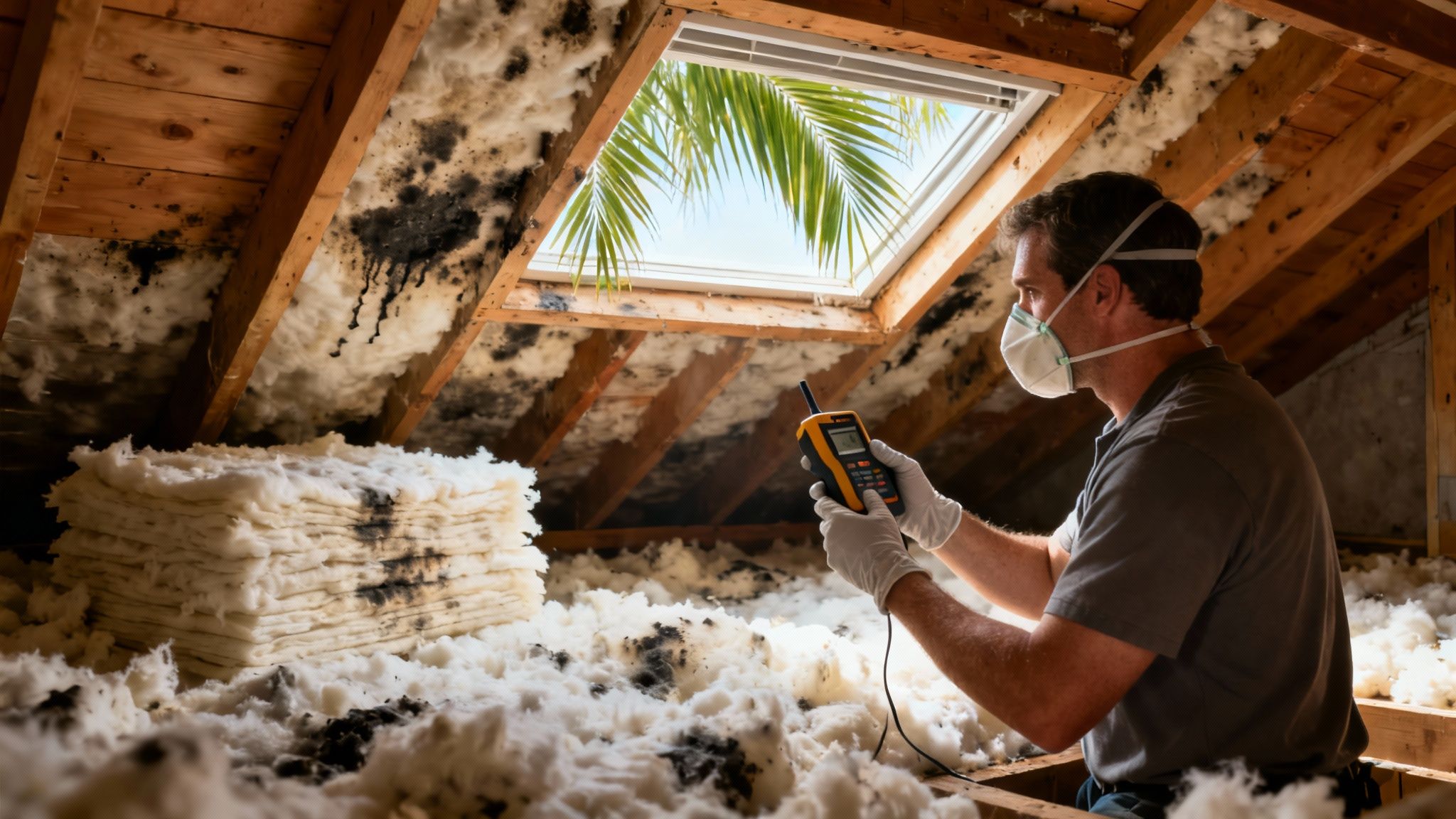
Mold can begin developing surprisingly quickly when moisture and warm temperatures are present. A damp attic creates an ideal environment for microbial growth, especially in humid climates. Prompt cleanup helps reduce the likelihood of contamination spreading throughout the home.
🏗️ Structural Protection
Water doesn’t only affect insulation. Prolonged exposure can damage roof decking, wooden framing, drywall, and other structural components. Addressing moisture early helps prevent deterioration that can become significantly more expensive to repair later.
💨 Indoor Air Quality Concerns
A damp attic can affect air quality throughout the home. Moisture-related contamination may contribute to odors, airborne particles, and other environmental concerns. These issues often become more noticeable when HVAC systems circulate air through affected areas.
💦 Water-soaked insulation losing effectiveness
🦠 Increased mold growth risk
🪵 Structural wood exposed to prolonged moisture
🦨 Persistent musty odors
📉 Reduced indoor air quality These problems can escalate rapidly if storm damage is not addressed quickly.
🛠️ The Wet Insulation Removal Process
Professional restoration typically involves more than simply removing wet material. The goal is to eliminate moisture, prevent contamination, and prepare the space for recovery.
💧 Water Extraction
The first step is identifying and removing standing water or excessive moisture. Water extraction helps reduce further damage and speeds up the drying process. This stage is especially important after significant hurricane attic damage where large volumes of water may have entered the structure.
🗑️ Insulation Vacuum Removal
Saturated loose-fill insulation is often removed using specialized vacuum equipment. This allows technicians to extract damaged material efficiently while minimizing the spread of debris. Removing wet insulation also exposes hidden areas that require inspection and drying.
🧼 Drying and Sanitizing
Once damaged material has been removed, the attic is dried using professional equipment designed to reduce moisture levels throughout the space. Sanitizing treatments may also be performed when contamination concerns exist, helping prepare the area for replacement insulation.
🦉 How Attic Fanatics Responds After Storm Damage
Attic Fanatics approaches storm recovery by evaluating the full extent of moisture intrusion before restoration begins.
This includes identifying affected insulation, assessing structural conditions, and implementing a drying strategy tailored to the level of damage. By combining water extraction, insulation removal, and moisture mitigation, the process helps restore attic performance while reducing the risk of future problems associated with storm damaged insulation.