Attic Insulation Removal and Replacement: Costs and What to Expect
The attic insulation replacement cost depends on more than the price of the new material. If the existing insulation needs to be removed, the project may also include labor, equipment, disposal, cleaning, air sealing, and attic preparation. In some homes, adding new insulation over the existing material may be possible. In others, removing everything first is the better approach. The condition of the attic determines which route makes sense.
💰 What Goes Into the Replacement Cost?
The cost to replace attic insulation can vary considerably between homes, even when their attics are similar in size.
Cost factor | What can affect the price |
Attic size | A larger area generally requires more labor and new material. |
Existing insulation | The condition and amount of material determine whether removal is necessary. |
Removal | Extraction requires additional labor, equipment, and handling. |
Disposal | Removed material needs to be collected and disposed of appropriately. |
Attic cleaning | Debris or contaminated material may require additional cleanup. |
Air sealing | Gaps and penetrations may need to be addressed before new insulation is installed. |
Ventilation | Blocked or inadequate ventilation pathways may need correction. |
New insulation | Material type and the amount required affect the installation cost. |
Insulation depth and R-value | The planned insulation level determines how much material is needed. |
🔍 Do You Really Need to Remove the Old Insulation?
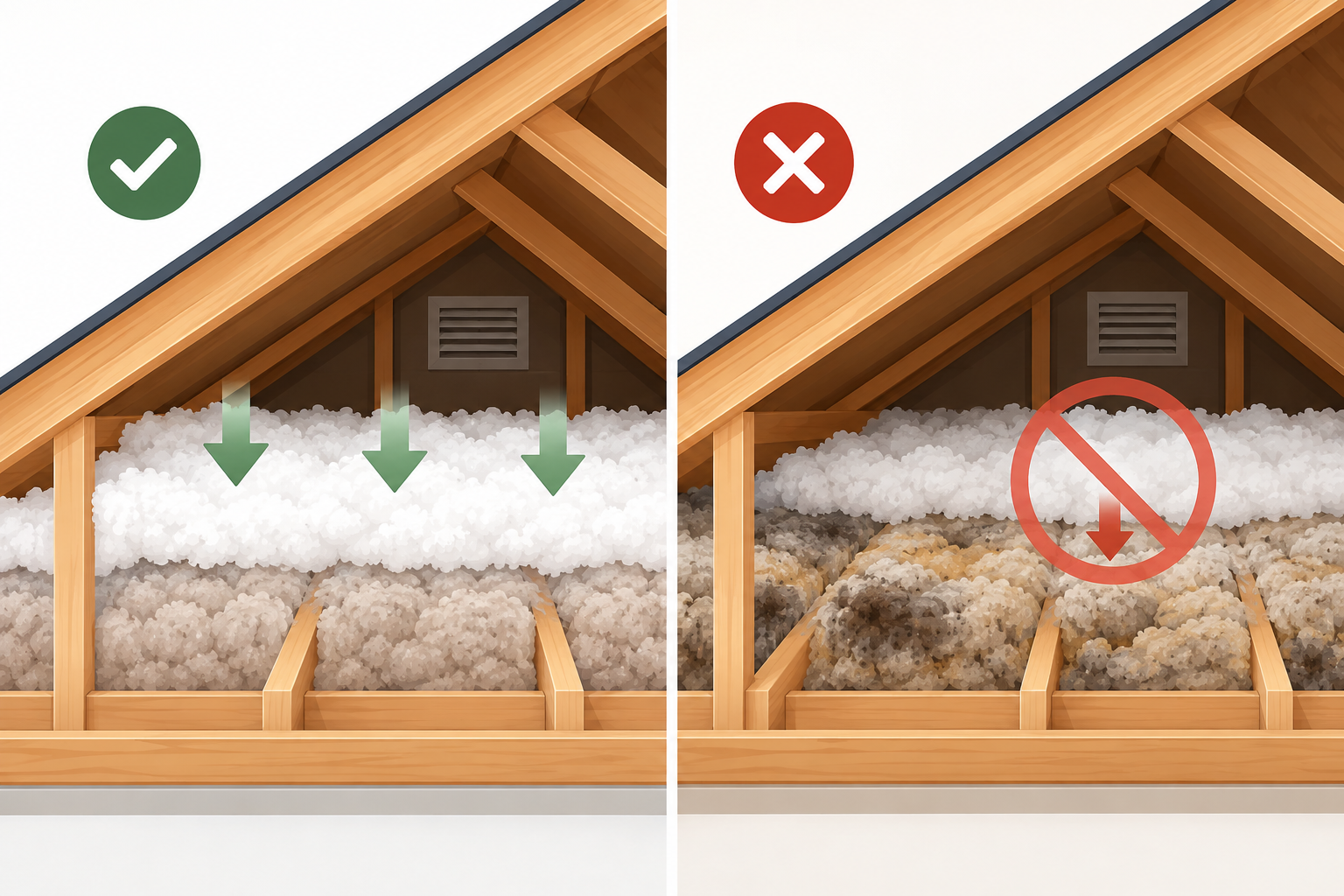
Not always. Existing insulation may be left in place when it is dry, reasonably clean, undamaged, and suitable for the planned work. In those situations, adding another layer may be possible. Full attic insulation removal becomes more relevant when the material is contaminated, heavily damaged, affected by moisture, badly compressed, or otherwise unsuitable for the new installation. For example, insulation affected by pest activity may need to be removed rather than simply covered. The same applies when moisture has caused significant deterioration. Age alone doesn’t automatically mean the insulation needs to go.
🧹 What Happens During Insulation Removal?
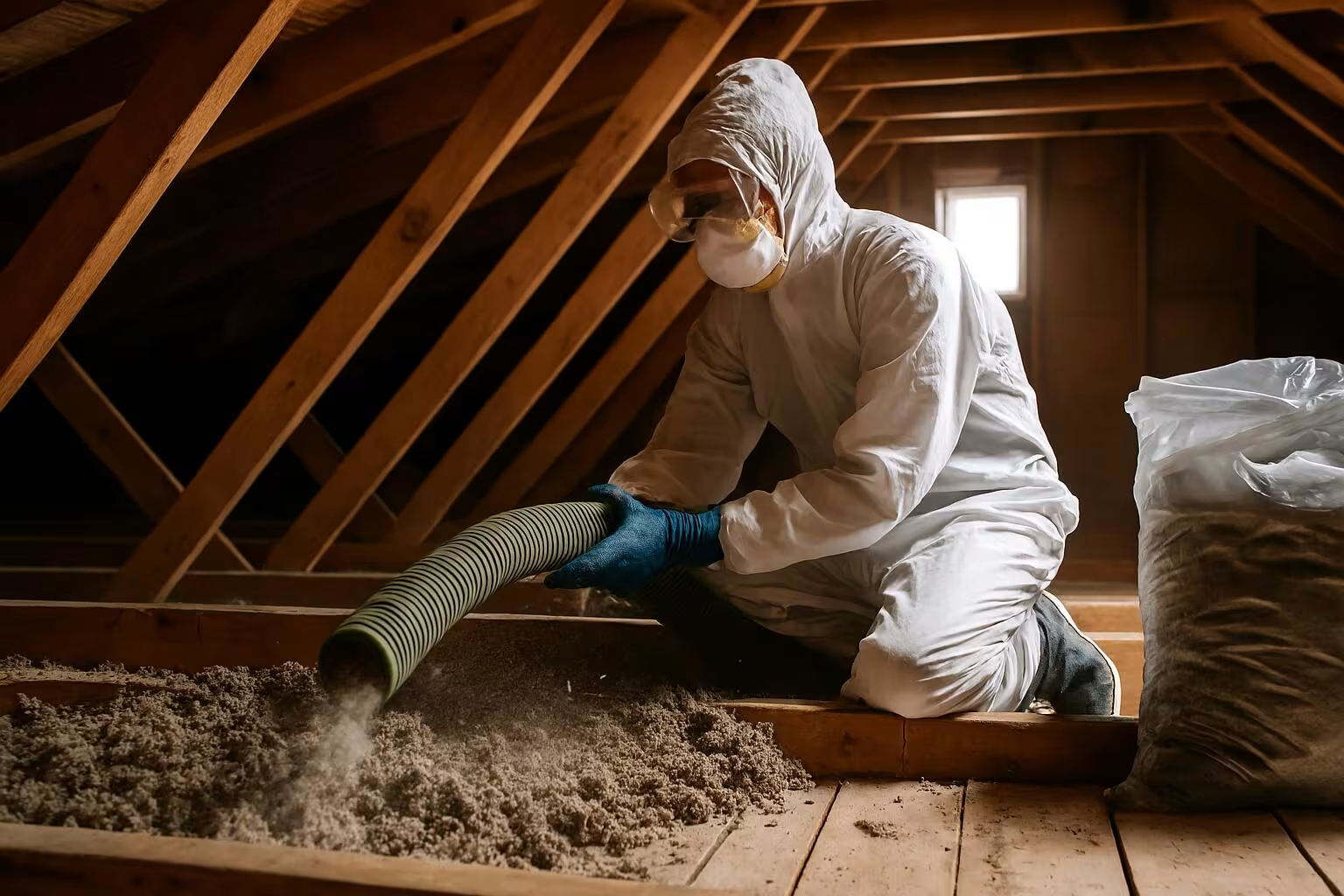
When removal is necessary, the process starts with extracting the existing material from the attic. The method depends on what’s already there. Loose material may require specialized vacuum equipment, while other materials may be removed using different handling methods. After the material is removed, the attic may need attic cleaning to clear remaining debris and prepare the space for the next stage. If there is contaminated insulation, pest debris, or evidence of moisture damage, those conditions should also be addressed before new material is installed.
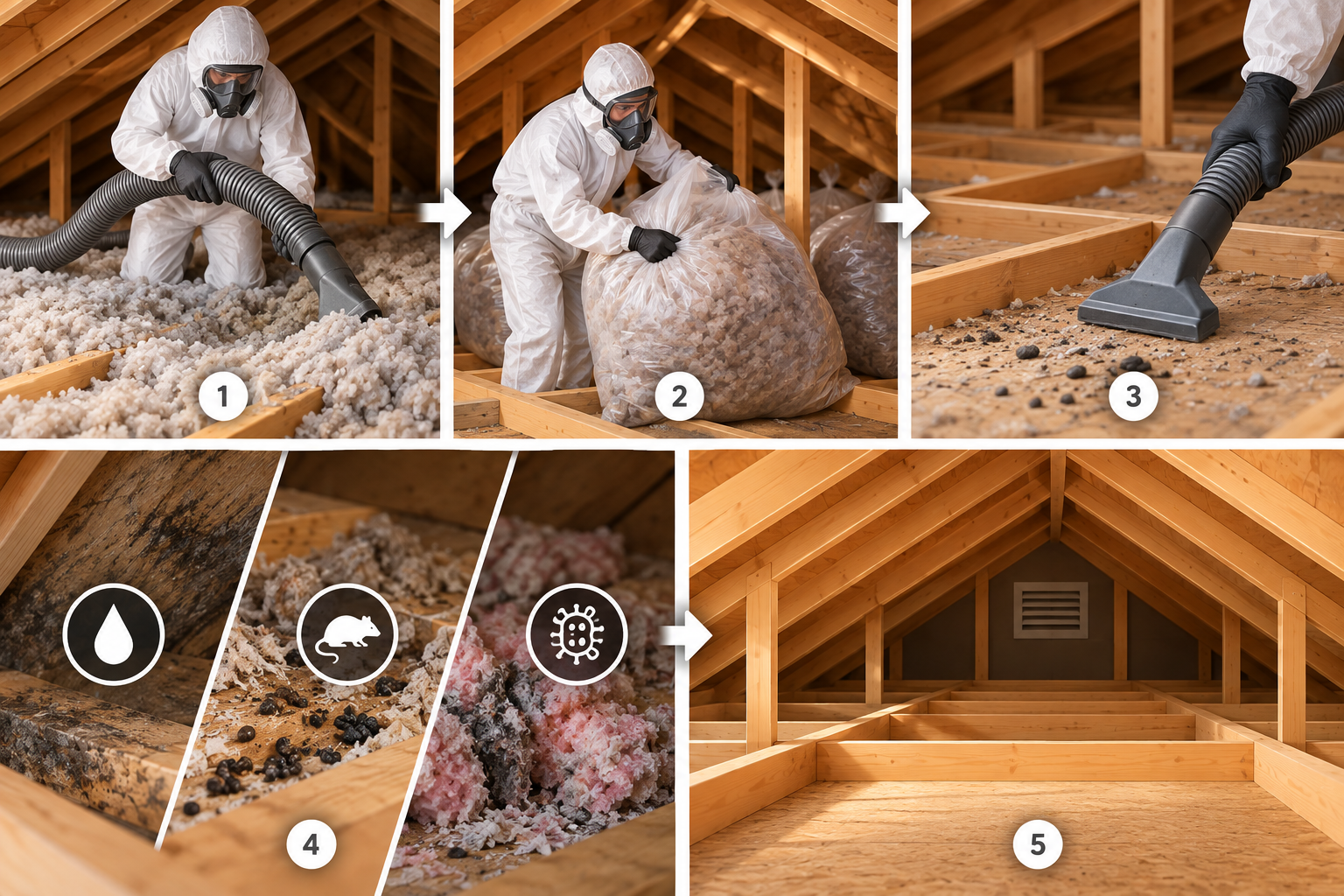
🛠️ The Replacement Process
1. Inspection
An attic inspection establishes what is currently in the space. The condition of the existing insulation, ventilation, access, moisture concerns, and other visible issues can all affect the project.
2. Assessment
Once the attic has been evaluated, the contractor can determine whether the existing material can remain or whether removal is appropriate. This is also where the required insulation level and the condition of the ventilation system should be considered.
3. Removal if Needed
If the existing material is damaged, contaminated, or unsuitable for the planned installation, it can be removed and prepared for disposal.
4. Attic Preparation
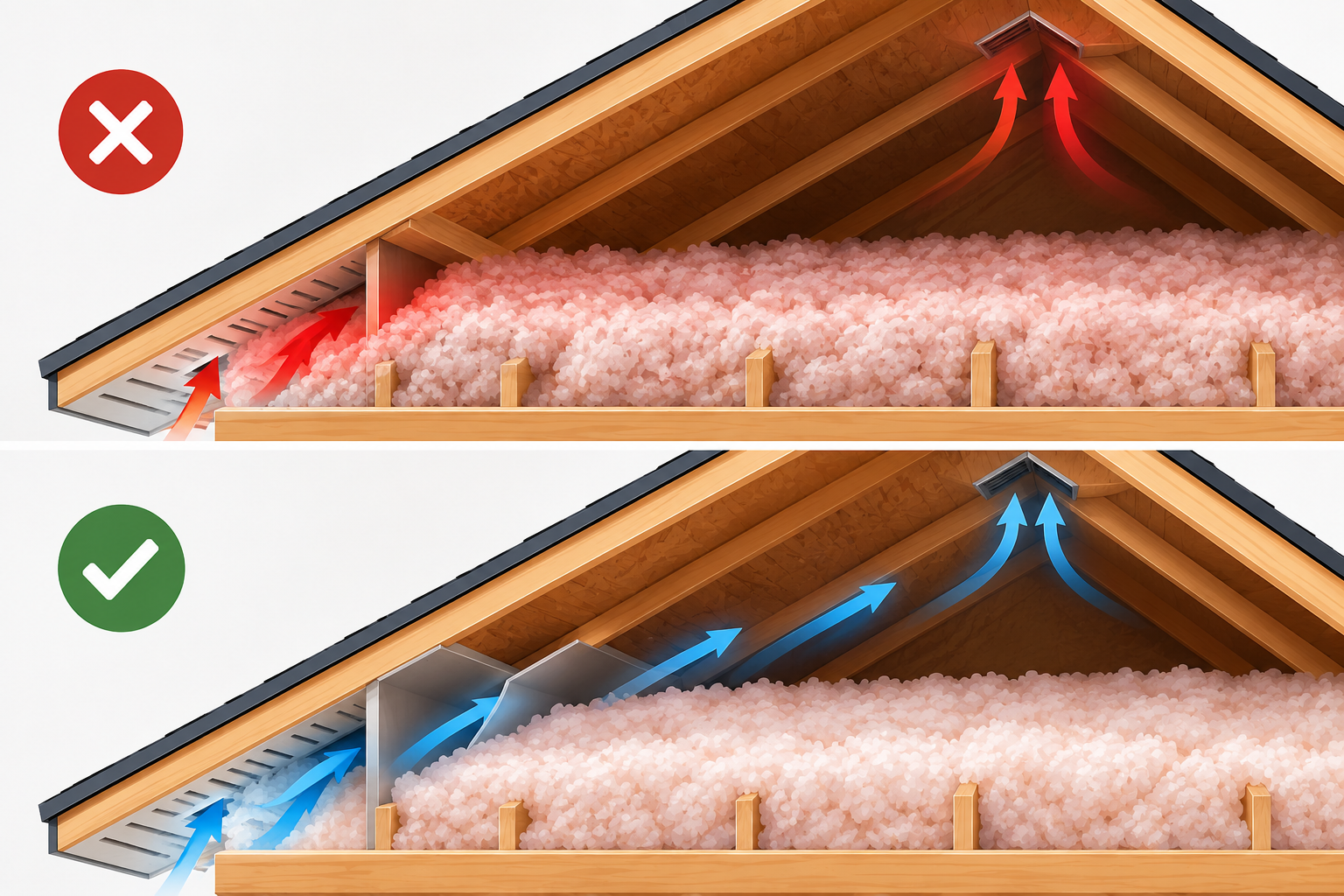
Once the old material is out, the space can be cleaned and checked for issues that should be addressed before installation. This may include sealing air leaks, correcting ventilation problems, or installing ventilation baffles where the soffit intake pathway needs to remain clear.
5. Ventilation and Air Sealing
Insulation shouldn’t be installed over unresolved airflow or air leakage problems.
Air sealing addresses unwanted openings that allow air to move through gaps and penetrations. Attic ventilation provides the intended airflow pathway through a vented attic. These systems serve different purposes, but both can be relevant during a replacement project.
6. New Insulation
Once the attic is prepared, the selected material can be installed. The choice may involve blown-in insulation, fiberglass insulation, or spray foam insulation, depending on the attic design and the goals of the project. The amount installed should be based on the intended insulation depth and target R-value, rather than simply adding an arbitrary amount of material.
7. Final Inspection
After installation, the attic should be checked to make sure the insulation is distributed properly and intended ventilation pathways remain clear. This final step can also identify areas where coverage is inconsistent or where other parts of the attic system need attention.
🧱 Adding Insulation Over Existing Material
If the existing insulation is in good condition, adding new material can sometimes be a reasonable alternative to complete removal. This can avoid the labor and insulation disposal costs associated with extracting material that doesn’t need to be removed.
However, the attic still needs to be assessed first. Adding another layer over damaged or contaminated insulation doesn’t solve the underlying problem. It can also make future access and inspection more difficult. The condition of the existing material should therefore guide the decision.
🌬️ Check Ventilation Before Replacing Insulation
Replacement is also an opportunity to check whether the attic’s ventilation pathways are functioning as intended. Soffit intake areas can become blocked by insulation, while missing or poorly positioned baffles can restrict the route air needs to follow.
If ventilation problems are discovered, they should be addressed before new insulation is installed. Otherwise, the new material could simply cover up an existing problem.
🧪 What About Spray Foam?
Spray foam insulation follows a different installation approach from loose-fill and batt materials. Whether it is appropriate depends on the attic assembly, ventilation strategy, moisture conditions, and the surfaces being insulated. Because of those differences, a spray foam project shouldn’t be compared with a blown-in or fiberglass replacement based only on the material price.
The preparation and installation requirements can be different as well.
🌴 Why South Florida Conditions Matter
A South Florida attic can experience high heat and humid conditions, so moisture, ventilation, and insulation should be considered together during replacement. That doesn’t mean every attic requires the same solution. The existing roof design, insulation condition, ventilation pathways, and construction of the home all influence what should be done.
📋 What Should Your Quote Include?
Before agreeing to a replacement project, ask whether the quote covers the complete scope. Find out whether it includes insulation removal, labor, equipment, disposal, cleaning, air sealing, baffle installation, ventilation corrections, new insulation, and final cleanup.
Also ask what insulation type will be installed and what depth and R-value the work is designed to achieve. This makes it easier to compare quotes based on the actual work rather than comparing material prices alone.
🔍 Find Out What Your Attic Actually Needs
The best way to determine whether you need complete replacement is to inspect the existing attic first. Attic Fanatics can evaluate attics, assess the condition of the existing insulation, identify contamination or damage, check ventilation and air leakage, and determine whether removal is necessary. From there, homeowners can get a clearer picture of the work involved and choose an insulation solution based on the actual condition of the property.