Solar vs. Electric Attic Fans: Which Is Right for Your South Florida Home?
When comparing a solar vs electric attic fan, the biggest difference is how the fan gets its power. But the decision involves more than the power source. Installation, operating conditions, controls, maintenance, available sunlight, electrical access, and the existing ventilation system all matter.
☀️ Solar vs. Electric Attic Fans at a Glance
Factor | Solar Attic Fan | Electric Attic Fan |
Power source | Uses energy from a solar panel | Connected to an electrical supply |
Operating cost | Typically uses solar power while available | Uses household electricity |
Installation | Requires suitable roof placement and solar exposure | Requires suitable electrical access and installation |
Controls | Depends on the model and control system | Often available with thermostats or other controls |
Performance | Can vary with available sunlight and system design | Generally less dependent on sunlight |
Maintenance | Fan components and solar panel may need inspection | Fan, electrical components, and controls may need inspection |
Noise | Depends on fan and motor design | Depends on fan and motor design |
Lifespan | Varies by fan, motor, panel, and installation | Varies by fan, motor, and installation |
South Florida suitability | Can be suitable where solar exposure and installation conditions allow | Can be suitable where electrical access and the attic setup allow |
☀️ How a Solar Attic Fan Works
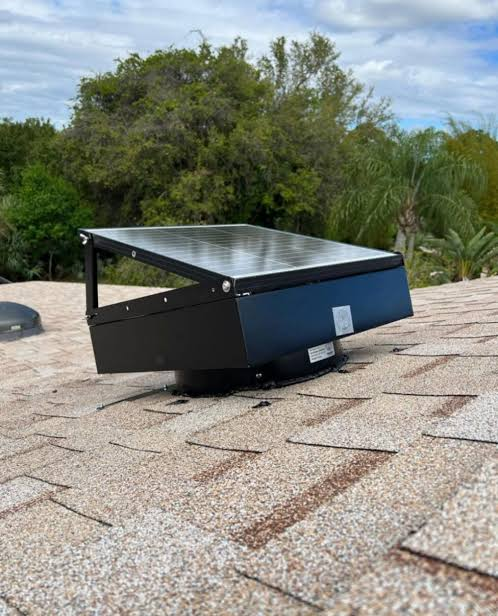
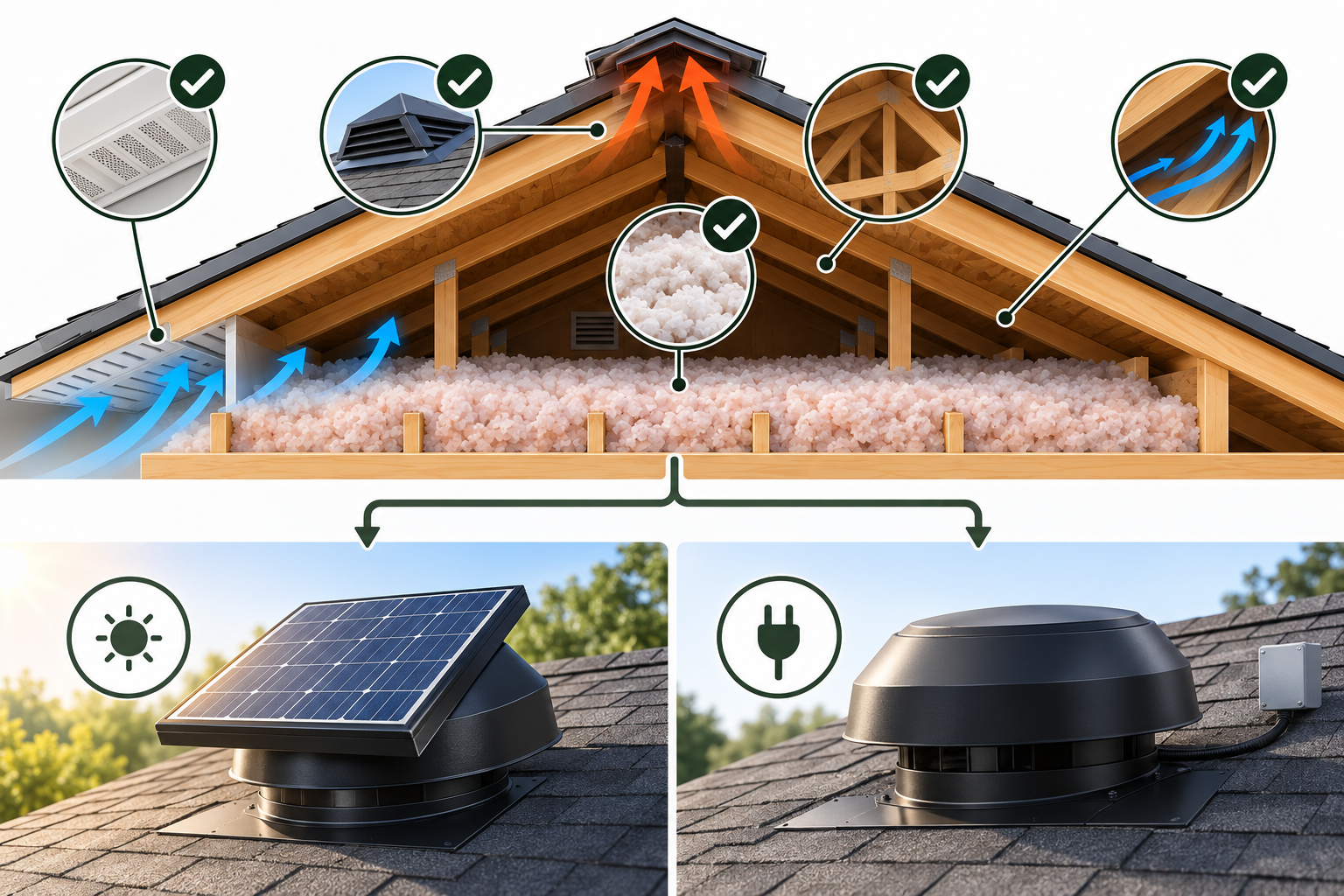
A solar attic fan uses a solar panel to generate the electricity needed to operate its motor. The panel is typically positioned where it can receive sufficient sunlight. Because the power source is tied to available solar energy, operating conditions can vary throughout the day and depending on the system’s design. Some models may include additional electrical components or power storage, so homeowners should check the specifications of the particular unit rather than assuming every solar-powered fan operates the same way. For a home with suitable roof exposure, solar can be an option for powered attic ventilation without relying on a standard household electrical connection for the fan’s primary operation.
⚡ How an Electric Attic Fan Works
An electric attic fan uses household electricity to power its motor. This means its operation isn’t dependent on direct sunlight. Many units can be paired with a thermostat that turns the fan on when the attic reaches a selected temperature. Other control options may also be available depending on the model. The main consideration is energy consumption. Unlike a solar-powered system, an electric unit draws power from the home’s electrical supply when it operates. That doesn’t necessarily make it the wrong choice. The appropriate option depends on how the fan will be used and what the homeowner wants from the system.
💰 Solar vs. Electric Attic Fan Cost
The upfront installation cost can vary significantly for either option. A solar system may involve the fan, solar panel, mounting, wiring, and roof installation. An electric system may involve the fan, electrical connections, controls, and installation. The total price also depends on roof access, attic configuration, the location of the fan, and whether additional work is required. It’s better to compare the complete installed system rather than the price of the fan itself. Operating costs are different as well. Solar power can reduce the amount of household electricity used by the fan, while an electric unit adds to the home’s energy consumption when operating.
🌡️ What About Attic Temperature?
Powered exhaust fans are designed to move air out of the attic. Their potential usefulness depends on whether there is enough air available to replace what the fan removes. This is where the existing ventilation system becomes important. If the attic has adequate intake ventilation, outside air can enter through the available intake pathways as the fan exhausts air.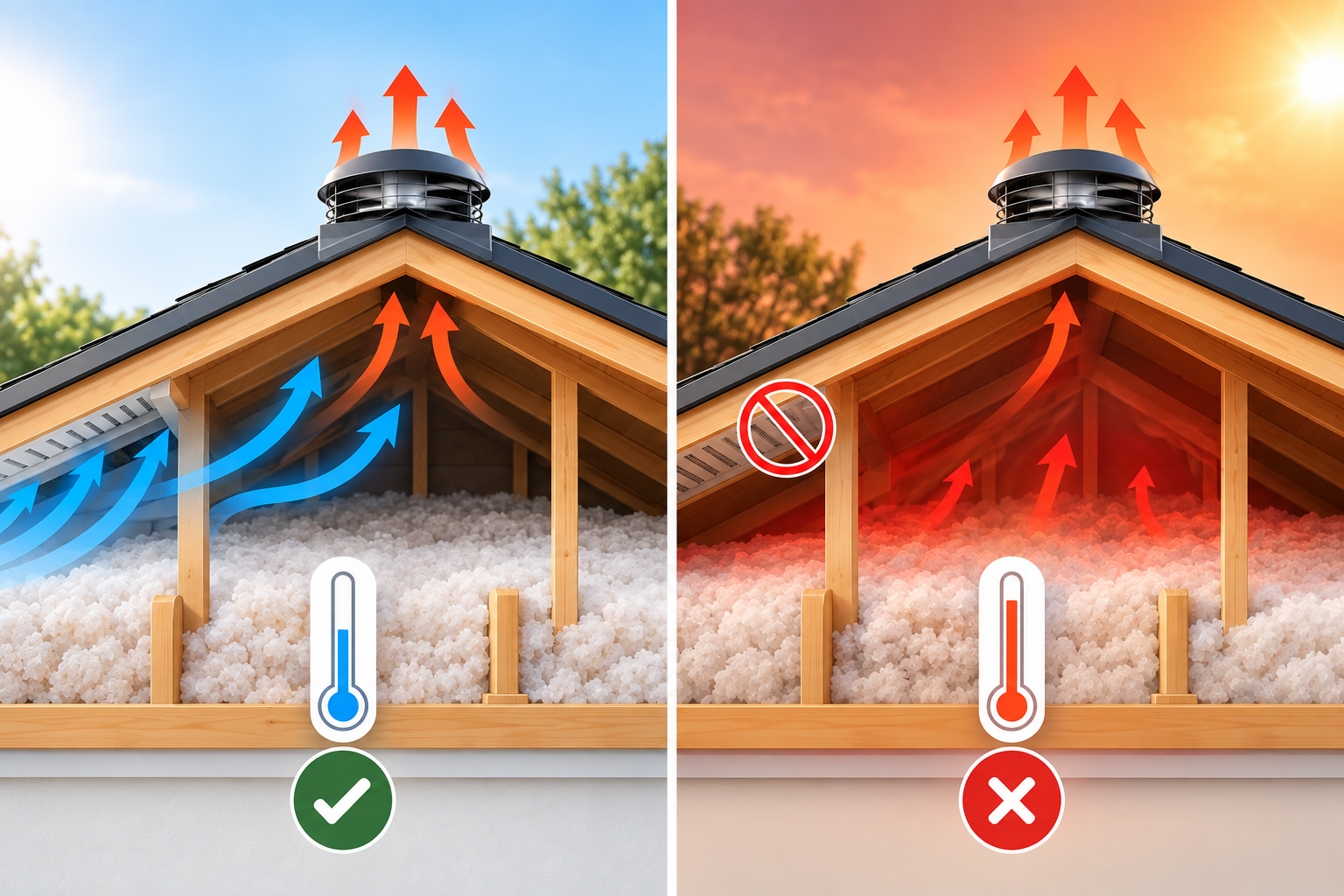
Without enough intake, the fan may not have an adequate supply of replacement air.
🌬️ Intake Ventilation Still Matters
Installing a powered fan doesn’t eliminate the need for soffit ventilation or other intake openings. An exhaust fan removes air. Intake openings provide the pathway for replacement air to enter. If soffit vents are blocked by insulation, debris, or another obstruction, increasing exhaust capacity may not solve the underlying ventilation problem. This is why a powered fan should be considered as part of the complete attic ventilation system rather than as a standalone solution.
⚠️ What Happens When an Attic Lacks Intake Airflow?
Imagine installing a powerful exhaust fan in an attic with very limited intake openings.
The fan is designed to remove air, but there isn’t an adequate pathway for fresh outside air to enter and replace it. The result may not be the improved airflow a homeowner expected. In some situations, the system may pull air from unintended locations instead of creating the desired path through the attic. Before adding powered exhaust ventilation, check the existing intake system and make sure the attic has a suitable airflow pathway.
🎛️ Thermostats and Operating Controls
Controls can affect how often a fan runs. A thermostat can activate an electric fan when the attic reaches a set temperature. Some solar units may also offer controls depending on their design. The goal is to operate the fan when it is actually needed rather than assuming continuous operation is always beneficial. The appropriate settings depend on the fan, attic conditions, and the overall ventilation strategy.
🔧 Maintenance and Lifespan
Both systems contain components that can eventually require maintenance. A solar unit may need attention to the fan motor, mounting components, solar panel, and associated wiring or controls. An electric unit may require inspection of the motor, electrical connections, thermostat, and other components. The expected lifespan depends on the equipment, installation quality, operating conditions, and maintenance.
Neither type should be considered maintenance-free simply because of its power source.
🔊 What About Noise?
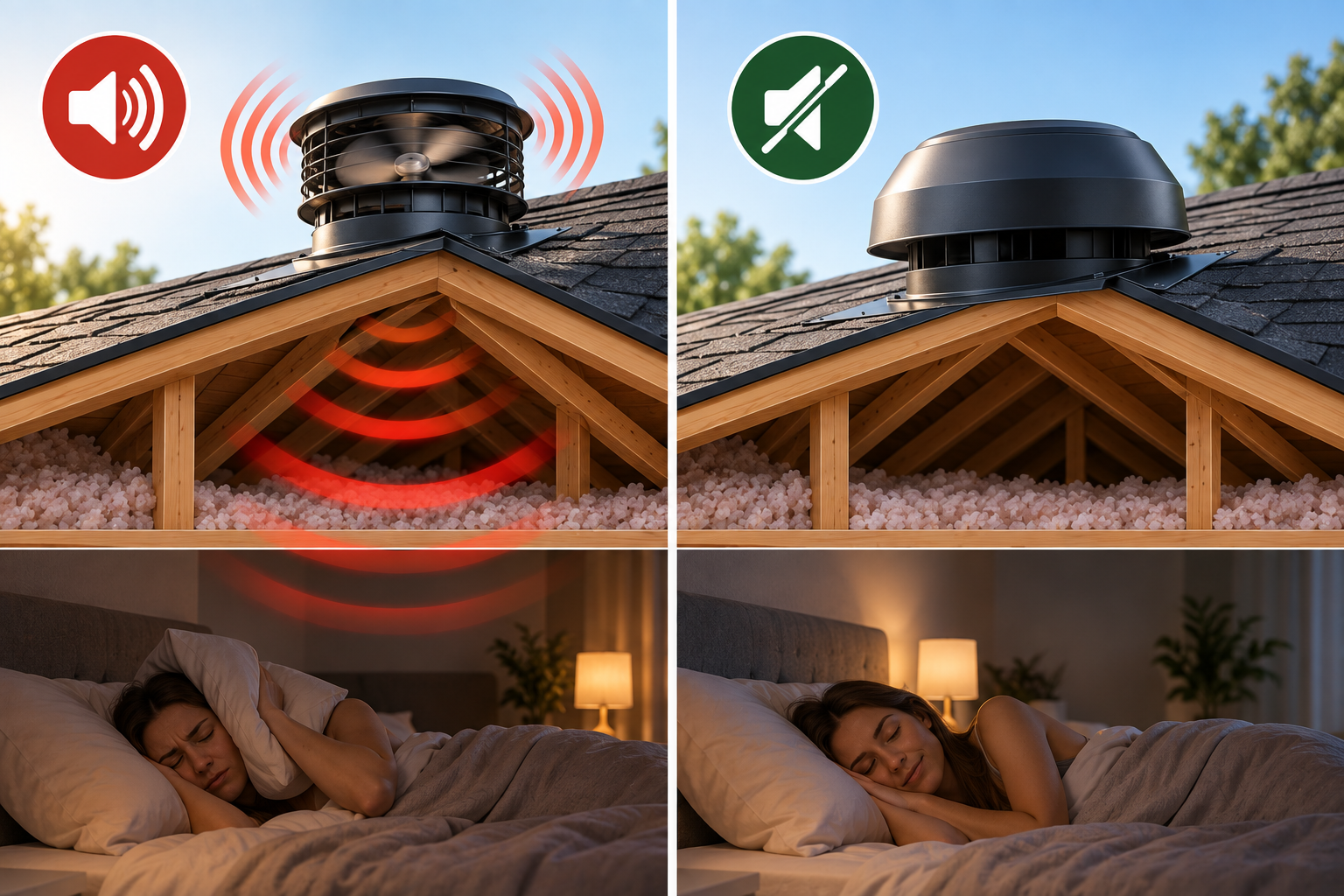
Noise depends more on the specific fan and motor design than on whether the unit is solar or electric. A homeowner comparing models should check manufacturer specifications and consider where the fan will be installed. A fan mounted close to living areas may have different noise considerations from one installed in a less occupied attic location.
🌴 Which Option Makes Sense for South Florida Homes?
The homes environment can make attic heat and humidity an important consideration, but the climate alone doesn’t determine which fan should be installed. A solar option may appeal to homeowners who want a powered exhaust fan that primarily operates using solar energy and have suitable roof exposure. An electric model may make more sense where consistent electrical operation and specific control options are priorities. But neither decision should be made before looking at the existing intake and exhaust ventilation.
💡 Will an Attic Fan Lower Your Energy Bills?
There isn’t a guaranteed answer. Potential effects on energy consumption depend on factors such as blow-in insulation, air sealing, attic construction, HVAC performance, existing ventilation, outdoor conditions, and how the fan operates. An attic fan shouldn’t be marketed as a guaranteed way to reduce electric bills. If a home has inadequate insulation or significant air leakage, addressing those issues may be more relevant than simply adding powered exhaust ventilation.
🏠 Solar or Electric: Look at the Whole System
The choice between a solar and electric fan shouldn’t start with the fan. First, evaluate the attic’s existing intake ventilation, exhaust ventilation, insulation, roof design, and airflow pathways. If the system already has blocked soffit vents or inadequate intake capacity, adding a powered exhaust fan may not address the underlying issue. Once the attic has been evaluated, you can compare whether a solar or electric option fits the property’s conditions and the homeowner’s priorities.
🔍 Have the Ventilation System Evaluated First
If you’re considering powered attic ventilation, an attic inspection can help identify what the existing system is doing and whether additional exhaust is actually appropriate. Attic Fanatics can evaluate attics, including existing intake and exhaust ventilation, insulation, airflow pathways, and other conditions that may affect fan performance. That gives homeowners a clearer basis for deciding whether they need a solar attic fan, an electric attic fan, changes to the existing ventilation, or another solution.