Blown-In vs. Spray Foam Insulation: Which Is Better for Your Attic?
When comparing blown in vs spray foam insulation, the biggest difference isn’t simply the material. The two systems work differently, particularly when it comes to air sealing, moisture control, and how the attic is designed. The right choice depends on the existing attic, your insulation goals, budget, and whether the space is intended to remain vented or become part of the conditioned building envelope.
Blown-In vs. Spray Foam at a Glance
Factor | Blown-In | Spray Foam |
R-value | Depends on the material and installed depth | Varies by foam type and thickness |
Air sealing | Usually requires separate air-sealing work | Can create an air-sealing layer when correctly installed |
Installation | Applied as loose material with specialized equipment | Sprayed directly onto the intended surface |
Cost | Often depends on material quantity, attic size, and installation | Generally involves higher material and application costs |
Moisture | Does not prevent moisture problems by itself | Can provide moisture resistance depending on the product and application |
Attic ventilation | Commonly used in vented attic assemblies | Can be used in different attic assemblies depending on design |
Durability | Can perform well when properly installed and kept dry | Can provide long-term performance when properly installed |
Accessibility | Useful for covering open attic floors and irregular areas | Can be useful on roof decks and other surfaces |
Best suited to | Many conventional attic floors and existing vented spaces | Applications where insulation and air sealing are both part of the design |
How the Two Systems Work Differently
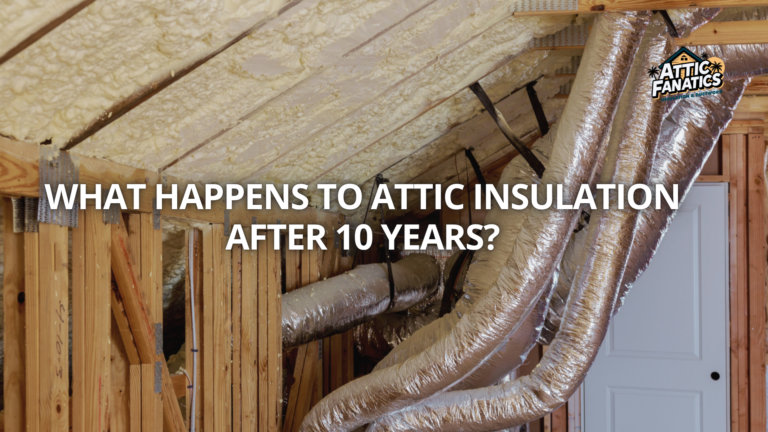
Blown-in material is distributed across the attic using specialized equipment. It is commonly installed over the attic floor and can settle around framing, wiring, and other obstacles. Its primary job is to slow heat transfer. If there are gaps around penetrations or other areas where air can move through the building envelope, those openings generally need to be sealed separately. Spray foam is applied directly to the surface and expands as it cures.
Depending on the product and application, it can provide both thermal insulation and an air-sealing layer.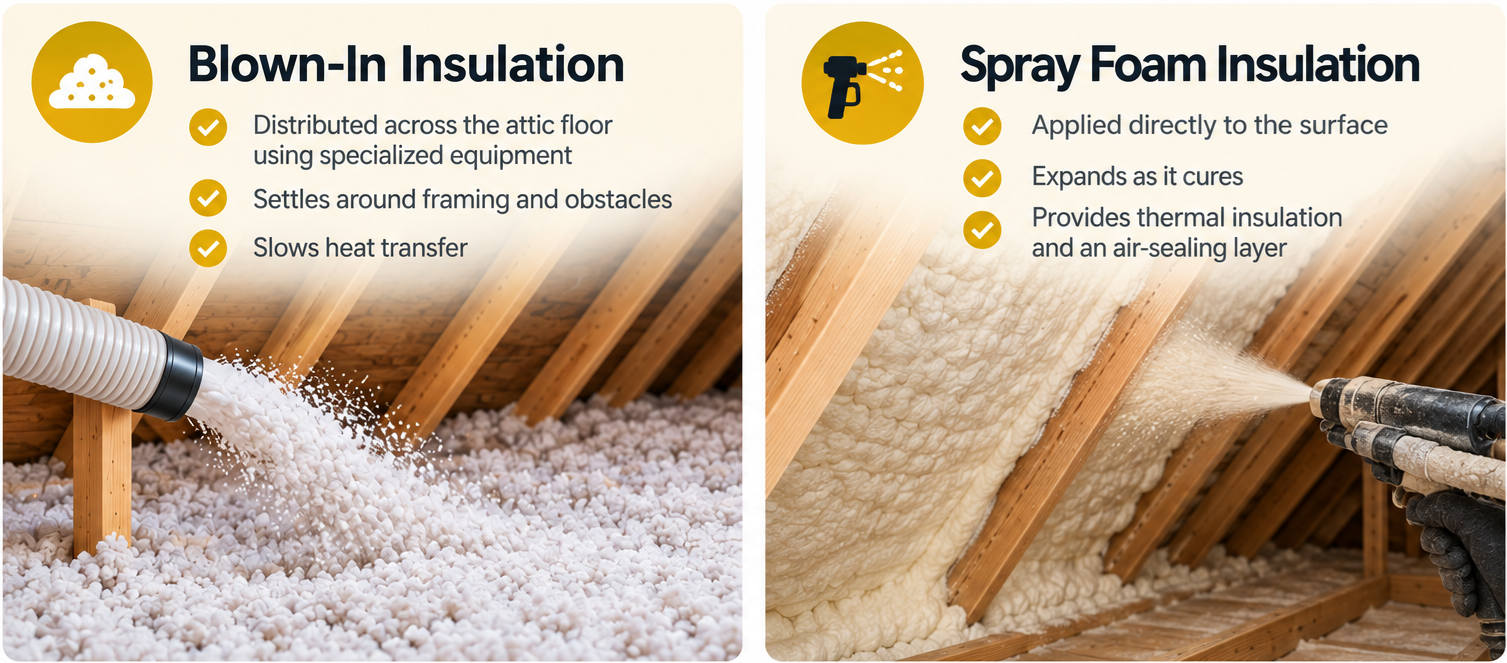
That difference is one of the main reasons homeowners should look beyond the material itself when comparing the two options.
Insulation and Air Sealing Are Not the Same
Adding blow-in insulation does not automatically stop air leakage. Air can move through gaps around wiring, pipes, vents, recessed fixtures, framing joints, and other penetrations. Those areas may need dedicated air sealing before or alongside the insulation work. With spray foam, the material itself can form an air-sealing layer when it is correctly applied to the intended surfaces. That doesn’t mean every application automatically seals every opening. Proper preparation and installation still matter. This distinction is important when comparing quotes. One proposal may include separate air-sealing work while another may not.
What About R-Value?
Both systems can provide a specified R-value, but the amount required depends on the material and how it is installed. Spray foam products can have different performance characteristics depending on whether the installer uses open-cell or closed-cell foam. Blown-in materials also vary in their thermal performance. Instead of comparing a single number from a product sheet, look at the insulation level the complete system is designed to provide. The target should also fit the attic assembly and the home’s construction rather than being selected in isolation.
 Open-Cell vs. Closed-Cell Spray Foam
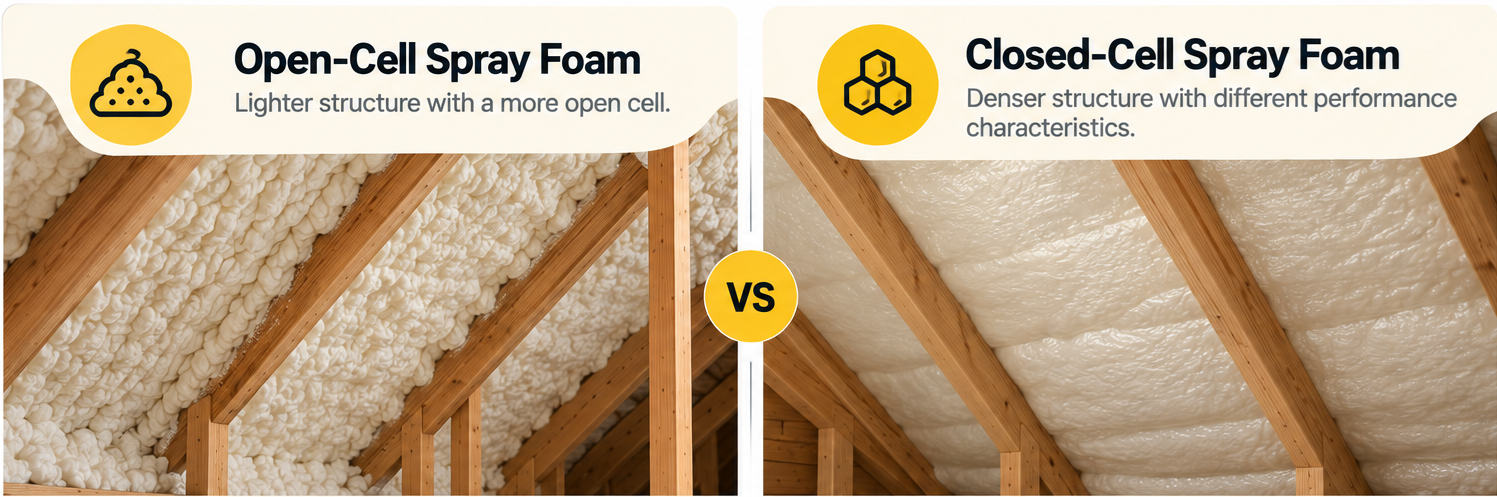
Not all spray foam works the same way. Open-cell spray foam has a lighter, more open structure and is commonly used where its particular expansion and insulation characteristics suit the application. Closed-cell spray foam has a denser structure and can provide different thermal and moisture-control characteristics. The choice between them depends on the surface being treated, the desired performance, moisture conditions, and the overall attic design. Homeowners shouldn’t assume that one type is automatically better simply because its specifications appear higher.
Moisture Needs to Be Part of the Conversation
Moisture is especially important in the South Florida climate. Leaks, condensation, humidity, and other moisture sources can affect an attic regardless of which insulation material is selected. The insulation itself should not be treated as a solution to an unresolved moisture problem. If an attic has a leak or ventilation issue, that condition should be addressed as part of the overall project. Spray foam may offer certain moisture-control characteristics depending on the product, but it doesn’t eliminate the need to identify and correct the source of unwanted moisture.
Vented vs. Unvented Attics
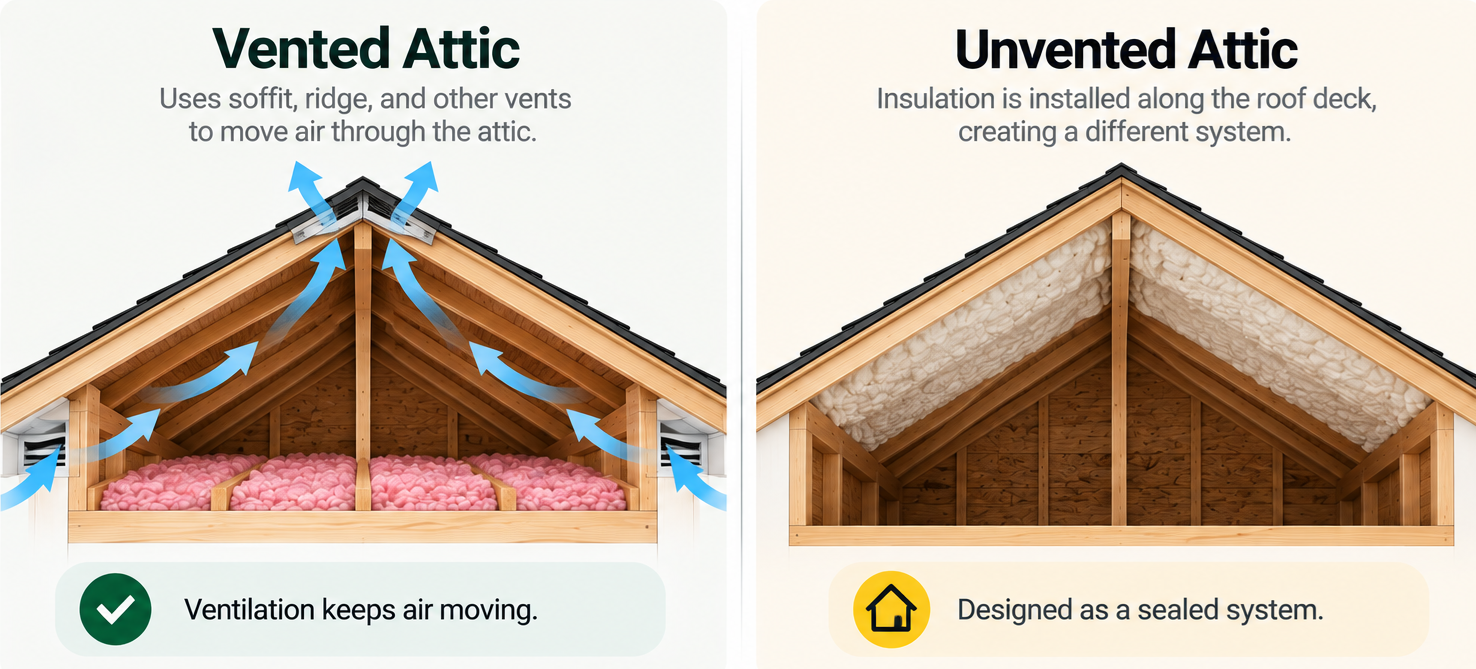
Your attic’s design can influence which insulation approach makes sense. A vented attic typically relies on ventilation pathways that allow air to move through the attic space. Soffit vents, ridge vents, and other openings are part of that system and need to remain functional. An unvented attic is designed differently. In some applications, insulation is installed along the roof deck to create a different relationship between the attic and the conditioned space below. Because the two assemblies work differently, homeowners shouldn’t choose an insulation material first and figure out the attic design afterward. The insulation, air sealing, moisture control, and ventilation strategy need to work together.
Is Spray Foam More Expensive?
The insulation cost depends on the size of the area, material selected, installation method, accessibility, and the preparation required. Spray foam generally involves different material and labor requirements than blown-in systems, which can make the total project cost higher in some applications. But comparing only the material price doesn’t tell you the whole story. For example, if a project requires separate air sealing, preparation, or other work alongside blown-in insulation, those costs should be considered when comparing it with a spray foam proposal. Look at the complete scope rather than choosing based on the lowest initial number.
Which Option Makes Sense for Your Attic?
There isn’t one answer for every property. A blown-in system may make sense for a conventional attic floor where the goal is to increase thermal resistance while maintaining the existing vented design. Spray foam may be considered when air sealing is a major part of the project or when the attic assembly calls for insulation at the roof deck. Existing conditions matter too. The current insulation, ventilation, moisture, access, roof design, and intended use of the attic can all affect the decision. The goal is to choose an insulation system that fits the way the attic is built and how the homeowner intends to use the space.
Evaluate the Attic Before Choosing the Material
The best place to start isn’t with a product. It’s with the attic.
An evaluation can identify existing insulation, air leakage, moisture concerns, ventilation pathways, access limitations, and the type of attic assembly you’re working with. Attic Fanatics USA can help homeowners in South Florida assess these conditions and determine an appropriate insulation strategy. That evaluation can help clarify whether a blown-in system, spray foam, or another approach fits the property.