Why Blow-In Insulation Fails Sooner Than You Think
Most homeowners expect insulation to keep performing for decades without much attention. While quality materials can last a long time, certain conditions can cause performance to decline much earlier than expected.
Over time, aging materials, moisture problems, and hidden gaps can reduce efficiency. When comfort changes or energy bills increase, the issue may not be the HVAC system; it could be what is happening above the ceiling.
 Why Blow-In Insulation Loses Performance Over Time
 Why Blow-In Insulation Loses Performance Over Time
Blow-in insulation is designed to create a protective layer that slows heat transfer and helps maintain indoor comfort. However, like any home system, its effectiveness depends on proper installation, material condition, and environmental factors.
As years pass, the material can shift, compress, or become affected by outside conditions. These changes reduce its ability to provide consistent temperature control throughout the home.
Common Reasons Insulation Stops Working Early
Settling and Material Compression
One of the most common reasons performance declines is settling. Loose-fill materials naturally compress over time, which reduces thickness and coverage.
When the insulation layer becomes thinner, it may no longer provide the same resistance against heat movement. This often creates uneven temperatures and forces cooling systems to work harder.
Moisture Problems Inside the Space
Roof leaks, high humidity, and poor ventilation are some of the biggest threats to long-term insulation performance. When excess water enters the space, materials can become heavier, compressed, and less effective at controlling temperature.
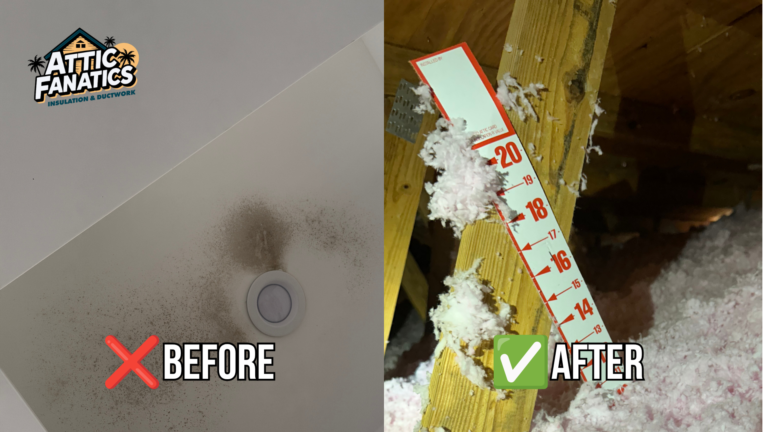
Over time, trapped humidity may also create conditions for mold growth and affect overall indoor air quality if the issue is not addressed properly.
Poor Installation Quality
Even good materials can fail early when they are not installed correctly. Uneven coverage, missed spaces, or incorrect depth can create weak points from the beginning.
A proper installation requires balanced distribution to ensure the entire area receives consistent protection.
How Different Materials Age Over Time
Cellulose Performance Changes
Cellulose is commonly used because it provides dense coverage and fills irregular spaces well. However, it can experience gradual compression as years pass. If exposed to excess dampness, the material may settle faster and gradually lose some of its original effectiveness.
Fiberglass Performance Changes
Fiberglass is lightweight and resistant to many environmental factors, but it still requires proper placement. Movement, disturbance, or gaps can reduce coverage over time.
Regular inspection helps determine whether the existing material is still performing correctly.
Airflow and Hidden Gaps
Controlled ventilation is important, but unwanted air movement through cracks and openings can reduce efficiency. These leaks allow conditioned air to escape and outdoor temperatures to influence the home.
Addressing these problems is often necessary before adding new materials.
Signs You May Need Blow Insulation in Attic Evaluation
Insulation issues are not always visible from living areas. However, certain warning signs may indicate reduced performance.
- Uneven temperatures between rooms
- Increasing energy costs without lifestyle changes
- Moisture signs or unusual odors
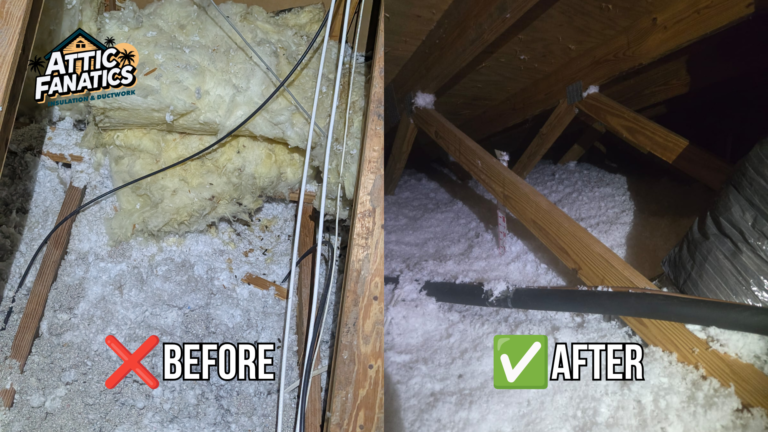
- Thin, uneven, or compressed insulation layers
- Heating or cooling systems running longer than normal
 Uneven temperatures between rooms
 Increasing energy costs without lifestyle changes
 Moisture signs or unusual odors
 Thin, uneven, or compressed insulation layers
 Heating or cooling systems running longer than normal
These symptoms can suggest the current system is no longer supporting home efficiency properly.
When Attic Insulation Replacement Makes More Sense
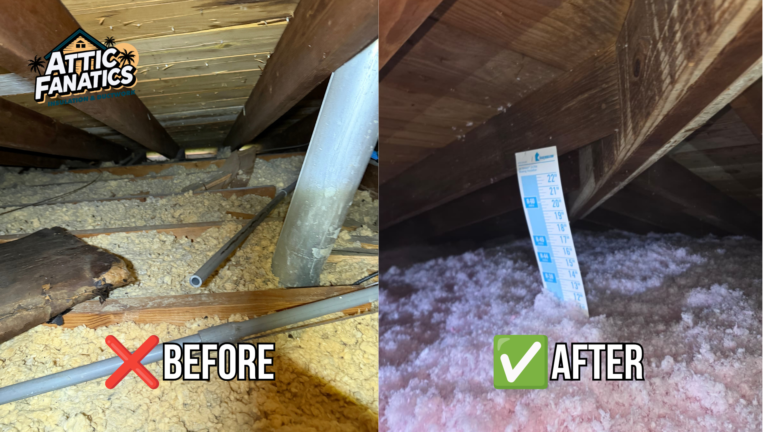
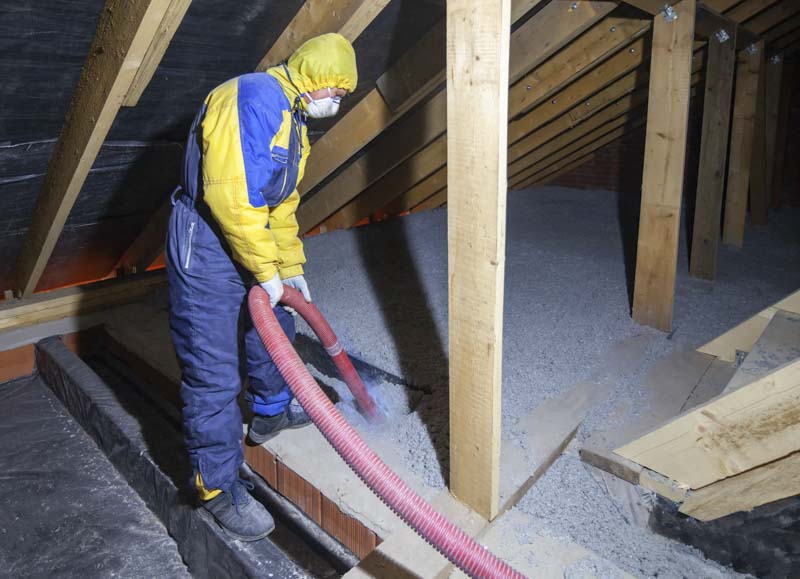
Adding more material is not always the right solution. If existing insulation is wet, contaminated, damaged, or severely compressed, covering it may only hide the original problem.
Replacement is usually recommended when the current material can no longer deliver reliable performance. Removing damaged insulation also allows hidden issues, such as leaks or air gaps, to be corrected before installing a new system.
How Attic Fanatics Restores Comfort and Efficiency
Attic Fanatics evaluates existing insulation conditions, identifies performance issues, and recommends solutions based on the home’s needs. The process focuses on correcting the cause of efficiency loss instead of temporarily covering the problem.
With proper removal, preparation, and installation, homeowners can improve comfort, reduce energy waste, and create a more efficient living environment.
Keep Your Insulation Working Longer
A well-performing insulation system depends on more than just the material installed. Proper depth, moisture control, sealing, and regular evaluation all contribute to long-term results.
If your home feels less comfortable or energy use keeps increasing, scheduling an insulation assessment can help determine whether repairs, improvements, or replacement are the best next step.