🏚️ How Flattened Attic Insulation Rots Florida Roofs
Most homeowners think of insulation as a tool for controlling indoor temperatures and reducing energy bills. While that’s certainly true, insulation also plays an important role in protecting the roof structure itself. When it becomes compressed, damaged, or ineffective, the consequences extend far beyond comfort and efficiency. In Florida’s humid climate, flattened insulation can contribute to moisture accumulation, poor ventilation performance, and conditions that encourage deterioration of the roof deck. What appears to be a minor issue hidden beneath the roofline can gradually affect some of the most important structural components of the home.
❓ What Causes Attic Insulation to Flatten?
Insulation materials are designed to maintain a specific thickness. That thickness creates air pockets that help slow heat transfer. When the material becomes compressed, its ability to perform effectively decreases.
⏳ Age and Compression
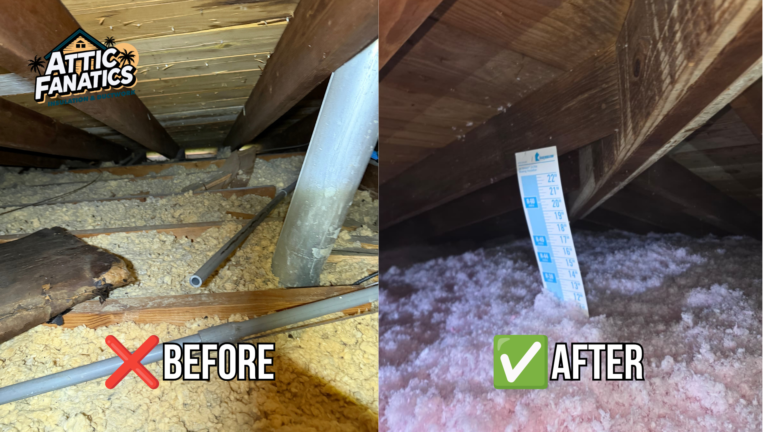
Over time, many insulation materials naturally settle. Years of exposure to temperature fluctuations and gravity can reduce thickness and create uneven coverage. As the material compresses, it loses much of its original thermal resistance, making it less effective at controlling heat movement.
💧 Moisture Exposure
Water is one of the biggest threats to insulation performance. Roof leaks, condensation, and excessive humidity can cause materials to become heavy and compacted. Once moisture enters the insulation, it often accelerates deterioration and reduces overall effectiveness.
🥾 Foot Traffic in Attics
Walking through attic spaces can compress insulation significantly, especially when people repeatedly use the same pathways. Service technicians, contractors, and homeowners may unintentionally flatten large sections over time. These compressed areas often become weak points where heat and moisture problems develop more easily.
📉 How Flattened Insulation Affects Attic Conditions
When insulation loses its thickness, it affects more than just indoor comfort. The entire attic environment can begin to change.
🌡️ Reduced Thermal Protection
Compressed material provides less resistance to heat transfer. More heat enters the attic space, increasing temperatures and creating greater stress on roofing materials. This can make cooling systems work harder while raising overall energy consumption.
🧽 Increased Moisture Retention
Flattened insulation often struggles to dry efficiently when exposed to moisture. Instead of allowing air to circulate through the material, compression can trap dampness for longer periods. This is one of the most common compressed insulation problems found during attic inspections.
🌀 Poor Attic Airflow
Proper airflow relies on a balance between insulation and ventilation. When insulation becomes uneven or compacted, airflow patterns may be disrupted. Restricted airflow allows humidity and heat to remain trapped, creating an environment that encourages moisture-related damage.
📉 Reduced thermal performance
🔥 Higher attic temperatures
💦 Trapped moisture within materials
🌀 Poor ventilation efficiency
🏚️ Increased risk of structural deterioration These issues often develop gradually, making them easy to overlook until larger problems appear.
🪵 Connection Between Moisture and Roof Deck Damage
The roof deck forms the structural surface beneath roofing materials. When excess moisture accumulates nearby, the wood can begin to deteriorate over time.
🏚️ Wood Deterioration
Wood repeatedly exposed to moisture may soften, weaken, and eventually begin to decay. This process often occurs slowly, making early detection difficult. Many cases of roof deck moisture damage develop over years rather than months.
🍄 Mold Formation
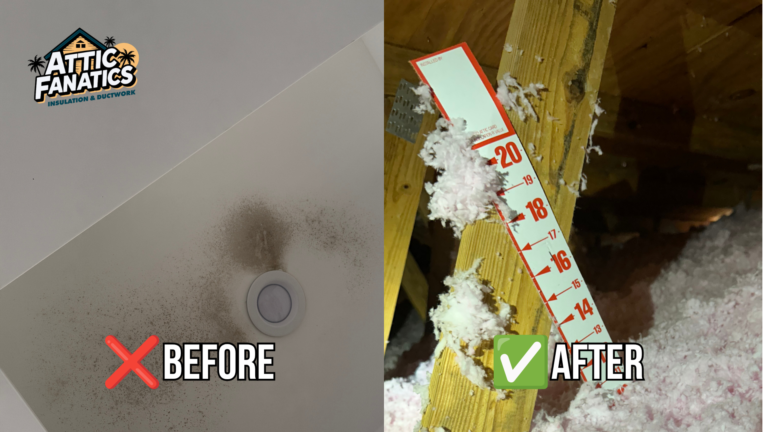
Persistent humidity and damp conditions can support mold growth on wood surfaces. Once established, mold may spread throughout affected areas and contribute to indoor air quality concerns. The combination of trapped moisture and warm temperatures creates ideal conditions for microbial growth.
🏗️ Long-Term Structural Concerns
If moisture problems continue unchecked, deterioration can affect the structural integrity of the roof system. Repairs become more complex and expensive as damage progresses. Addressing insulation problems early is often far less costly than repairing damaged roof decking later.
🛠️ Restoring Attic Insulation Performance
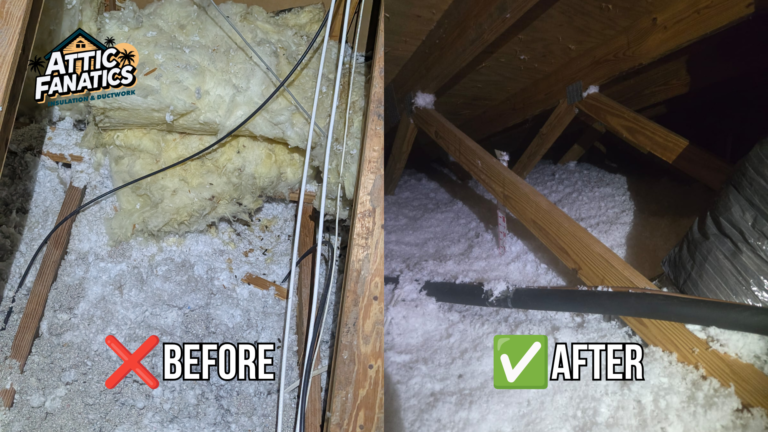
When insulation becomes severely compressed, replacement is often the most effective solution. Restoring proper depth and coverage helps improve temperature control and reduce moisture-related concerns. Professionals typically evaluate the condition of the existing material, identify moisture sources, and assess ventilation performance before recommending corrective action. In many attic insulation replacement in Florida projects, improving airflow and addressing humidity concerns are just as important as replacing the insulation itself.
🦉 How Attic Fanatics Protects Roof Systems
Attic Fanatics evaluates insulation performance as part of a broader approach to attic health. By identifying compressed areas, moisture concerns, and ventilation issues, they help restore conditions that support both energy efficiency and roof durability. This comprehensive approach helps reduce the likelihood of long-term moisture problems that can affect structural components over time.
❓Frequently Asked Questions
❓Is flattened insulation still effective?
❓Can compressed insulation be restored?
❓Does insulation affect roof lifespan?
❓What causes roof deck rot?