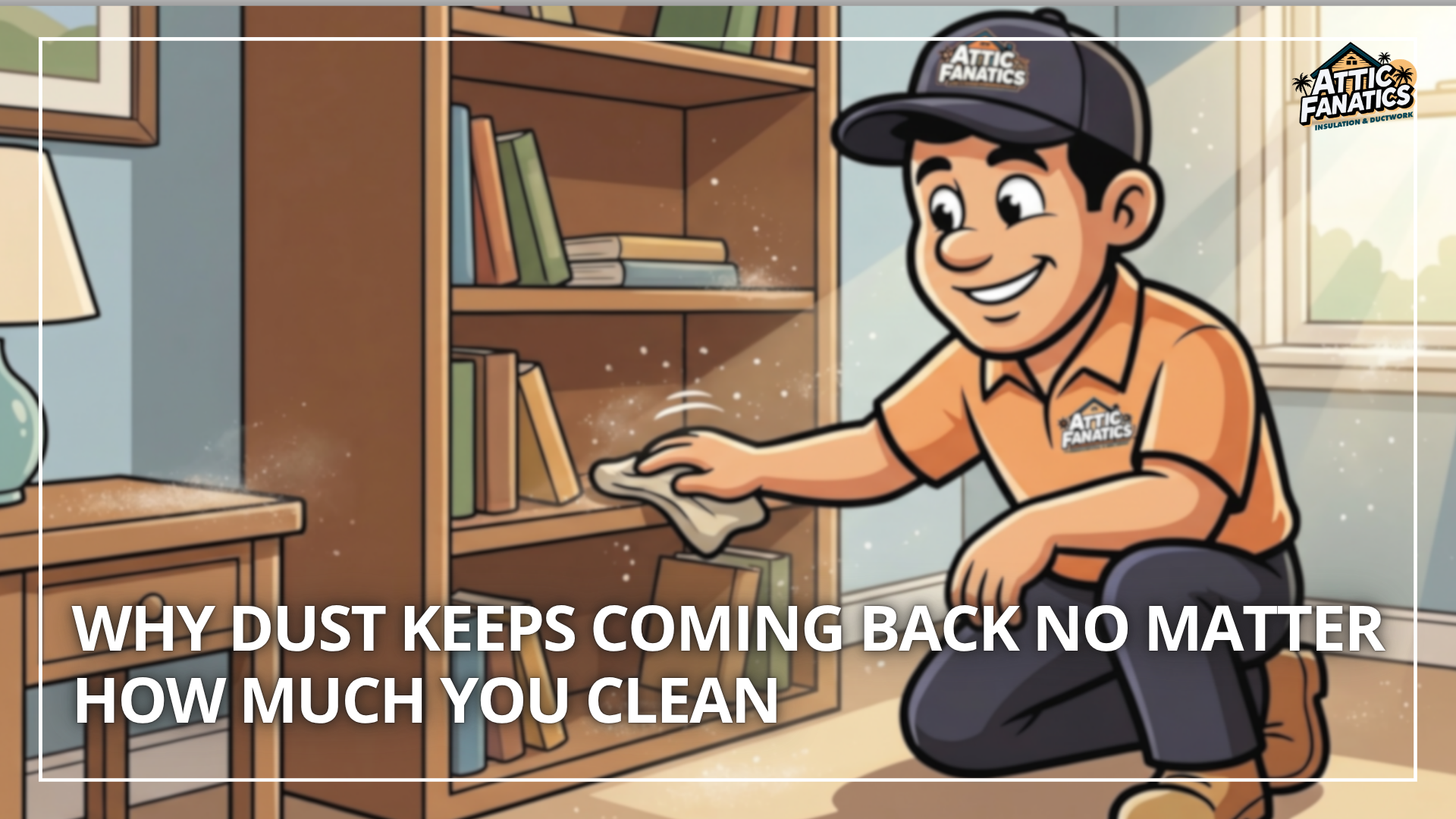
🧹 Why Dust Keeps Coming Back No Matter How Much You Clean
You spend your entire weekend vacuuming, wiping down tables, and polishing shelves, only to look around forty-eight hours later and see a fresh gray film settling over everything. It is incredibly frustrating to feel like you are losing a never-ending battle against household grime. Most homeowners in South Florida assume they just need better vacuums, stronger cleaning sprays, or more frequent routines, completely missing the real culprit.
If you are constantly wondering why dust keeps coming back no matter how much you clean, the answer is rarely about your housekeeping skills. Instead, your home is likely suffering from systemic air filtration and structural issues originating directly from the dark, forgotten attic cavity right above your head.
🌬️ How Air Leaks from the Ceiling Space Drive Persistent Household Dust
To understand why your living room surfaces never stay clean, you have to look at the massive pressure dynamics inside your house. An unsealed ceiling acts like a porous sieve rather than a solid barrier. When small gaps exist around your recessed lights, exhaust fans, and attic hatches, air constantly circulates between the upper structural cavity and your living quarters.
This structural flaw explains why dust keeps coming back no matter how much you clean, as dirty air from above is continuously pushed down into your breathing zones.
🌡️ The Florida Stack Effect
In the intense climate of South Florida, the “stack effect” plays a massive role in indoor air dynamics.
🥵 Summer Pressure: Warm air rises and escapes through roof vents, creating a negative pressure zone below that pulls outdoor air inside.
🌀 AC Air Pull: When your air conditioner runs heavily, it shifts internal pressures, often pulling contaminated air down from unsealed ceiling gaps.
⏳ The Forty-Eight Hour Film: This continuous movement carries microscopic particles, crumbled drywall dust, and outdoor soot directly into your home, coating your shelves hours after you finish cleaning.
🏚️ The Shocking Breakdown of Old Attic Insulation Barriers
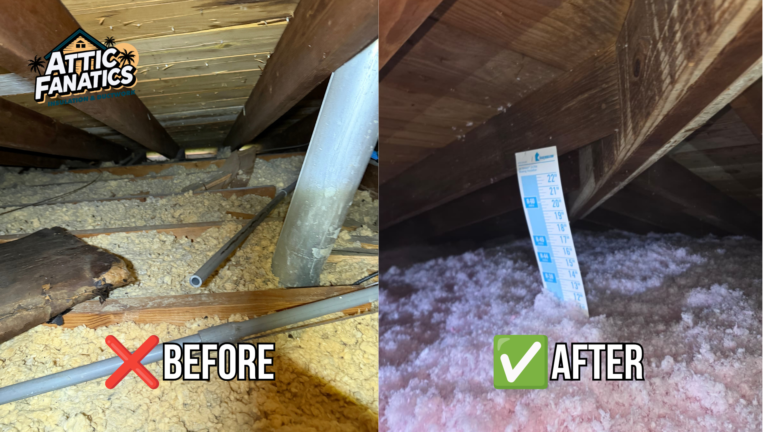
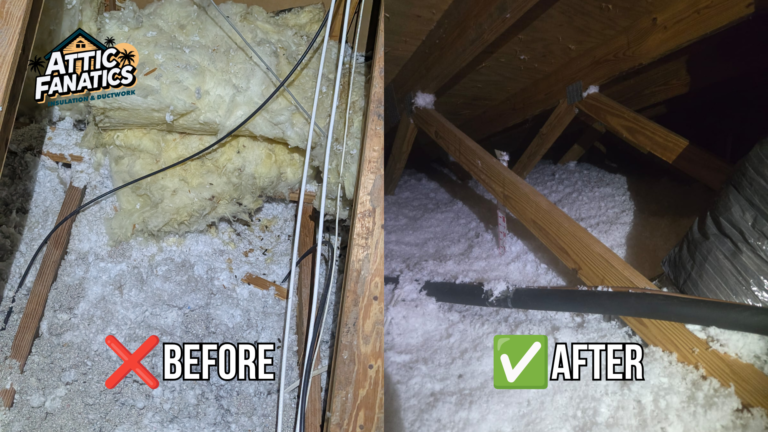
Many property owners do not realize that the pink or gray material sitting above their heads has a limited shelf life. Over decades of enduring extreme South Florida heat, traditional insulation products experience massive structural degradation. When this material crumbles, it transforms from a helpful thermal shield into a primary source of airborne pollution. If your home has old, decaying attic insulation dust generation skyrockets, sending fine particles through every minor ceiling penetration.
When traditional fiberglass or outdated cellulose starts to dry out, it sheds tiny fibers at the slightest air movement. These microscopic glass fragments and cellulose dust particles are so light that they remain suspended in the air for hours before settling on your furniture. If you notice that your household dust feels unusually scratchy, or if cleaning your tabletops causes immediate throat tickles, you are likely dealing with disintegrating insulation material. No amount of surface wiping will stop this process until the degraded overhead material is completely addressed.
🐀 Pest Infestations and Biological Material Coated in Attic Insulation Dust
A dusty home is often a direct indicator of wildlife activity that has gone unnoticed right above your ceiling. Attics in South Florida are notorious targets for rodents, insects, and bats looking to escape the outdoor humidity. Once these pests infiltrate your roof space, they shred traditional batting or loose-fill materials to construct elaborate nesting grounds, creating a massive amount of debris.
This destructive nesting process leaves behind significant biological contaminants that blend seamlessly with the crumbling insulation fibers, turning ordinary household dust into a potential health hazard.
| 🪓 Source of Debris | 🦠 How It Becomes Dust | 😷 Impact on Your Home |
| Rodent Infestations | Fecal matter and urine dry out, crumbling into microscopic toxic dust particles. | Causes heavy air, bad smells, and unexplained allergy triggers. |
| Insect Exoskeletons | Dust mites and cockroaches leave behind shed skins and droppings that break down. | Mixes with insulation fibers and settles on bedding and furniture. |
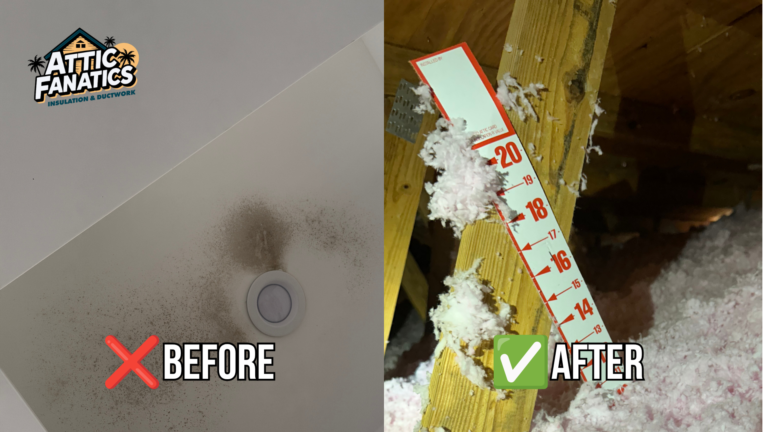
| Fungal Microspores | High humidity turns old insulation into a sponge, allowing hidden mold colonies to grow. | Spores drop through ceiling cracks, creating a constant supply of gray dust. |
💨 Leaky AC Ducts Pulling Attic Air into Your Breathing Zone
The problem becomes significantly worse when your home’s mechanical climate control system is compromised. Most South Florida homes have their entire HVAC duct network routed directly through the hot attic cavity. If these air ducts are old, unsealed, or cracked, they act like a massive vacuum cleaner, drawing in superheated, filthy air from the attic space every single time your air conditioner turns on.
When your HVAC system experiences duct leaks, it stops circulating clean, filtered indoor air. Instead, it sucks in the heavy, contaminated air from the attic cavity and forcefully blasts it out through your ceiling supply vents. This mechanical failure distributes fine insulation particles, pest debris, and decades of accumulated attic dust straight into your bedrooms and living rooms. If you notice a fresh layer of gray film on your nightstands every morning, your air conditioner is functioning as a direct delivery system for overhead pollutants.
🛠️ Eradicating the Source of Chronic Dust with Professional Solutions
Wasting your weekends with spray bottles and microfiber cloths will never solve a structural dust issue. To permanently halt the endless cycle of grime, you have to seal the pathways connecting your living space to the attic and remove the deteriorating materials causing the pollution. Ignoring these symptoms allows airborne irritants to continuously compromise your indoor air quality and strain your cooling equipment.
To completely clean your home’s air and eliminate the true root of persistent dust, a professional team must implement a strategic, multi-step structural intervention:
🔍 Thermal Air Leak Analysis: Utilizing advanced technology to pinpoint exactly where air, heat, and attic dust are slipping through your ceilings.
🗑️ Safe Insulation Removal: Utilizing high-powered commercial vacuums to completely extract degraded, pest-contaminated material without exposing your living areas to dust.
🧼 Attic Decontamination: Applying targeted sanitizing treatments to eliminate mold spores, bacteria, and pest proteins from the wooden structures.
🌬️ Duct Cleaning and Sealing: Cleaning out accumulated debris from your HVAC channels and completely sealing duct joints to keep attic air out of your vents.
Attic Fanatics providing homeowners across South Florida with permanent relief from chronic indoor pollution. By executing precise attic insulation removal, thorough sanitation, and expert duct cleaning, they disconnect your living spaces from the dirty air above your head. Upgrading your home with clean, modern blow-in or high-performance spray foam insulation prevents particulate migration, completely stabilizes your indoor climate, and dramatically drops your monthly energy costs.
Investing in a professionally sealed and insulated home transforms your living space from a dusty nightmare into a clean, healthy haven. Once your air delivery systems are completely isolated from overhead debris, your home stays visibly cleaner, the air feels noticeably lighter, and you can finally put down the duster and enjoy a truly pristine environment.
❓Frequently Asked Questions
❓Can a dusty attic really cause dust to appear in my downstairs rooms?
❓Why does my house get dusty so fast when the air conditioning is running?
❓Is attic insulation dust dangerous to breathe in every day?
❓Will buying a high-end air purifier stop this constant dust problem?