Why Your 150° Florida Attic is Killing Your AC and Budget 🔥🏠
You lower the thermostat. The AC turns on. And somehow… your home still feels warm.
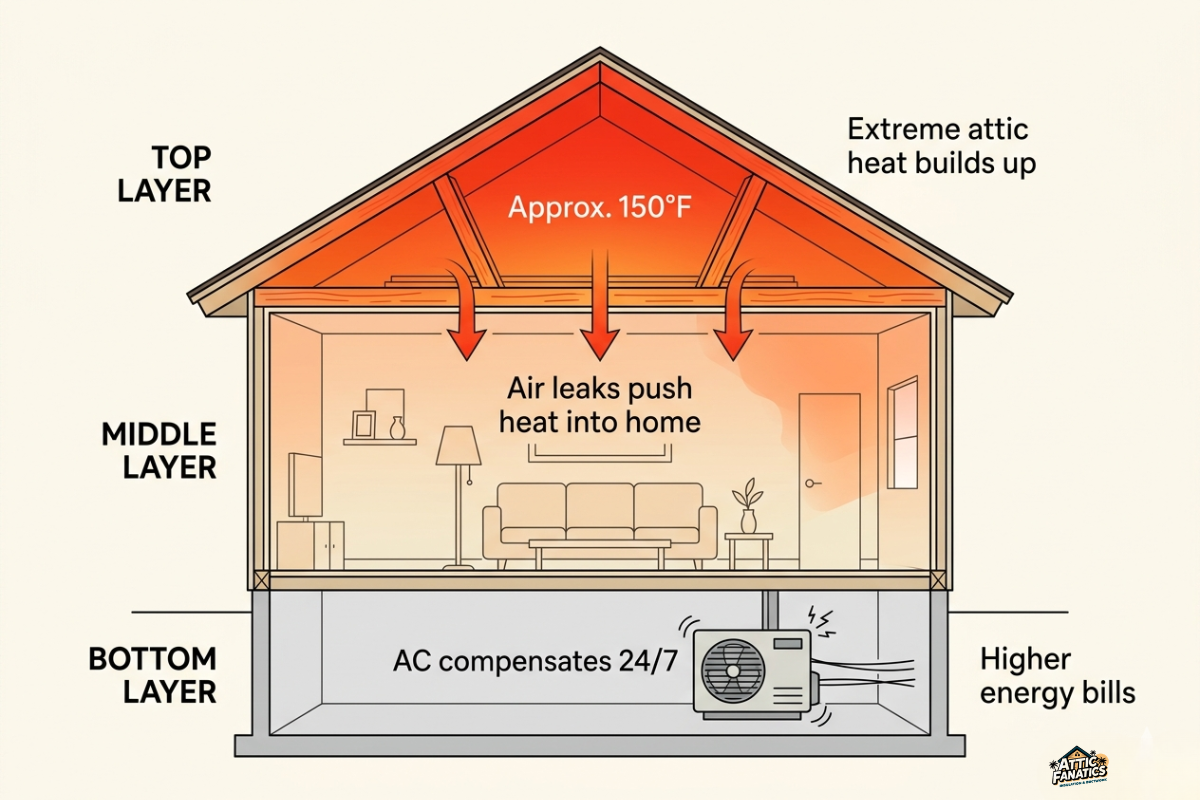
Here’s what most homeowners miss: the space above your ceiling can reach temperatures close to 150°F during summer. That heat doesn’t just sit there, it pushes down into your living space, forcing your cooling system to fight a constant uphill battle.
And the frustrating part? It’s happening every day, quietly driving up your energy bills.
Why Your Attic Is the Biggest Source of Heat in Your Home 🌡️
Your roof space acts like a heat trap. Sunlight hits your roof all day, and that heat builds up in the upper level of your home.
Without proper protection, that heat transfers directly into your conditioned floor area. Even if your AC is running, it’s constantly trying to offset the heat coming from above.
This is where most homes lose efficiency. It’s not the AC; it’s the home’s top layer, allowing heat to move freely inside. And the longer this heat transfer continues, the harder your system has to work just to maintain a basic level of comfort. Over time, this constant strain doesn’t just increase your bills; it also shortens the lifespan of your cooling system.
The R-Value Reality Check: Why R-19 Insulation Isn’t Enough for Florida 🧱
Many older homes still have insulation rated around R-19. That level might have worked years ago, but it’s no longer enough to handle today’s extreme temperatures.
When insulation is too thin or worn out, it can’t act as an effective thermal barrier. Heat moves through it easily, and your home struggles to stay cool.
Modern standards recommend higher levels, often between R-30 and R-60. Compared to R-19, which provides a thinner layer of protection, higher R-value insulation is much more effective at slowing down heat entering your home. It’s specifically suited for hotter climates, where stronger resistance is needed to keep indoor temperatures stable.
Upgrading your attic insulation is one of the most direct ways to reduce heat transfer and improve comfort.
How Heat and Moisture in Your Attic Lead to Mold Problems 💧
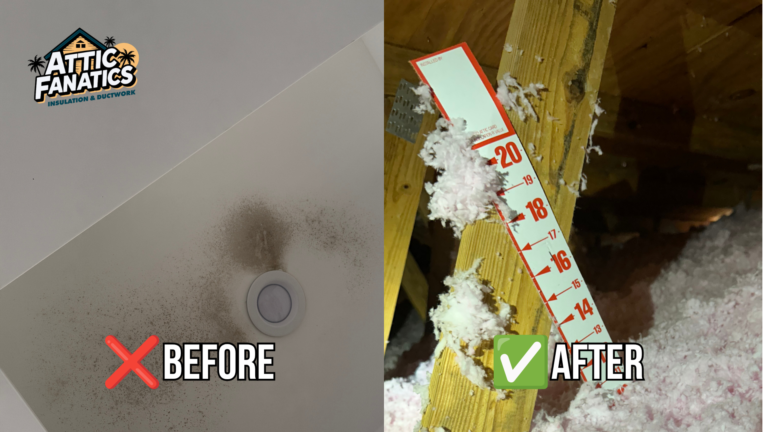
Heat isn’t the only issue. Moisture can build up in the space above your living area, especially in humid climates. When warm air meets trapped moisture, it creates the perfect environment for mold. Over time, this can affect both your insulation and the structure of your home.
Once insulation becomes damp, it loses effectiveness, allowing even more heat to pass through. This cycle increases both discomfort and long-term repair risks.
Don’t Just Cover the Heat – Seal It Out 🛑
Adding insulation alone won’t fix the problem if air is still leaking into your home. Small gaps around attic floor joists, wiring, and openings allow hot air to enter continuously.
Air infiltration reduction is the first step. Sealing those gaps prevents outside heat from pushing into your home before insulation even comes into play.
This is why a complete attic insulation service focuses on both sealing and insulation, not just adding more material.
Quick Check: Is Your Attic Insulation Actually Doing Its Job? 🔍
Most homeowners assume everything is fine until they actually check. A quick inspection of your roof space can reveal whether your insulation is helping or silently costing you money.
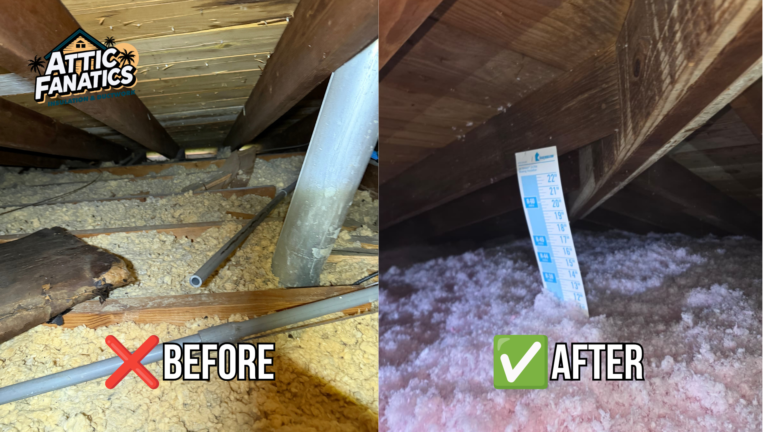
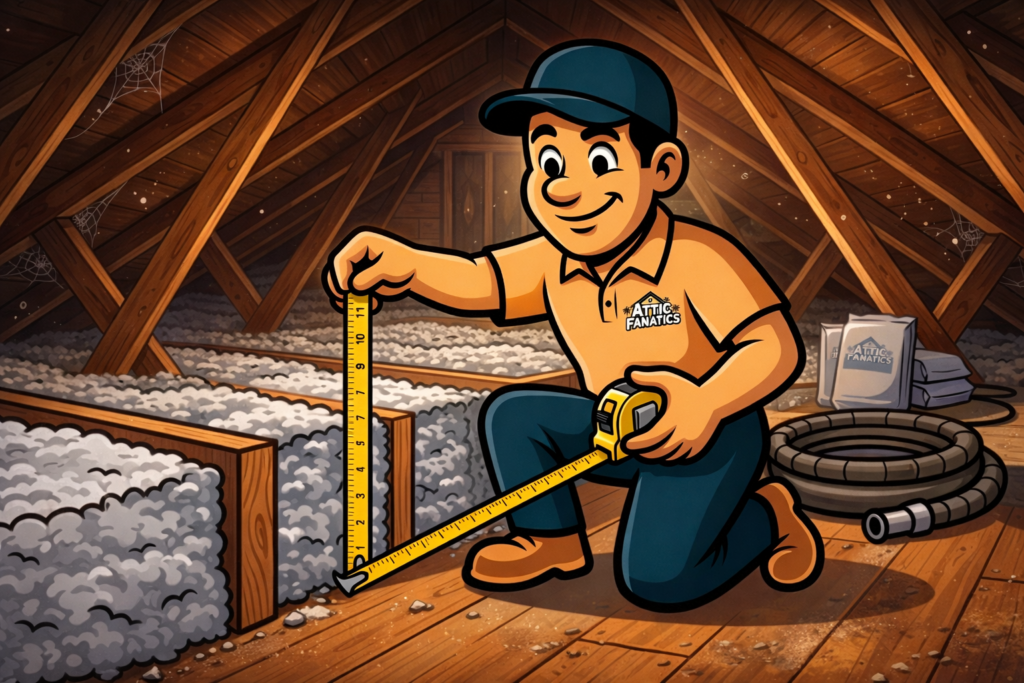
Step 1: Measure the depth of your insulation
Start by inserting a ruler or yardstick into the insulation to measure how deep it is. This gives you a rough idea of whether your home has enough coverage to block heat. If the depth is low, heat can pass through more easily, making it harder to keep your house cool.
Step 2: Check for uneven coverage
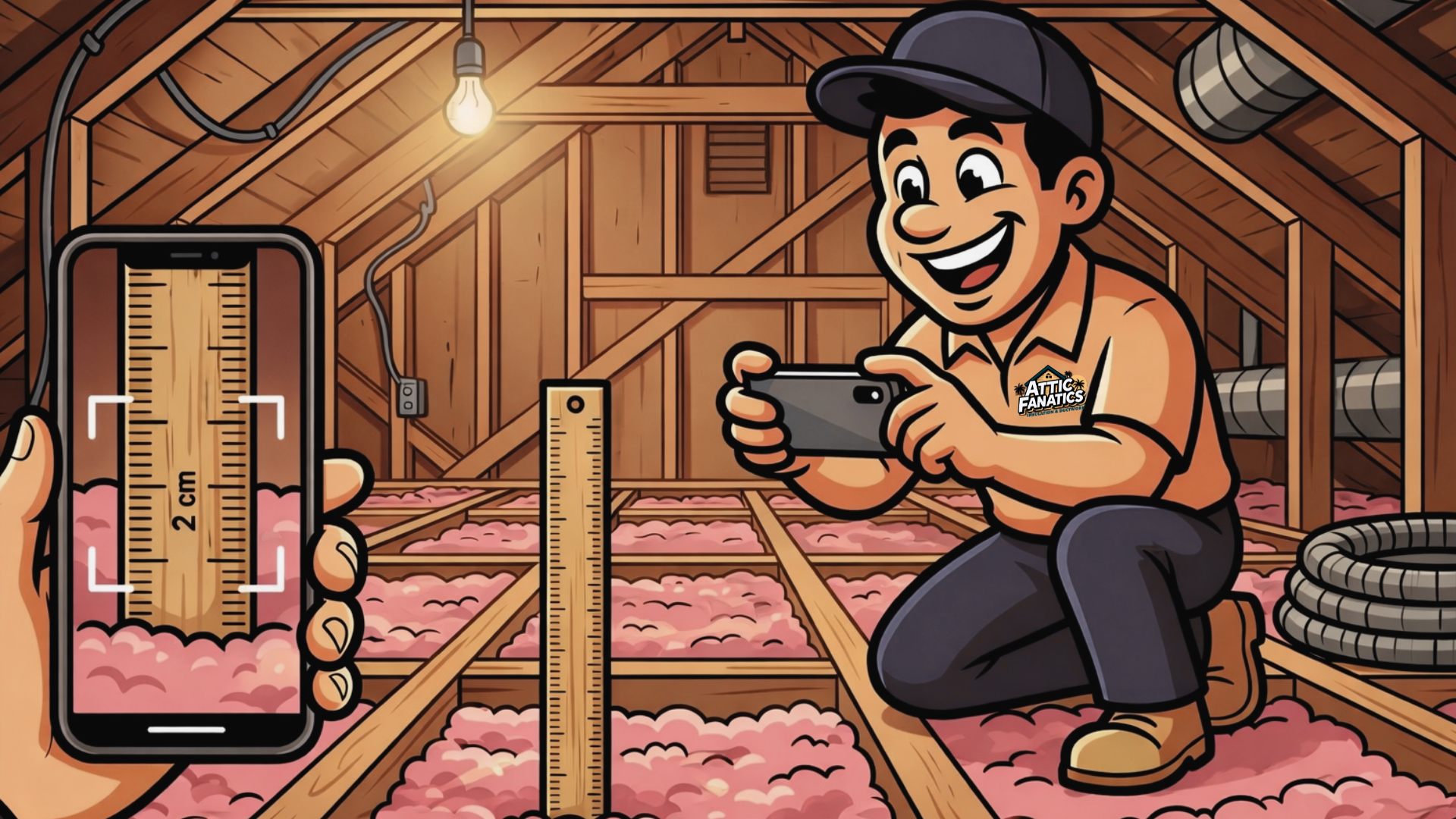
Take measurements in a few different spots and compare them. Capture your measurements on photo or video, this gives you a clear reference point and helps you easily spot inconsistencies.
Step 3: Look for visible warning signs
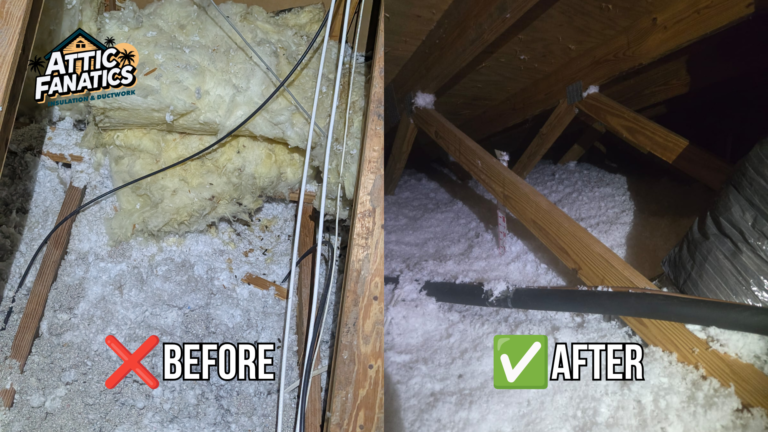
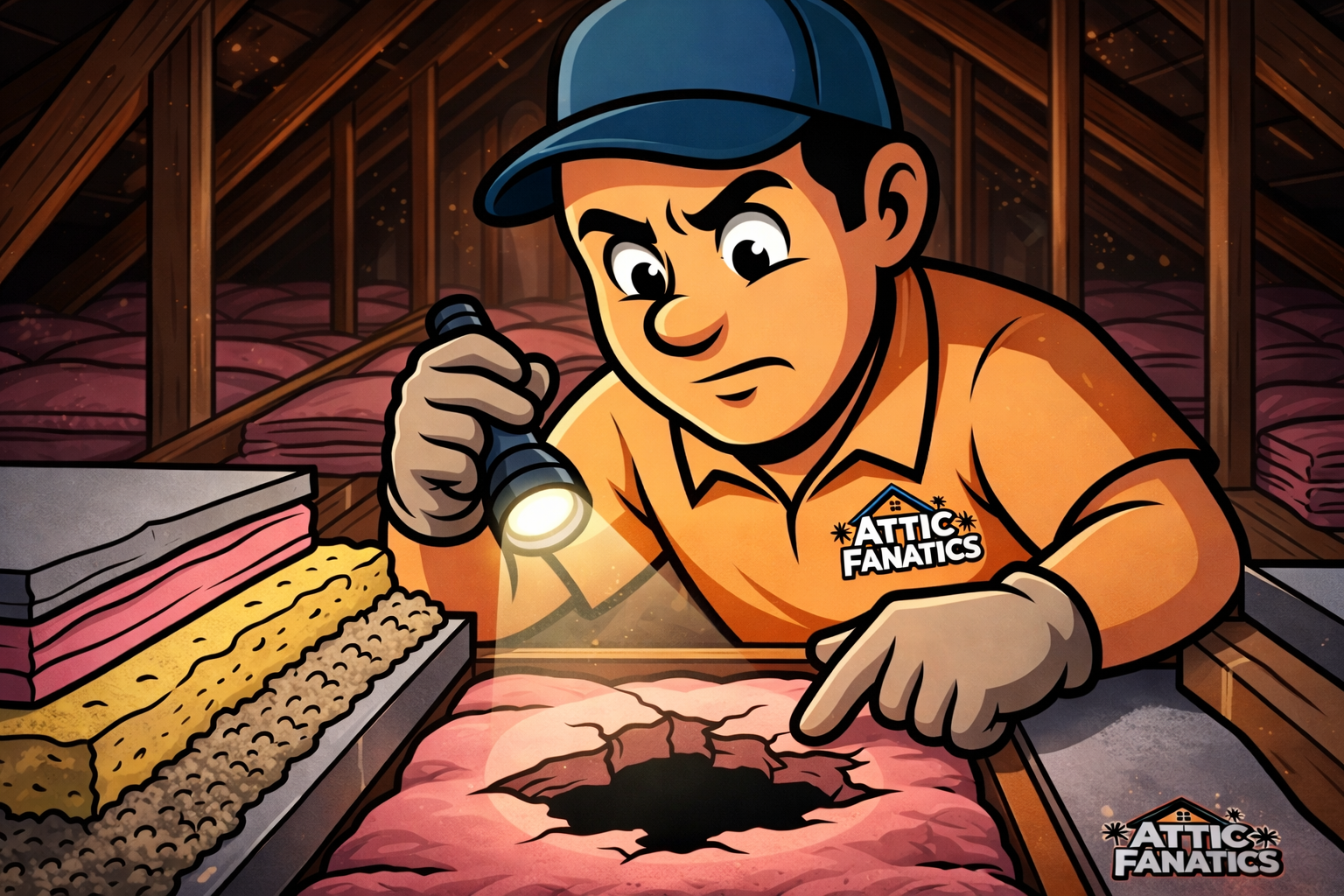
If you can see the tops of joists in your roof space or notice thin, compressed, or dirty insulation, that’s a clear red flag. These gaps allow heat to move directly into your home, reducing the effectiveness of your entire cooling system.
Step 4: Evaluate overall performance
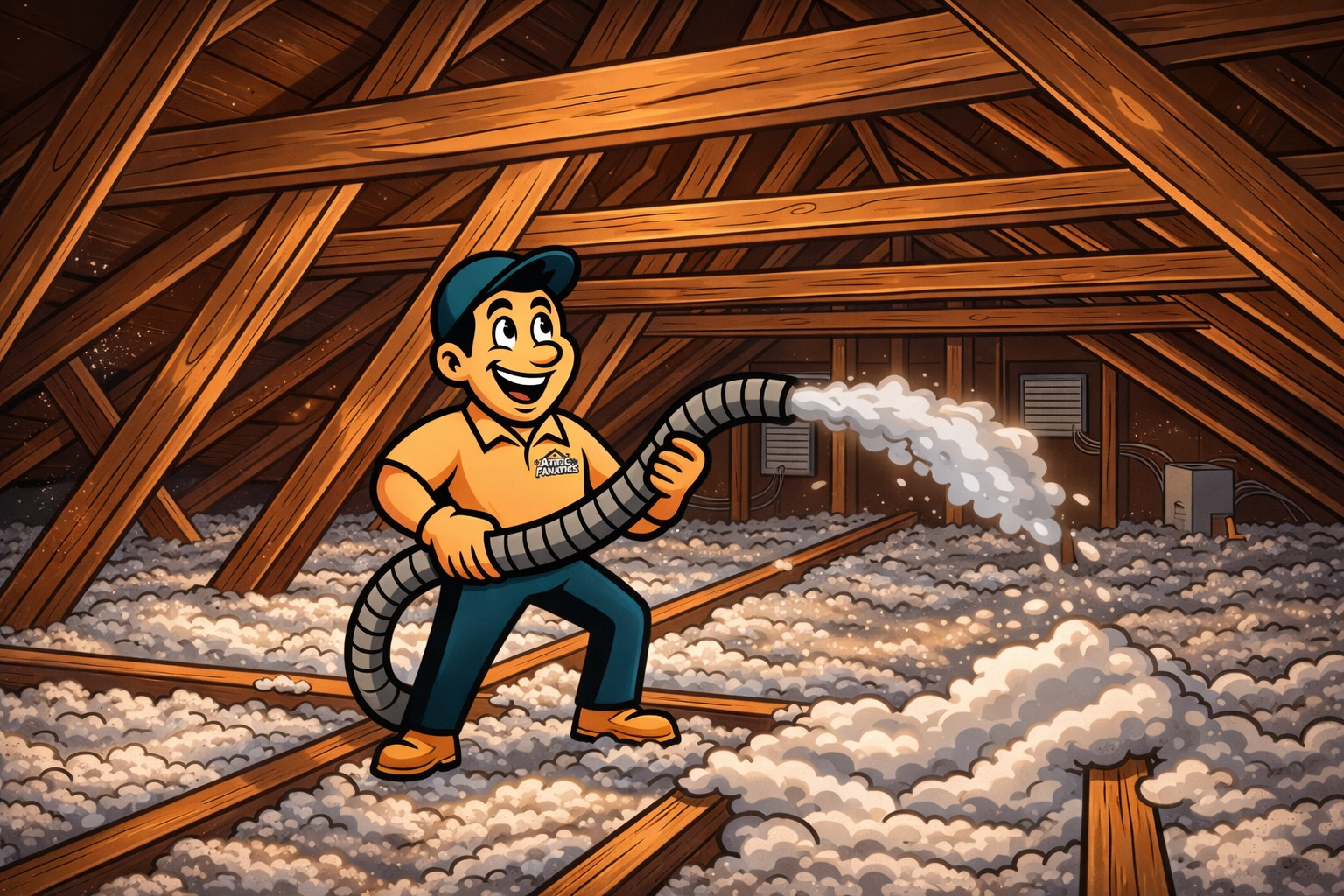
Even if insulation is present, it may not be doing its job properly. Over time, materials settle or lose effectiveness, especially in high-heat environments. This is where solutions like blow-in insulation help by filling gaps and creating a more consistent layer across the surface above your ceiling.
Taking a few minutes to check these areas can reveal why your home feels warmer than it should and why your energy bills keep rising.
How Much Can You Actually Save? (What the Data Shows) 💰
Here’s what many homeowners don’t realise: fixing your attic isn’t just about comfort, it directly impacts your monthly costs. When heat is properly controlled, your AC runs less often, which means lower energy use and more predictable bills.
According to the EPA, homeowners can save an average of 15% on heating and cooling costs by air sealing their homes and upgrading insulation together. That’s not a small difference, especially in Florida, where cooling makes up a large part of your energy bill.
This is why preparation matters. Simply adding insulation without sealing gaps won’t deliver the same results, because air leaks will continue to let heat into your home.
What You Actually Get: Lower Bills, Less Heat, and a Longer-Lasting AC ❄️
Once your roof space is properly sealed and insulated, the difference is noticeable. Your home stays cooler with less effort, and your AC doesn’t have to run as long to keep temperatures stable. Over time, this reduces strain on your system, helping it last longer and lowering the risk of costly repairs or early replacement.
According to industry specialists, these improvements often show up directly in monthly energy costs. For homes spending around $150–$250 on cooling, a 15% efficiency gain can translate to roughly $20–$40 in monthly savings, or $250–$500 per year. In warmer climates where AC systems run most of the year, those savings tend to compound even faster over time.
You’ll also notice more consistent temperatures from room to room, without those hot spots upstairs. Your system won’t have to constantly turn on and off, which improves overall efficiency. Over time, that added stability means fewer repairs and a more comfortable home year-round.
Sources:
https://www.energystar.gov/saveathome/seal_insulate/why-seal-and-insulate
https://www.energystar.gov/saveathome/seal_insulate/methodology