Fiberglass vs. Blown-In Insulation: Which Should You Choose?
Choosing between fiberglass vs blown in insulation comes down to the attic, not just the material. Both can work well, but factors such as the existing insulation, available space, desired R-value, and installation conditions can change which option makes more sense.
Fiberglass vs. Blown-In Insulation at a Glance
Factor | Fiberglass Insulation | Blown-In Insulation |
Cost | Depends on material, attic size, and installation | Depends on material, attic size, depth, and installation |
R-value | Varies by product and thickness | Varies by material and installed depth |
Installation | Installed as batts, rolls, or other forms | Applied using specialized blowing equipment |
Coverage | Works well across accessible, open areas | Can fill irregular spaces and gaps more easily |
Air leakage | Does not automatically stop air leaks | Does not automatically stop air leaks |
Durability | Can perform well when properly installed and kept dry | Can perform well when properly installed and protected from moisture |
Moisture | Performance can be affected by moisture exposure | Moisture can affect performance and material condition |
Maintenance | Usually requires little routine maintenance | Usually requires little routine maintenance when properly installed |
Existing attics | Can work well in suitable open areas | Often useful when adding insulation over an existing layer |
South Florida homes | Can be suitable when properly installed | Can be suitable when properly installed and combined with good attic practices |
How Fiberglass Insulation Works
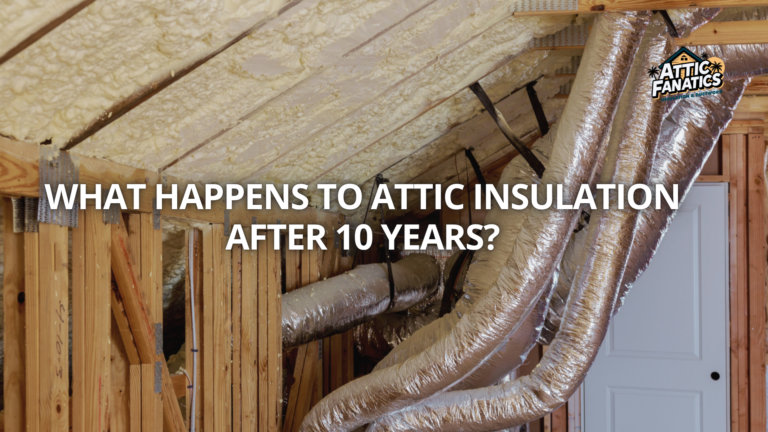
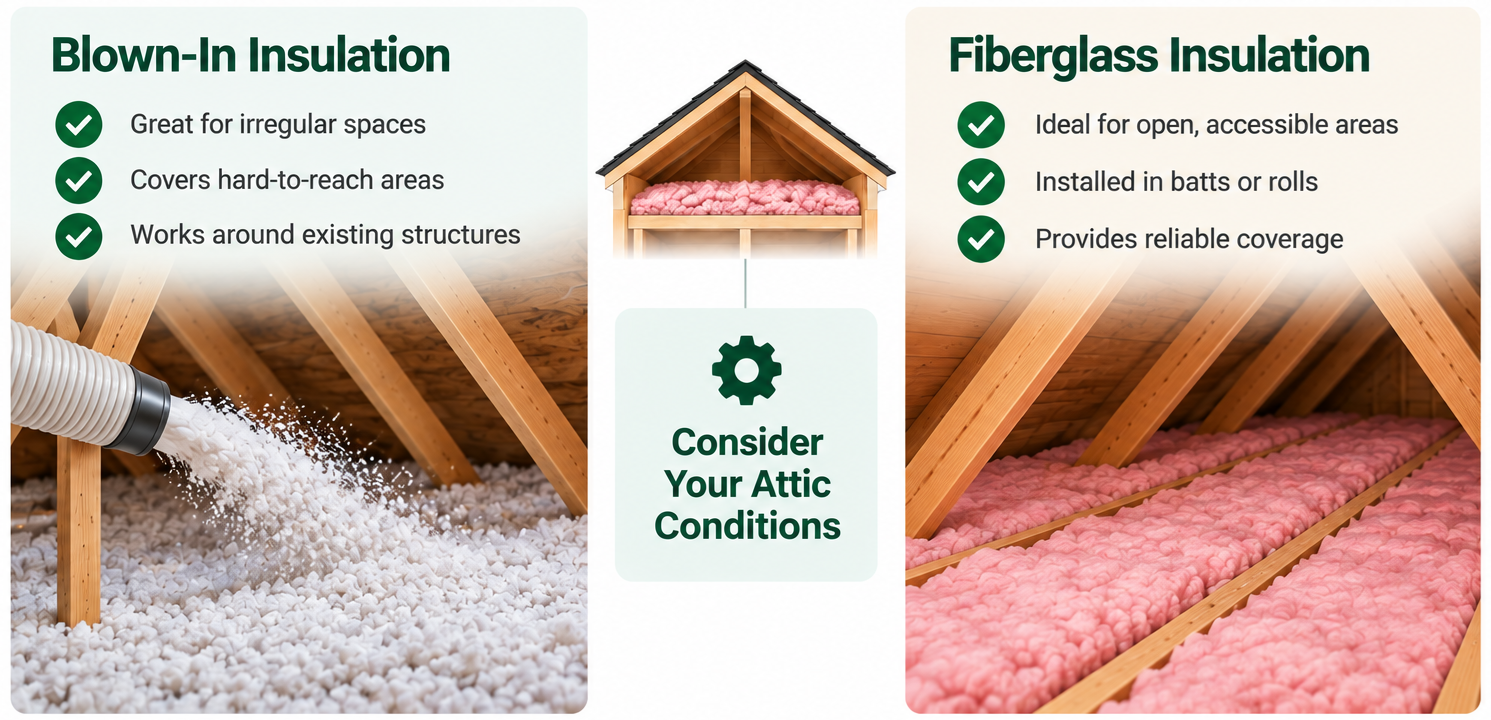
Fiberglass insulation is made from fine glass fibers and is commonly available as batts or rolls. It can be a practical choice where the attic has accessible, relatively open areas that allow the material to be installed properly. One advantage is that the material can be measured and placed across the intended areas without specialized blowing equipment. However, the installation still matters. Gaps, compression, poor fitting around obstacles, or areas with missing coverage can reduce the effectiveness of the insulation system.
That’s especially important in an attic with wiring, ductwork, framing, and other obstructions.
 How Blown-In Insulation Works
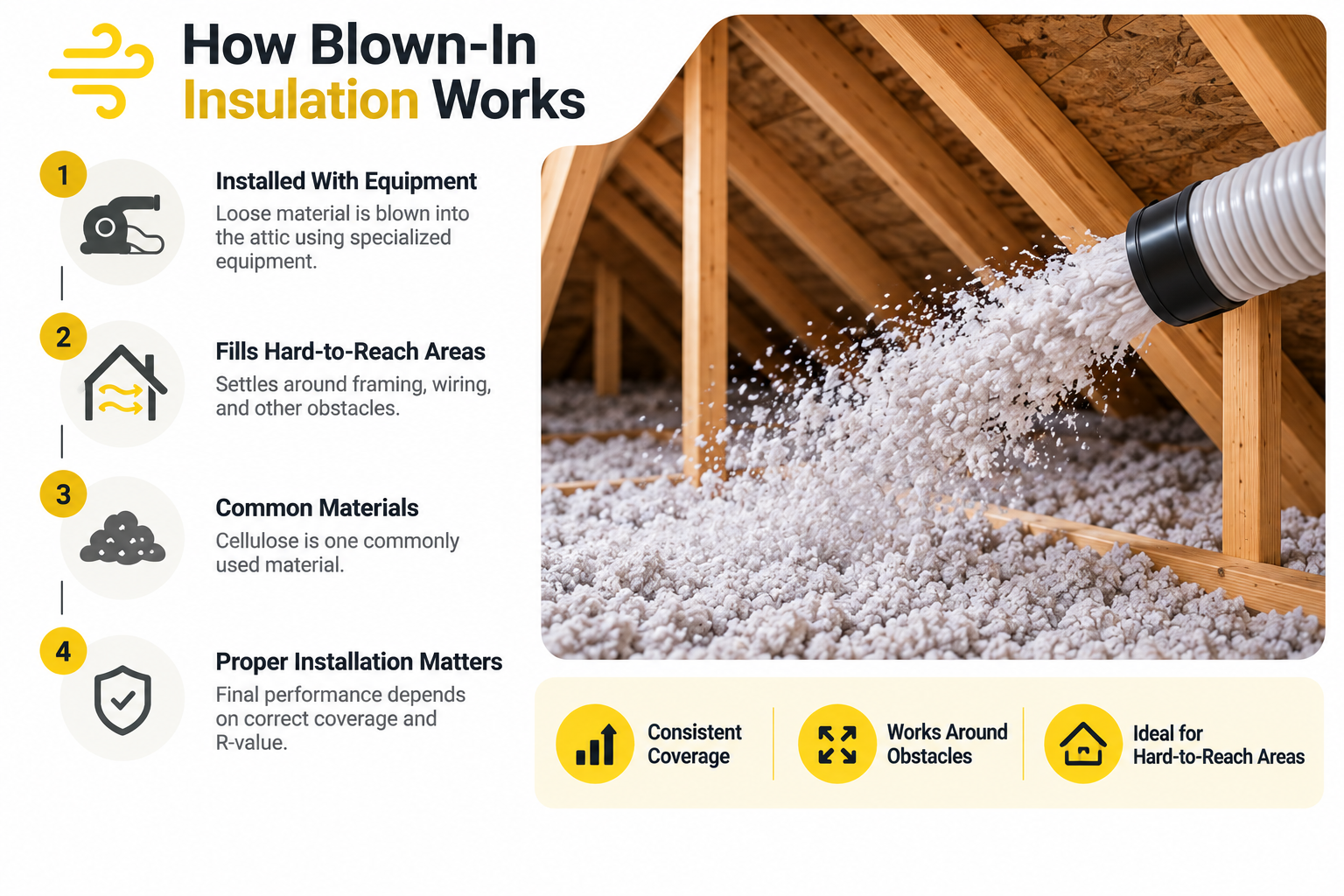
Blow-n insulation is installed as loose material using specialized equipment. Because it can settle around framing, wiring, and other obstacles, it can provide more consistent coverage in areas that are difficult to reach with batts or rolls. Cellulose insulation is one common material used in this application. The final result still depends on proper installation, including achieving the intended coverage and R-value throughout the attic.
 R-Value Isn’t the Only Thing to Compare
Both materials can be installed to reach a specific R-value, which measures resistance to heat flow. The amount of material needed depends on the type selected, the existing insulation, and the level the project is designed to reach. That’s why the overall insulation depth is worth checking when comparing quotes. Two contractors may recommend different materials or amounts while aiming for a similar level of thermal protection. Instead of comparing the materials by their advertised specifications, look at what the complete installation is designed to provide.
Insulation Doesn’t Automatically Stop Air Leaks
This is an important distinction when comparing blown in vs fiberglass insulation.
Insulation and air sealing perform different jobs. Insulation slows heat transfer. Air sealing addresses openings where air can move through gaps and penetrations around areas such as wiring, pipes, fixtures, and other parts of the building envelope. Adding more insulation doesn’t automatically seal those openings. If air leakage is present, it may need to be addressed separately before or alongside the insulation work. A properly insulated attic can still have unwanted air movement if these gaps are left untreated.
 What About South Florida’s Climate?
The South Florida climate means attic temperatures and moisture conditions deserve attention when choosing an insulation system. Both fiberglass and blown-in materials can be used in hot climates when they are installed correctly and the attic is properly managed. Moisture is an important consideration. Insulation that is exposed to leaks, condensation, or other moisture problems may become damaged or perform differently than intended. This is why the condition of the attic matters just as much as the material selected.
Don’t Forget Attic Ventilation
Insulation works alongside other parts of the attic system, including attic ventilation.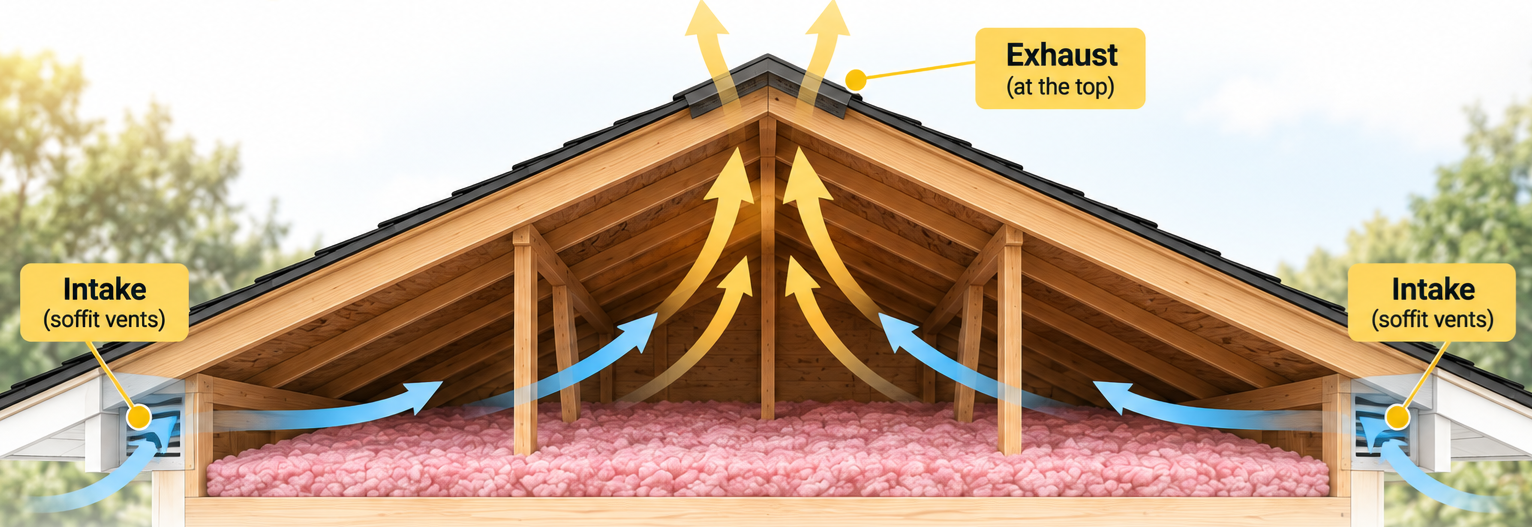
Soffit vents and other ventilation pathways need to remain functional. Insulation should not be installed in a way that blocks intended airflow through ventilation channels. This is particularly important when adding insulation to an existing attic. Before installation, the contractor should identify where air is supposed to enter and exit and make sure those pathways remain clear. Good ventilation doesn’t replace insulation, and insulation doesn’t replace proper ventilation. They address different parts of the attic environment.
Which One Costs More?
There isn’t a universal answer to whether fiberglass or blown-in insulation has a lower insulation cost. The total depends on the attic size, material selected, required insulation depth, existing conditions, labor, and how difficult the space is to access. A straightforward attic with open areas may have different installation requirements from an attic filled with obstructions or an existing layer of insulation. For that reason, compare the complete installed system rather than looking at the material price alone.
 Which Works Better in an Existing Attic?
Both materials can be appropriate for an existing attic, but the conditions of the space should guide the decision. Blown-in material can be useful where there are irregular areas or where additional coverage needs to be distributed around existing structures.
Fiberglass can make sense where the attic provides suitable areas for batts or rolls to be installed correctly. The condition of the existing attic insulation also matters. If it is damaged, contaminated, or affected by moisture, removing it may be more appropriate than simply adding another layer.
 So, Which Should You Choose?
There isn’t one material that is right for every attic.
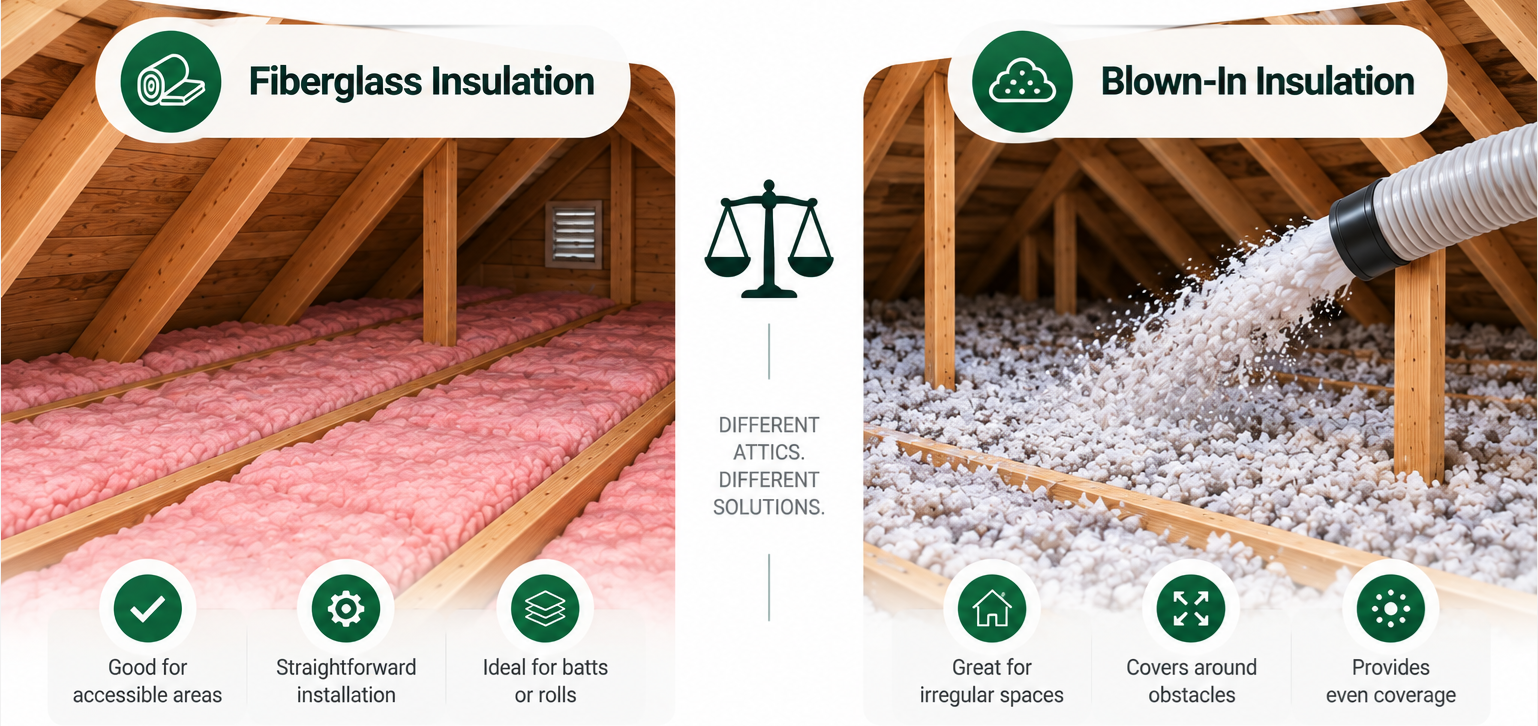
Fiberglass may suit a homeowner looking for a straightforward installation in accessible areas. Blown-in insulation may make more sense where irregular spaces and existing obstacles make consistent coverage more difficult. Your choice should also take into account the target R-value, installation requirements, air leakage, moisture conditions, ventilation, and the condition of the existing attic. The goal is not to choose the material that sounds better on paper. It’s to choose a system that can be installed correctly in your particular attic.
Start With the Attic, Not the Material
Before deciding between fiberglass and blown-in insulation, have the attic evaluated. An inspection can identify existing insulation, areas with poor coverage, air leaks, moisture concerns, ventilation pathways, and other conditions that may affect the installation. Attic Fanatics USA can help homeowners in South Florida evaluate these conditions and determine which insulation approach fits the property. That way, the decision is based on the attic itself rather than choosing a material simply because it is marketed as the better option.