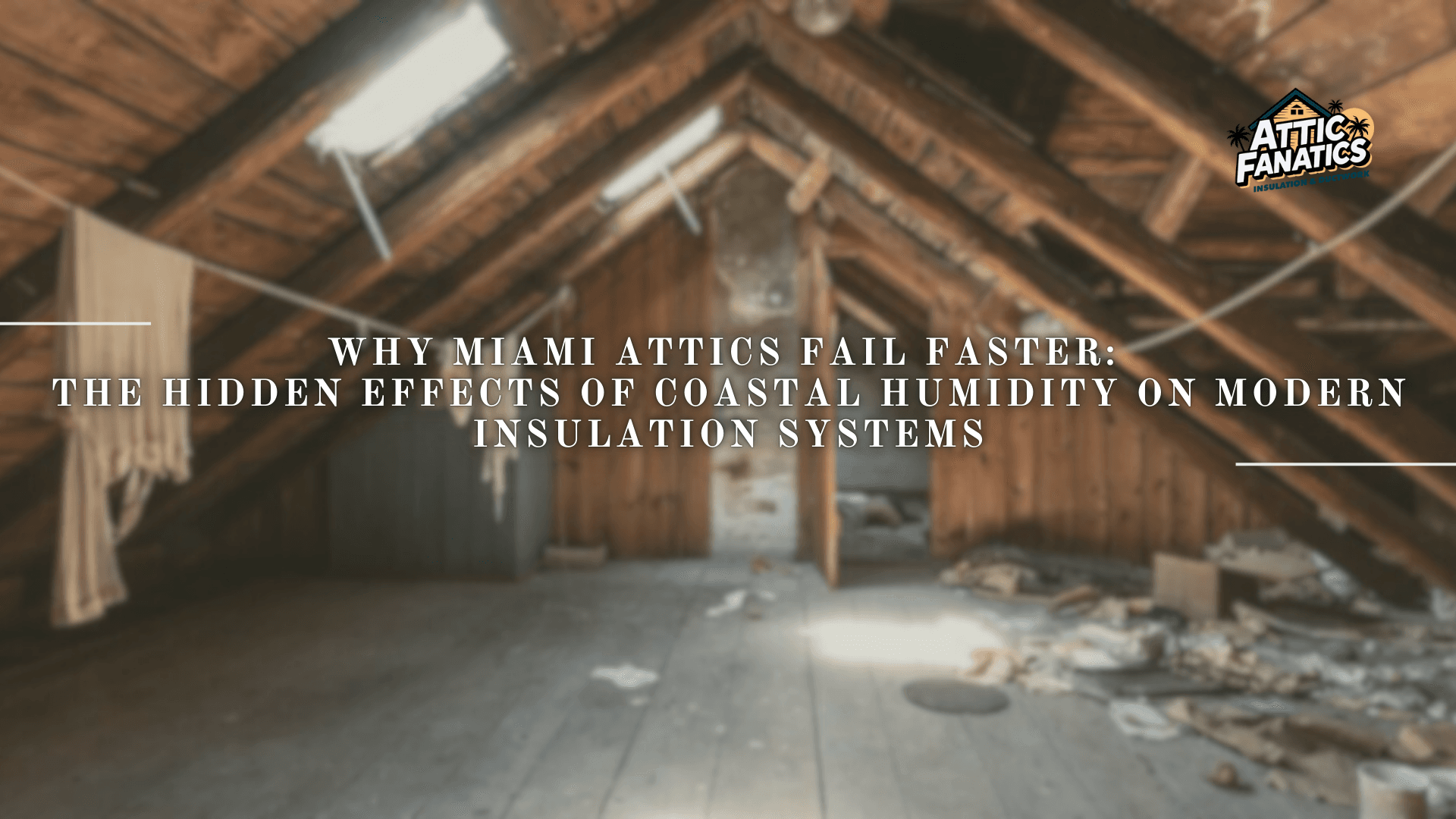
Why Miami Attics Degrade Faster and How Humidity Impacts Insulation

Coastal climate creates conditions that silently weaken attic systems long before homeowners realize there’s a problem. The combination of warm air, persistent moisture, and salt-laden breezes gradually alters how insulation materials behave. Many houses begin showing deterioration years earlier than properties in drier regions, and the underlying reasons trace back to the environment rather than construction quality. Homeowners who notice warmer upper floors or rising energy bills often find the issue tied to attic insulation in Miami conditions affected by constant humidity.
Why Coastal Humidity Breaks Down Modern Insulation Faster
 Why Coastal Humidity Breaks Down Modern Insulation Faster
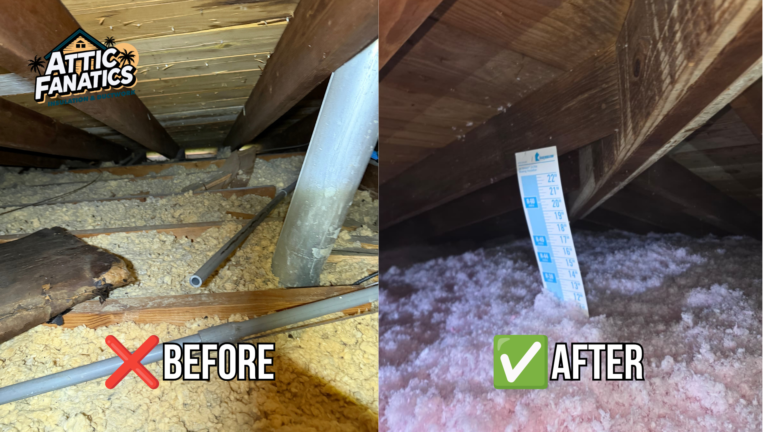
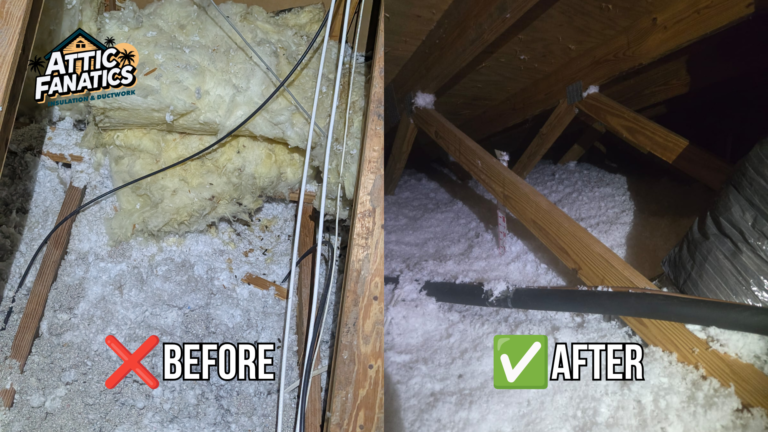
Humidity is not just an atmospheric effect it interacts directly with insulation fibers and surfaces. In Miami, moisture levels remain elevated throughout the year, creating a continuous cycle of vapor movement into the attic. Even sealed roofing systems allow small amounts of humid air to migrate upward. Over time, insulation begins to absorb and retain this moisture, reducing its ability to block heat transfer. Fiberglass loses loft, cellulose becomes heavier, and foam-based systems can experience micro-expansion that alters structural density.
Salt particles carried inland also contribute to accelerated deterioration. While the amount of salt entering an attic is small, the long-term impact is significant. Salt attracts water, meaning insulation can remain damp far longer than expected. This extended moisture retention encourages microbial activity, weakens vapor barriers, and slowly erodes material performance effects that often remain invisible until symptoms worsen.
The Science Behind Moisture Retention in Attics
 The Science Behind Moisture Retention in Attics
Attics function as transitional zones between outdoor weather and indoor living spaces. When warm, humid air enters and encounters a slightly cooler surface, condensation forms. This process repeats daily: morning humidity rises, afternoon heat dries some surfaces, and evening temperatures fall again. Insulation materials, especially porous ones, act like sponges within this cycle.
Moisture absorption leads to thermal conductivity changes. Insulation that should resist heat begins conducting it instead. Laboratory studies show that even a 5–10% increase in moisture content can reduce insulation efficiency by over 40%. In coastal environments, where the humidity seldom drops low enough for complete drying, these losses compound over time. The attic eventually becomes a zone where trapped moisture encourages expansion, softening, and settling shortening its overall lifespan.
Early Warning Signs Homeowners Often Overlook
 Early Warning Signs Homeowners Often Overlook
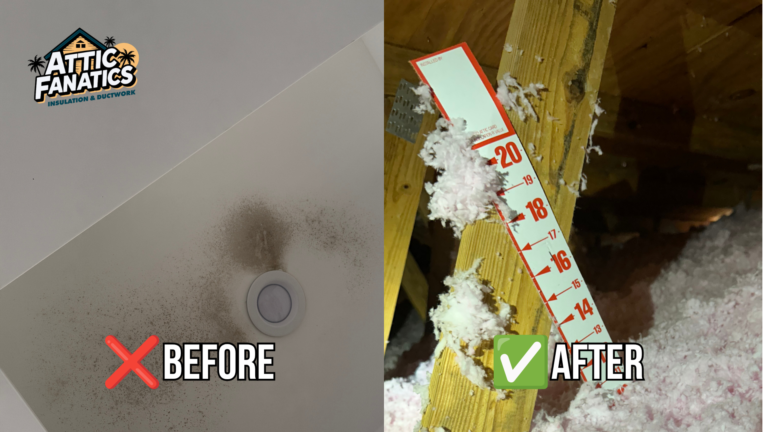
Many early indications of insulation deterioration appear subtle. Rising power usage is often dismissed as seasonal variation, yet it commonly signals reduced thermal resistance overhead. Other signs include uneven room temperatures, persistent attic odors, or a slight increase in indoor humidity even when HVAC systems function properly. Some homeowners notice dustier air or recurring minor mold patches near ceiling corners both signs of moisture movement within the attic.
Another overlooked indicator is sound. As insulation compresses or shifts due to moisture saturation, acoustic properties change. Homes may suddenly feel louder, with more outside noise filtering in through weakened thermal layers. Discoloration around recessed lighting or attic access points may also signal humidity bypass routes.
Long-Term Energy Efficiency Consequences
 Long-Term Energy Efficiency Consequences
Degraded insulation transforms the home’s entire energy profile. HVAC systems must work longer and harder to achieve the same temperature control, driving utility costs upward. Over time, prolonged strain can reduce system lifespan, requiring earlier-than-expected repairs or replacements. Indoor humidity increases because the attic becomes a reservoir of warm, moist air, making comfort more difficult to maintain. This effect is especially noticeable during summer, when cooling loads intensify and any insulation weakness becomes magnified.
Without intervention, long-term consequences extend beyond higher bills. Moisture-compromised insulation can contribute to corrosion in hidden components, degrade attic wood structures, and allow microbial growth that impacts indoor air quality. The more the attic absorbs moisture, the more the home becomes vulnerable to internal temperature swings, creating a cycle of discomfort and inefficiency.
Expert Diagnostics for Humidity-Exposed Attic Systems
 Expert Diagnostics for Humidity-Exposed Attic Systems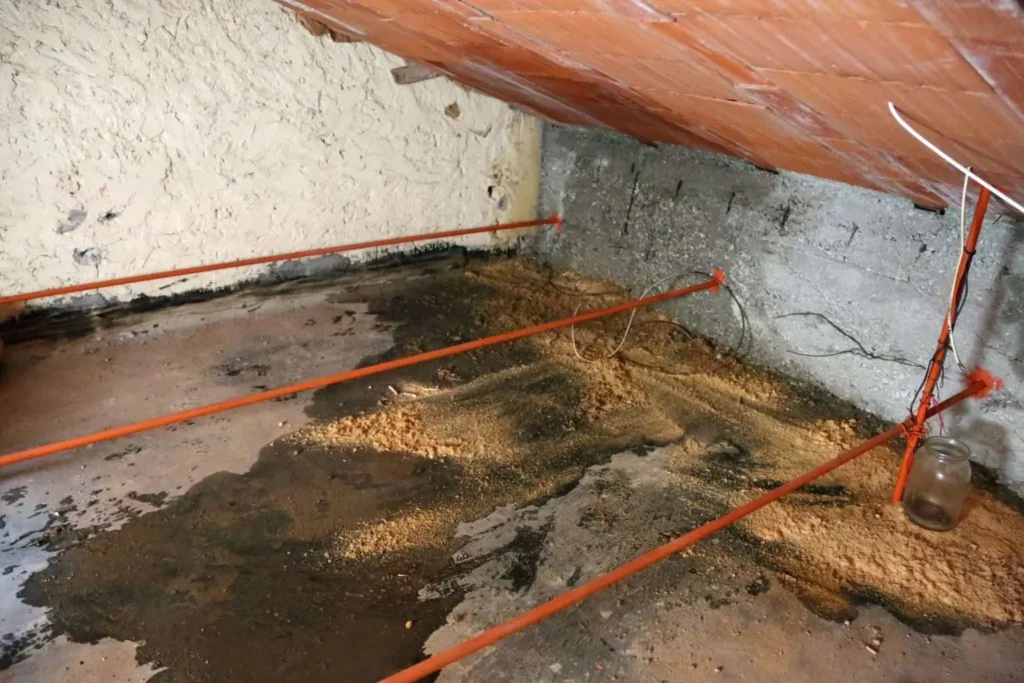
Because these issues develop gradually, specialized evaluation is essential. Attic Fanatics provides in-depth diagnostics tailored to the region’s humid coastal environment, identifying how moisture interacts with existing insulation and where deterioration has already begun. Their assessments consider vapor flow patterns, insulation density changes, moisture mapping, and airflow irregularities, offering a detailed understanding of how the attic has adapted or failed to adapt to persistent humidity.
The insights produced allow homeowners to make informed decisions about upgrades that suit humid climates. Tailored insulation improvements, strategic vapor control solutions, and modern moisture-resistant materials can reset the attic’s performance and extend long-term efficiency.
Strengthening Attics Against Coastal Climate Challenges
 Strengthening Attics Against Coastal Climate Challenges
Protecting a home from the persistent effects of humidity requires a combination of climate-specific materials, proper airflow design, and professional evaluation. Coastal conditions in this region introduce unique challenges that accelerate insulation decline, but early awareness and expert guidance can prevent long-term energy losses and structural stress. Understanding how moisture influences attic performance is the first step toward creating a home that remains efficient, comfortable, and resilient throughout the year.