Best Attic Insulation in 2025: What Really Works
Florida attics face extreme heat, high humidity, and storm‑driven moisture. The decision isn’t just “more R‑value”; it’s how materials handle air leakage, vapor, wind, and long‑term durability. The core types of attic insulation in 2025 are fiberglass (loose‑fill and batts), cellulose, and foam. Attic Fanatics evaluates roof design (vented vs. unvented), HVAC location, moisture history, and code requirements before recommending a path for each home.
☀️ Blown in attic insulation: fast coverage, strong value
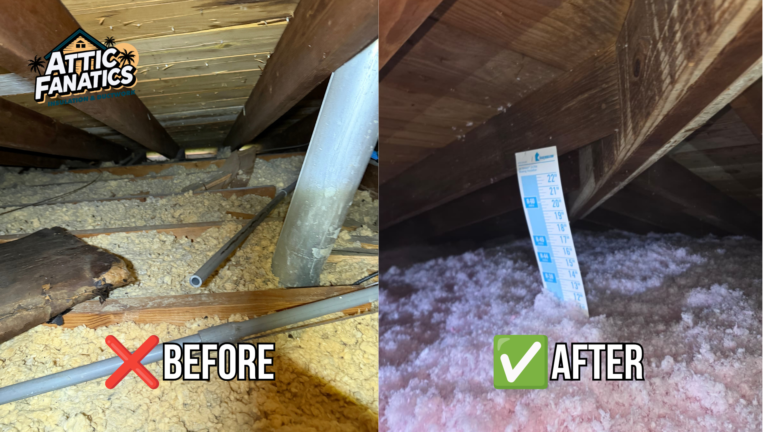
Loose‑fill fiberglass or cellulose delivers continuous coverage over joists, minimizing thermal bridging and reaching recommended R‑levels efficiently. In humid climate, fiberglass resists moisture uptake and remains light; cellulose offers better resistance to air movement and excellent sound control. Either approach performs best when paired with careful air‑sealing of top plates, electrical penetrations, and around can lights. Expect long service life when soffit baffles are protected and ventilation remains unobstructed.
💪 Spray foam insulation: air seal + storm resilience
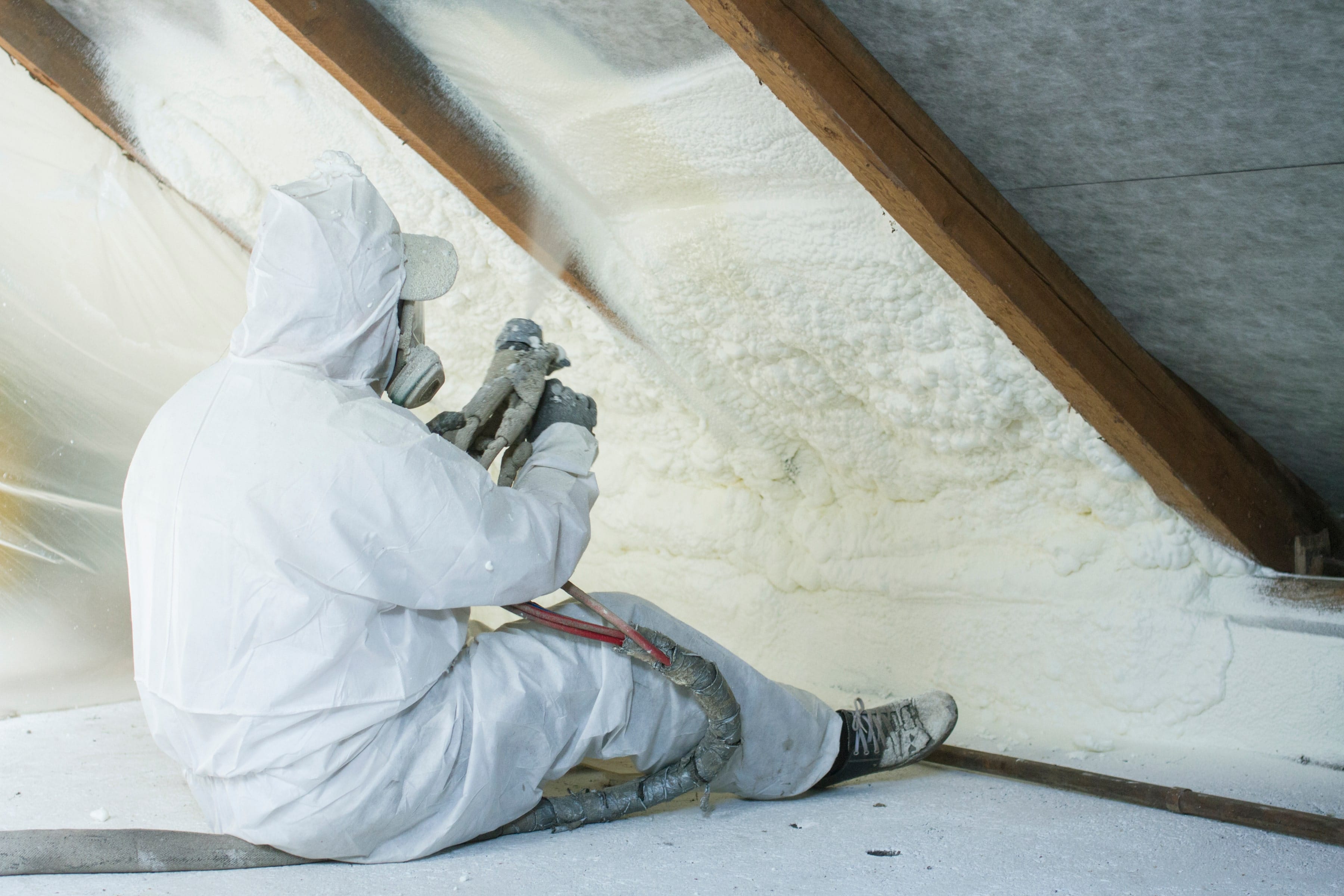
Foam converts the roof deck into a tight thermal and air boundary, creating a semi‑conditioned attic that protects ducts and air handlers from extreme heat. Closed‑cell adds rigidity and a higher vapor resistance (useful in coastal zones and high‑wind areas); open‑cell is thicker per dollar and excels at sound absorption. Foam reduces infiltration, limits wind‑borne rain intrusion, and controls dew‑point risks at the roof deck when properly designed. Upfront cost is higher, but comfort stability and equipment efficiency gains are significant where mechanicals live in the attic.
🧰 Adding Batt Insulation To Attic: Where It Fits
Batts are precise and effective on vertical or hard‑to‑reach surfaces—knee walls, hatch covers, and short rafter bays when installed snugly with full cavity contact. As a top‑off layer on floors, batts can leave gaps around wiring and irregular framing; a continuous blanket or dense coverage strategy is essential to avoid voids and compression. For homes, batts shine as a targeted complement to air‑sealed loose‑fill or as part of carefully detailed storage platforms and access paths.
🎯 How Attic Fanatics tailors the solution
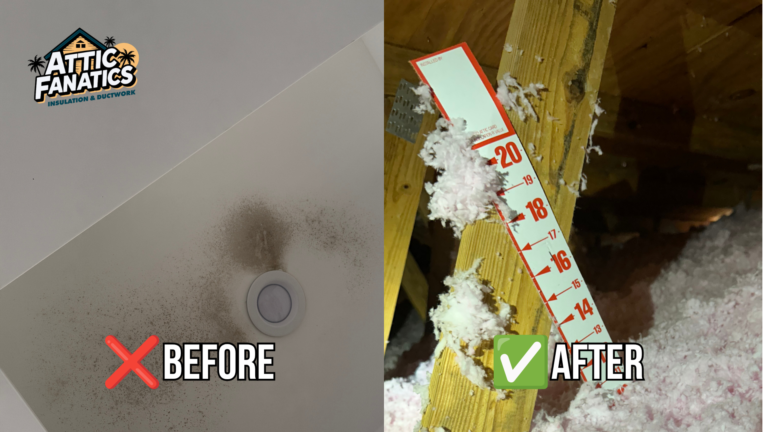
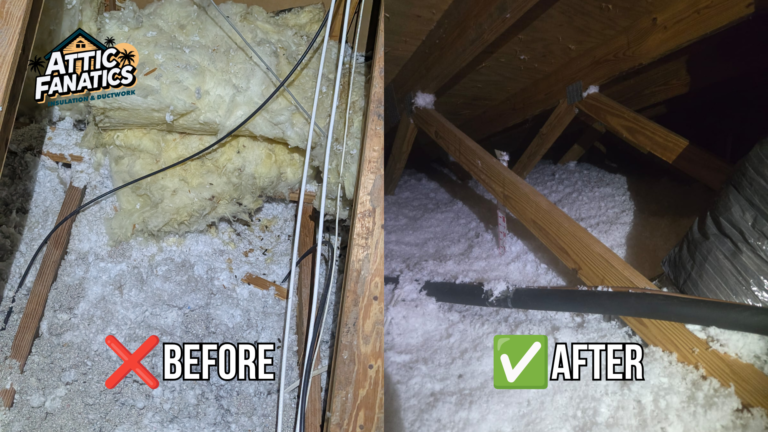
Attic Fanatics begins with diagnostics: inspecting ventilation paths, checking for past moisture or pest activity, measuring duct leakage, and verifying air‑sealing opportunities. In vented attics with accessible floors, the team typically air‑seals first, then specifies loose‑fill fiberglass or cellulose to meet or exceed code R‑values. Homes with HVAC equipment in the attic often benefit from an unvented design at the roof deck with closed‑cell or open‑cell foam to stabilize temperatures and curb latent load. Where old or contaminated insulation is present, the sequence is removal, sanitization, targeted sealing, and then new insulation—restoring both efficiency and indoor air quality. For knee walls and hatches, precisely fitted batts or foam board are detailed to stop hidden bypasses.
✅Care & longevity checklist
- 🔎 Inspect after major storms for roof leaks or staining; address early to protect performance.
- 🌬️ Keep soffit/ridge paths clear with intact baffles; never block airflow at the eaves.
- 💡 Maintain safe clearances around recessed fixtures unless they’re IC‑rated.
- 📏 If loose‑fill settles below joist tops over time, schedule a professional top‑up.
- 🐭 Exclude pests; contamination requires removal, sanitizing, and fresh material.
- 💧 Control humidity, balanced ventilation or spot dehumidification helps keep the attic dry.
📈 ROI in 2025: what owners should expect
For cooling‑dominated homes, air‑sealing plus high‑coverage loose‑fill often yields the fastest utility savings per dollar, especially when ducts remain in a vented attic. Foam at the roof deck typically carries a longer payback but can win overall where it protects leaky or lengthy duct runs, curbs infiltration, and improves comfort year‑round. Longevity is strong across all well‑installed systems; performance is preserved by keeping ventilation pathways open, managing moisture, and maintaining a tight air barrier.
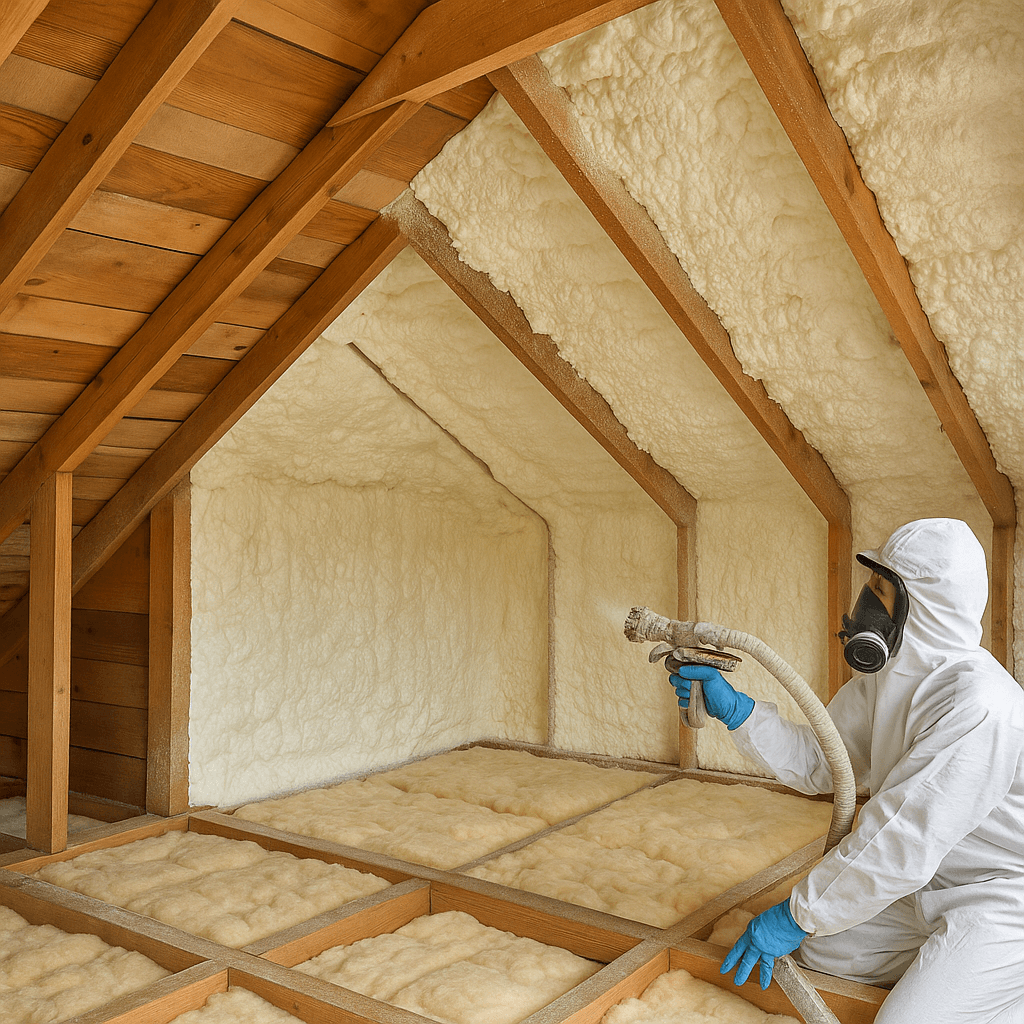
🏠 Attic insulation service for homes
Attic Fanatics matches materials to building physics, not trends: loose‑fill when coverage and value matter most in vented assemblies; foam when air‑tight, semi‑conditioned attics are the right move; targeted batts where detailing demands it. The result is durable comfort, better indoor air quality, and stable bills built for Florida’s climate in 2025 and beyond.